Some addiction treatment services in Maine aren’t financially sustainable, provider warns


An empty detox room at Wabanaki Public Health & Wellness in Bangor on Oct. 29. (Brianna Soukup/Staff Photographer)
Staff at a Wabanaki Public Health & Wellness drug recovery center in Bangor said they helped save a man who overdosed outside the facility on Tuesday. The same day, the organization’s leadership told the staff it plans to cut some of its addiction recovery services.
Those services have been built up over the past few years to help address drug and alcohol abuse around the state, but they are not financially viable, said co-CEO Lisa Sockabasin.
“I know that lives will be impacted by this, and it breaks my heart,” she said in an interview.
Her organization is one of several that expanded with encouragement from Gov. Janet Mills. Opioid-related deaths had been rising for six years when Mills was elected, and she made addressing it one of her top priorities. A Maine Department of Health and Human Services spokesperson said the state has put $6.8 million toward residential recovery treatment.
Sockabasin said when her organization started additional recovery services in 2023 with $1 million from the state, she thought they would be self-sustaining, but that has not turned out to be the case. Their two recovery homes in Bangor are losing money, she said, and the service that helps people go through withdrawal is an even bigger drain.
Several leaders in the recovery field in Maine said providing detox is precarious. They said they lose hundreds of dollars a day for each person they help manage through withdrawal who is on MaineCare, the state’s Medicaid program, because it does not pay the full price of what the service costs.
Advertisement
Ever since Wabanaki Public Health & Wellness opened its detox facility in 2023, it has cost the organization about $1.5 million more per year to deliver the service than MaineCare will reimburse for it, Sockabasin said. It has covered the losses with fundraising and grants but she said those grants were less available in 2025 and 2026, and covering the cost of drug and alcohol treatment hasn’t left enough money for the organization’s other services like food and water delivery to tribal members.
On Friday, she said the organization plans to close its detox services as soon as current patients finish receiving care.
“The closure of detox beds would be a critical loss on the front lines of the opioid crisis in the state,” said Courtney Gary-Allen, executive director of the Maine Recovery Action/Access Project, a nonprofit advocacy organization.
She said medically supported detox like what Wabanaki Public Health & Wellness has provided is an essential first step for people to end dependency on drugs and alcohol. Sockabasin said she raised an alarm with the state six months ago and has been fundraising in the hope she could avoid having to close detox beds or additional recovery services.

Lisa Sockabasin, co-CEO of Wabanaki Public Health & Wellness, at her office in Bangor on Oct. 29. (Brianna Soukup/Staff Photographer)
She said her “excruciating” last few months are a warning signal.
“There were many partnerships built to create a statewide system to catch people no matter what. And there are many of us within that statewide system today that are struggling to keep the lights on,” Sockabasin said.
Advertisement
At the same time, a few new facilities for detox and other residential recovery services plan to open soon, though some will be primarily for people with private insurance who can pay more.

Related
Addiction treatment facility opens in Westbrook
Gordon Smith has led the state’s opioid response since Mills took office and in an interview on Tuesday said he’s optimistic recovery services built up on his watch will survive, but he’s not surprised to hear some providers are struggling.
“The sustainability of our entire healthcare system is at risk, so of course our addiction treatment facilities are fragile,” he said.
HARD MATH
Gary-Allen said Wabanaki Public Health & Wellness is one of the first three places she calls when she meets someone who is ready to detox. Another is Milestone Recovery in Portland, which also primarily serves people who have MaineCare or are uninsured.
The fact that MaineCare can open the door to medical detox is an improvement, advocates say. Mills expanded Medicaid in 2019 and nearly 40,000 people on MaineCare got substance use treatment in 2025, according to the state health department.
But Milestone loses $210 a day per bed for someone on MaineCare who is going through withdrawal because of insufficient reimbursement rates, said Executive Director Jayme Villanueva.
Advertisement
With high demand for detox, Milestone tried to expand its offerings in 2024. Mills cut the ceremonial red ribbon on a new facility to go from 16 beds to 30, but Milestone couldn’t keep it going. A little over a year later, they scaled back to 10 spots while converting 16 beds to a less costly recovery service for people who have already gone through withdrawal.

Jayme Villanueva, executive director of Milestone Recovery, at the opening of Guardian Recovery Pine Tree in Westbrook on Oct. 27. (Brianna Soukup/Staff Photographer)
“We really tried hard to answer the call for more detox beds,” Villanueva said. “We were hemorrhaging money.”
Detox requires 24-hour medical staffing, and Villanueva said Milestone couldn’t maintain the number of nurses and other personnel needed.
MaineCare last significantly increased its rates for residential substance use treatment in 2021. The rate for detox went up 77% and the Mills administration has added yearly cost-of-living increases. MaineCare currently pays $449, about $150 less than New Hampshire’s daily rate.
In 2025, the Maine Legislature considered raising the rate to match its neighbor.
Madison Birch was one of more than a dozen people who testified in favor of the proposal. She said her sister had been addicted to heroin and when she was ready to get help detoxing, there wasn’t room for her. She died about a week later, Birch said in an interview.
Advertisement
“I truly believe that if she had been given access to detox, she would still be here today,” Birch said.
Representatives for Wellspring also testified. Along with Milestone and Wabanaki Public Health & Wellness, Wellspring is one of the few substance use treatment providers in the state primarily helping people on MaineCare. Wellspring said it was losing nearly $3,000 a day.
“Detox centers, such as the one I run, will struggle to maintain their current operations, and may be forced to reduce their capacity or even shut down altogether,” Wellspring’s Mary Ellen Dunfield testified. The organization did not respond to an interview request.
Lawmakers decided not to increase the MaineCare rate in 2025. The Mills administration said at the time the state would revisit it within a few years as part of the normal review cycle, and there wasn’t enough justification to make an exception.
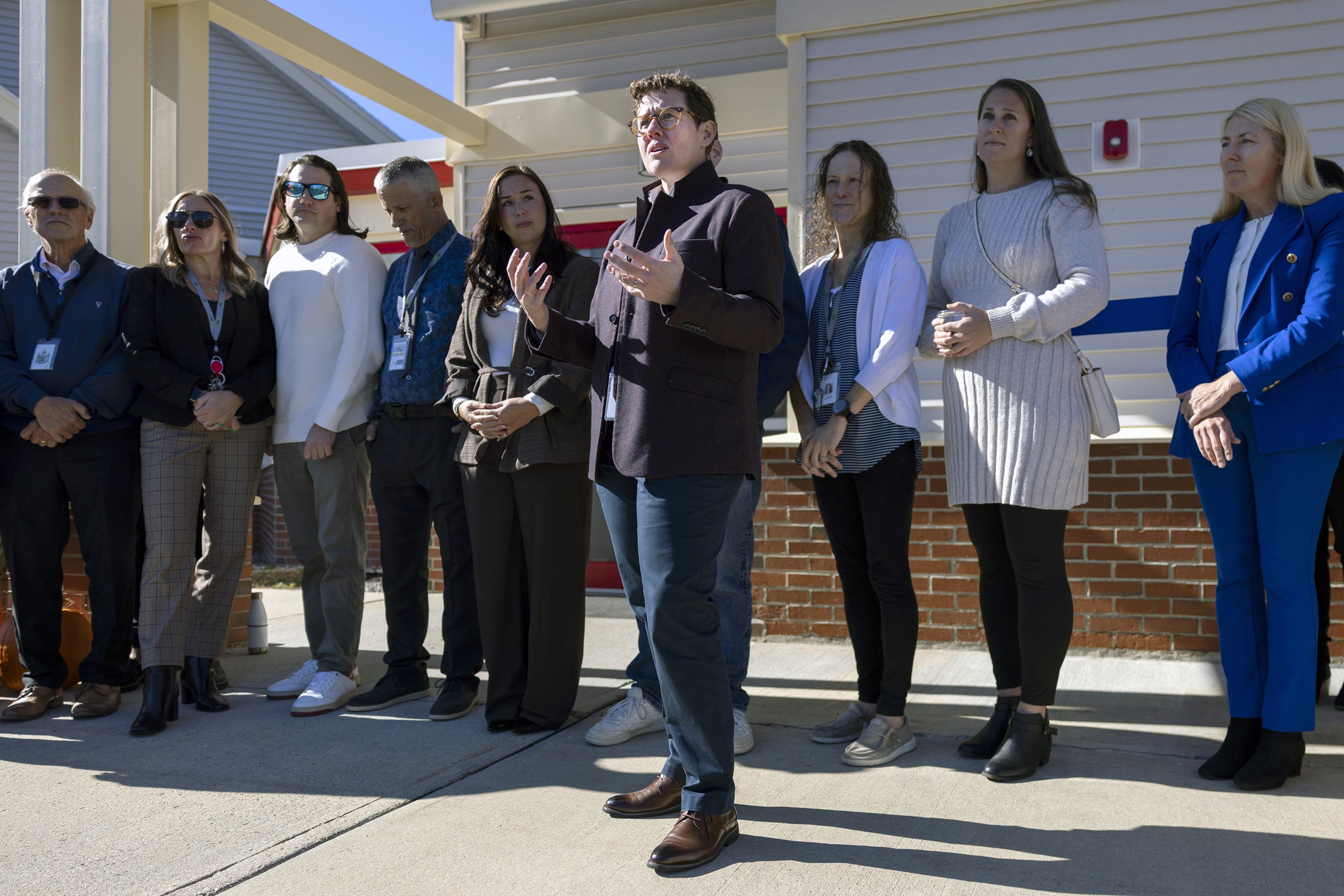
Kerry MacDonald, executive director of Guardian Recovery Pine Tree, speaks at the opening of the new recovery center in Westbrook on Oct. 27. (Brianna Soukup/Staff Photographer)
The Maine Department of Health and Human Services did not make anyone available for an interview. It pointed to the opening on Tuesday of Guardian Recovery Pine Tree in Westbrook as a sign that the landscape of substance use treatment providers in Maine continues to expand. Pine Tree is adding dozens of beds for people at various stages of drug recovery and moving a lot of its current operation from Portland.
A majority of their clients are not typically on MaineCare and Executive Director Kerry MacDonald said that is essential to its financial viability. Guardian Recovery is a nationwide company and has the infrastructure to be able to accept private insurance plans, which pay higher rates than MaineCare.
Advertisement
“The breadth of services and level of care we provide would be difficult to sustain on MaineCare,” MacDonald said.
The same is true in York County, said Manager Greg Zinser. The county is getting ready to open a recovery facility in Alfred this winter. He said of the 12 new detox beds, he anticipates the county will be able to have about five people with MaineCare. In Augusta, Housing For God’s Children is planning a detox center for MaineCare recipients, Gary-Allen said.

Related
Maine drug overdose deaths continue to decline so far this year
Smith said the Mills administration is encouraging Milestone and Wabanaki Public Health & Wellness to set up the private insurance infrastructure, but Sockabasin said it’s not a simple process and her team would need support to do it.
Villanueva said Milestone is seeking to get credentialed with one private insurance company, though she worries that if she uses a bed for someone with private insurance, that’s one less MaineCare patient who would have access.
“It would end up meaning that we would not be able to serve as many of the underserved population,” she said.
People in the Bangor area who work in recovery say Wabanaki Public Health & Wellness has been crucial in part because it serves the northern part of the state, which was particularly hard hit in the opioid epidemic. It’s also the only one offering Wabanaki ceremonies and values to native and non-native people in Maine, Sockabasin said.
Advertisement
She said her organization created services like detox and recovery homes in order to be part of a statewide solution to make sure that people with substance use disorders had a place to go. Now she’d like to see more of a statewide response to the organization’s funding shortage.
“It should be the strategic solutions that we’re creating together,” she said.
NO FUNDING LINED UP
Many recovery services in Maine have received temporary funding from opioid settlement funds, which are being paid by pharmaceutical companies and retailers that helped fuel the crisis. In 2024, Wabanaki Public Health & Wellness was awarded $1 million split over two years to provide treatment services.
Patricia Kimball, chair of the Maine Recovery Council that hands out half of the state’s opioid settlement funds, said its mission “is not to rescue organizations in financial trouble.” Though she said in her opinion as a private citizen, “the state needs to figure out a way to support detox,” because the MaineCare rate isn’t high enough to provide proper staffing.

Related
Maine governments have spent less than 15% of their opioid settlement funds
Sockabasin said federal grants that her organization has gotten in the past to fund recovery services are less available in the Trump administration. A federal grant that helped pay for two recovery houses ended in July, she said.
The result, she said, is that Wabanaki Public Health & Wellness has had to focus its fundraising on addiction treatment services that can’t pay for themselves. That means they have less money for basic human needs work like maternal-child healthcare and regular bottled water deliveries to hundreds of homes on the Passamaquoddy Reservation, where the tap water is rarely safe to drink.
Advertisement
“There are many people who think we can figure our way out of this dilemma. We can’t. Recovery services that don’t have a solid financial footing will go away,” Sockabasin said.
She added, “There have been points in our history when we felt like things were dangerously close to closing and we found a way through. And this time, we haven’t found a way.”
Some small recovery providers have closed or suspended some services, including the Together Place in Bangor and a Volunteers of America community center in Belfast.
Smith, the state opioid response director, said as he ends his tenure this winter, he worries about sustainability but he believes people in Maine’s recovery movement won’t let it fall apart. Gary-Allen, the statewide advocate, said she hopes the next governor will focus on stabilizing services that were built up under Mills, including small community recovery centers.
One of them, the Coastal Recovery Community Center, said it has no funding lined up for 2028.
“It’s a great big question mark,” said Director Erin Hustus. She said it’s possible the organization will have to go back to relying solely on volunteers and scale back the hours it’s open.
“Drugs will always be available,” she said. “But if we could all work together to fix the situation, then hopefully it wouldn’t be as bad.”
Editor’s note: Lisa Sockabasin serves on the community board for the Maine Trust for Local News, which owns the Portland Press Herald.
Copy the Story Link
Tagged: addiction and recovery, drugs, Health, health care

Rachel Estabrook is an accountability reporter at the Portland Press Herald. Before joining the Press Herald in 2026, Rachel worked in the newsroom at Colorado Public Radio for 12 years. She's originally. More by Rachel Estabrook