

How to make your Maine garden a pollinator’s paradise


A butterfly on an echinacea. (Photo by Tom Atwell)
Some new visitors to our home look puzzled when I point to the garden in front of our house and say, “This is our vegetable garden.”
It is where we grow a lot of our food — strawberries, raspberries and asparagus that comes back every year, alongside the tomatoes, peppers, cucumbers, squash, potatoes, peas, beans, beets, carrots and more that we have to replant each year.
But we also planted flowers over the years, including poppies, foxglove, sunflowers, rudbeckia, hibiscus, echinacea, cardinal flower and more. They either self-seed and come back, or are perennials.
Anyone who is compulsive about neatness and straight lines would not like this garden. We love it.
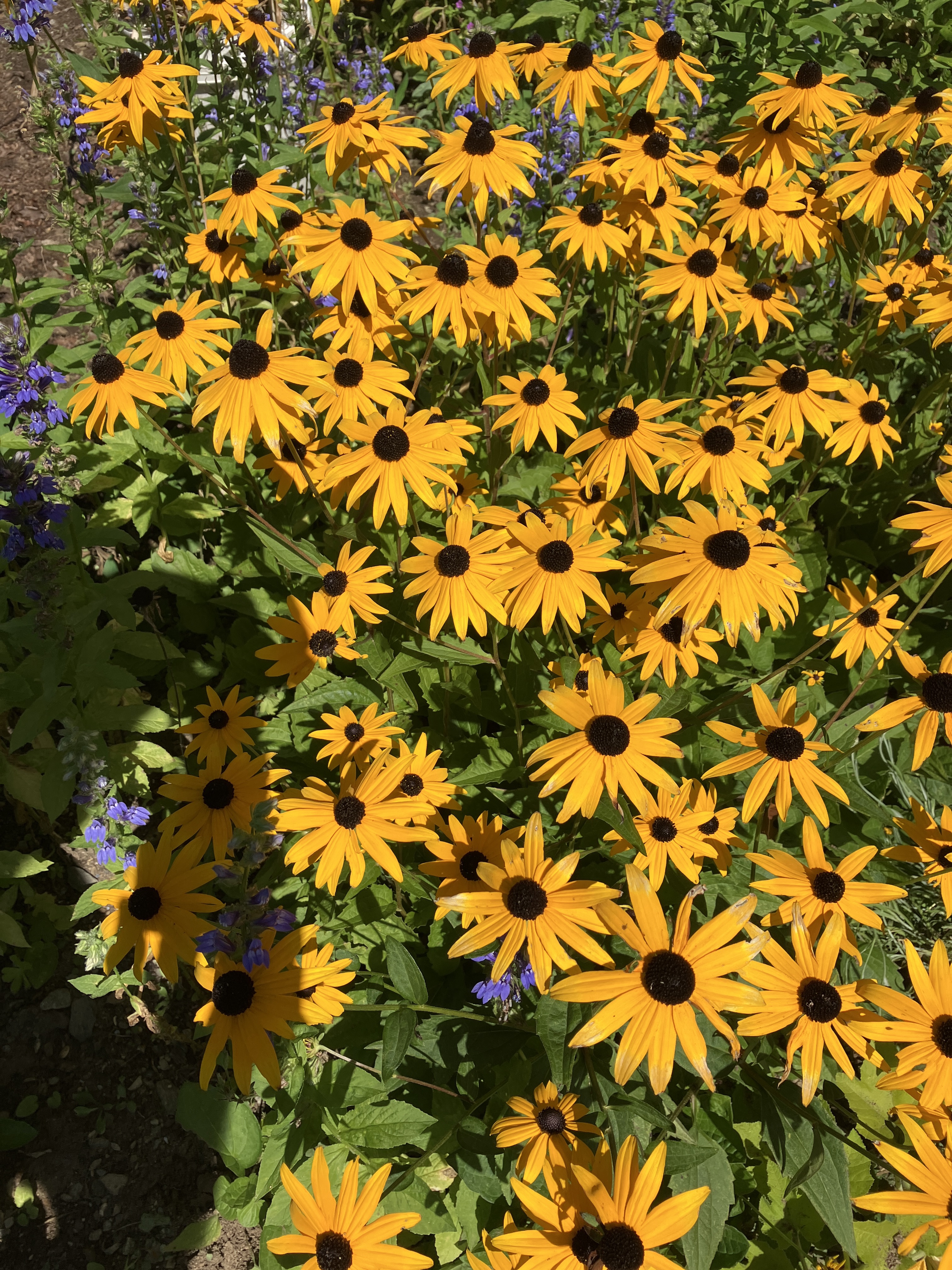
A bed of rudbeckia. (Photo by Tom Atwell)
It came about by accident. Early on, I would rent a rototiller and till the entire garden at the start of the season. Later I used a U-Bar, a tool with four strong tines and handles longer than I am tall, to till the garden, avoiding the asparagus and strawberries.
Then my wife, Nancy, urged me to stop doing that so the self-seeding flowers would grow. We’ve loved the result.
Advertisement
While some of the self-seeded plants are native, many, such as poppies and baby’s breath, are not.
The natives we have include asters, black-eyed Susan or rudbeckia, columbine, baptisia, lobelia or cardinal flower, echinacea and Joe Pye weed, native irises, cranesbill or hardy geraniums, catmint or nepeta, physostegia and violets. For violets, we have a few in the vegetable garden but more in the backyard area we call our lawn and mow a few times a year.
We also have jack-in-the-pulpit and trillium, but they are in a shady area we are rewilding.
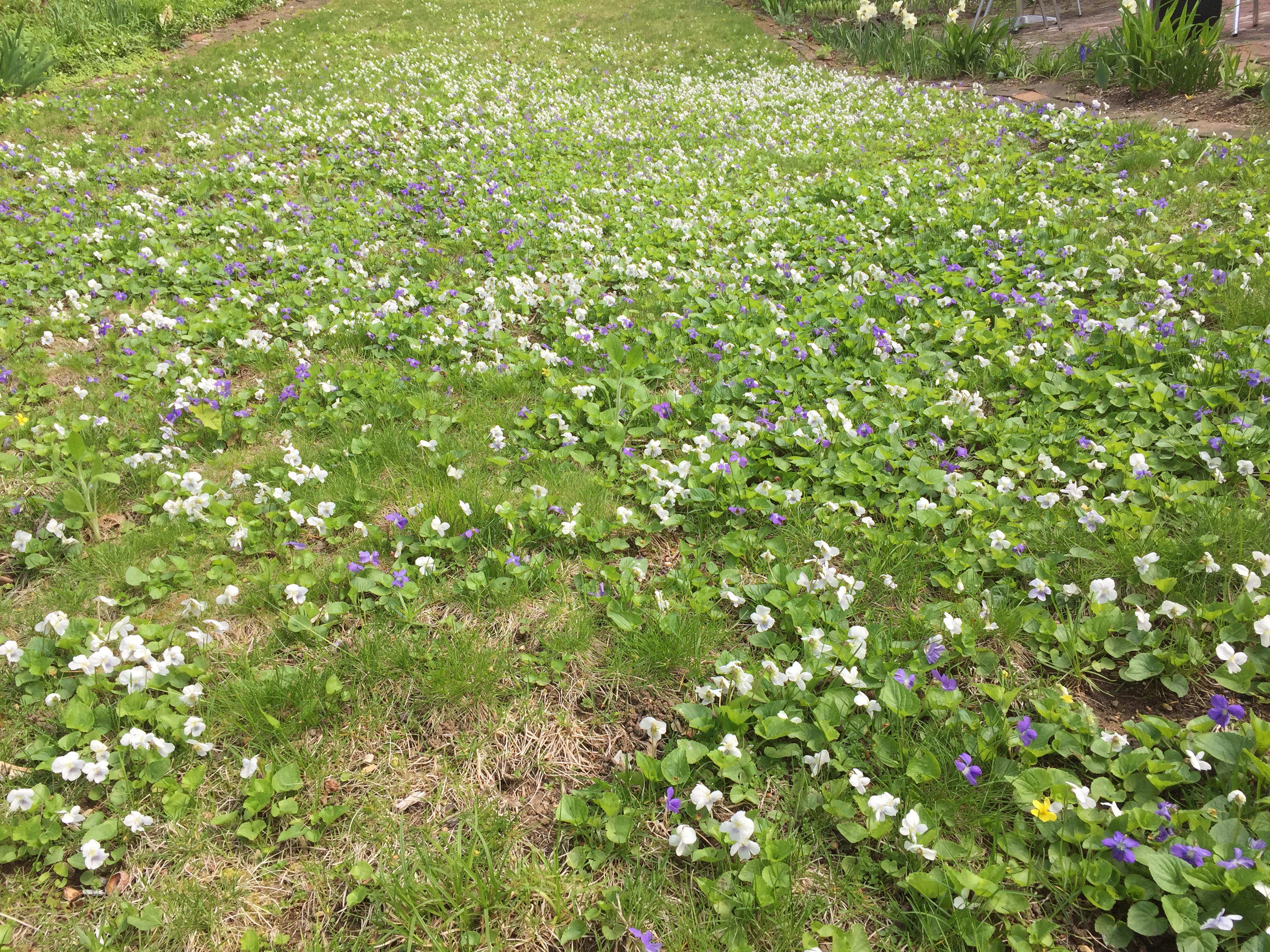
Violets spread in Tom Atwell’s backyard. (Photo by Tom Atwell)
We also have many non-native plants that various bees, moths, beetles and butterflies enjoy feeding on. That is to be expected because one of the prime pollinators we want to assist, honeybees, come from Europe and are not native to America.
The native bees that most people can recognize are bumblebees, which is a broad family with 16 different species in Maine, according to a publication by UMaine Cooperative Extension.
To feed pollinators and for your own viewing pleasure, a garden should have flowers in bloom from as early in the season and as late in the season as possible. This can be accomplished by having many different types of flowers, but also by growing plants whose blossoms last a long time.
Advertisement
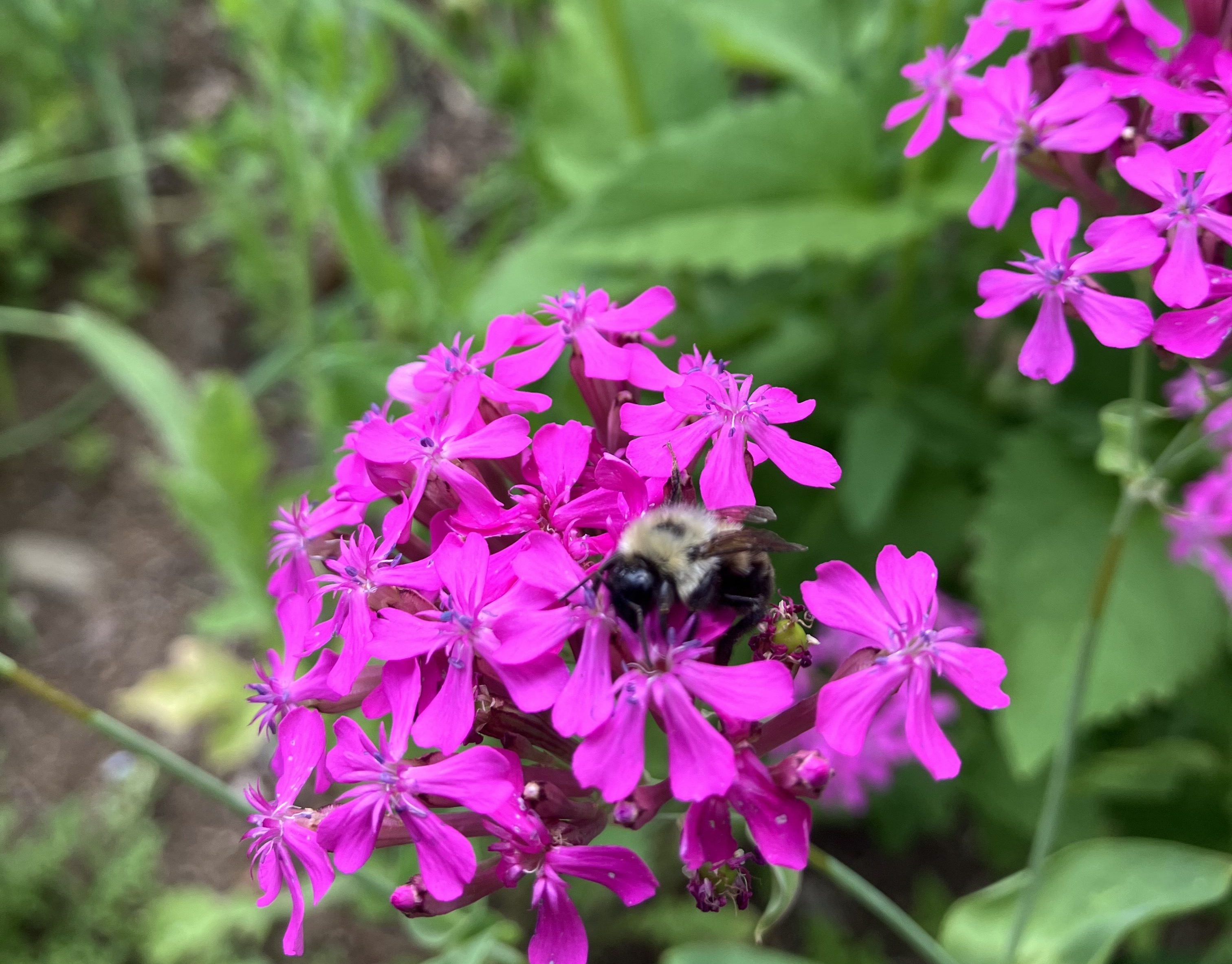
Plant plenty of flowers to attract pollinators like honeybees. (Photo by Tom Atwell)
Catmint, echinacea, rudbeckia and coneflower all fit that category.
One reminder for beginning gardeners, you can’t have plants self-seeding in your garden if you deadhead (garden-speak for cut off) faded blossoms.
Those blossoms, which were created after pollination by wind or insects, still need time to develop the seeds that will fall to the ground and sprout into plants the following season. You also shouldn’t pick up or rake the areas under the plants.
Some people even oppose raking leaves in the fall, but we do rake what we call the lawn. Most of our leaves blow off the vegetable garden. We do have about a third of our property that is woods or the area we’re rewilding, so we don’t rake there.
Thankfully, we have several months before we have to think of any raking.
SOME GARDEN TASKS TO GROW ON:
Keep up with the harvest. Strawberries are at their peak now and need to be picked (and maybe frozen or preserved as jam).
Advertisement
Start deadheading to help additional blooms.
Snug Harbor Farm in Kennebunk has a few workshops coming up, including one on designing a succulent container and another on designing floral arrangements.
Skillins Greenhouses is bringing in some Georgia peaches. It’s too late to order for the first delivery, but they have more coming in July.
For now, mostly your task is to sit back and enjoy what is usually the best time of the year.
From The Garden is published in partnership with Eat Drink Lucky and sponsored by Skillins Greenhouses.
Copy the Story Link
Tagged: environment, gardening