
Yarmouth marina businesses worry about dam removal impact


Yankee Marina and Boatyard on July 29. Yarmouth marina businesses are concerned about the removal of the dams on the Royal River. (Shawn Patrick Ouellette/Staff Photographer)
Removal of the Bridge Street dam began in Yarmouth last week, an effort to restore the natural flow of the Royal River as it moves through town and out into the harbor that leads to Casco Bay.
While many Yarmouth residents and environmental advocates are excited about this change, which has been two decades in the making, concerns also bubble downstream.
Business owners along Yarmouth’s harbor, which sits next to Interstate 295 where the Royal River widens, are worried about how their costs may rise if the undammed flow deposits more sediment into the harbor.
The town and project partners have taken action to financially protect the businesses, but the owners say they are not satisfied with the process or the reassurances they’ve received.
“We just don’t want to get hurt,” said Deborah Delp, the president of Yarmouth’s Yankee Marina and Boatyard.
Related
Royal River dam removal begins in Yarmouth
Three businesses on the Yarmouth harbor — Yankee Marina and Boatyard, Yarmouth Boat Yard and Royal River Boat — have to regularly dredge around their slips so the water remains deep enough for boats. The dredging, which the businesses do every 10 years, can cost each business between $300,000 and $800,000. An extra dredge would cost them over $1 million combined, the businesses estimated. If the rate of sedimentation increased and they had to dredge more frequently, it could be financially disastrous, said Delp.
Advertisement
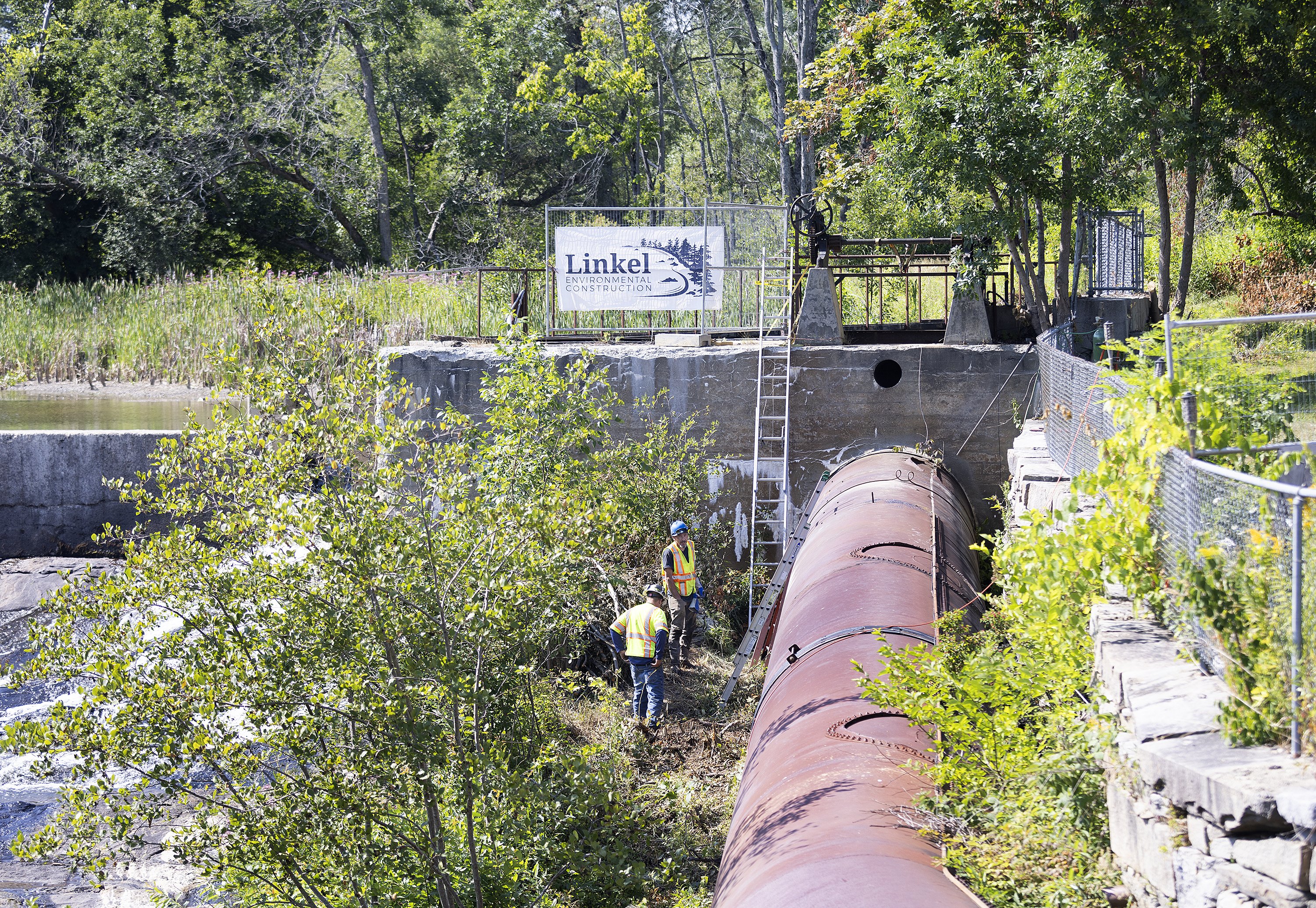
Contractors have begun the removal of the Bridge Street dam on the Royal River in Yarmouth. (Derek Davis/Staff Photographer) Purchase this image
Additionally, the marina businesses must have the dredged sediment tested, and disposing of potentially contaminated sediment is a more extensive and expensive process.
Prior to the dam removal beginning, engineers and hydrologists evaluated the volume of sediment in the riverbed and tested it. It was contaminated, they reported. Some portion of the sediment will be hauled out of the river, but there’s not much sediment in the river overall, said Andrew Fisk, the northeast regional director of American Rivers, which is leading the dam removal.
The owners remain wary.
“What if you miss a pocket of contaminant?” asked Delp, who lives in Pownal.
The Bridge Street Dam, which is being removed this summer, sits downstream of the Elm Street Dam. It’s only after the Elm Street Dam is taken down, likely next summer, that any increased flow of sediment may become apparent, said businesses and dam removal leaders.
The marina businesses, led by Delp, have been trying to raise these concerns to the Yarmouth Town Council for years as the dam-removal project has progressed. In response, the town announced last week that it secured an environmental liability insurance policy with a total coverage limit of $8 million that would cover potential harm to the businesses.
Advertisement
While the town sought out the insurance policy, American Rivers fully funded the policy premium of $44,200. The conservation nonprofit also secured funding for the dam removal.
Related
Yarmouth nonprofit preserves a piece of working waterfront
The policy, which is held by the town, classifies sediment as a pollutant and covers either excess or contaminated sediment in the harbor causing demonstrable financial damage to a businesses. If an extra dredge were needed up to 10 years following the dam removals, it would be covered by the policy, as would the dredging of sediment found to be contaminated, which could cost up to $6 million.
“The town has done a remarkable job of listening and addressing concerns, and that insurance policy is one part of the solution to address people’s concerns,” said Fisk. “It’s a novel idea.”
Any party, not just the three marina businesses, alleging harm from the altered Royal River sediment may submit a claim to the town for up to 10 years as part of the policy. The insurer would independently investigate claims.
Despite this assurance, business owners said they are less than satisfied. They had been considering their options and were presented this by the town without much input or choice, according to Delp. Prior attempts to raise concerns or be valued as a stakeholder were dismissed, she said.
“We just kind of were shut out of the conversation at the end,” said Delp, who also said she was pleased with the $8 million in coverage despite concerns about how it came together.
Advertisement
Steve Arnold, owner of Yarmouth Boat Yard, said his concerns, which he said he struggled to be able to share with town leadership, are not assuaged by the insurance policy. He thinks its duration should be longer than a decade and its coverage limits should be higher, in case the businesses have to do more than one additional dredge.
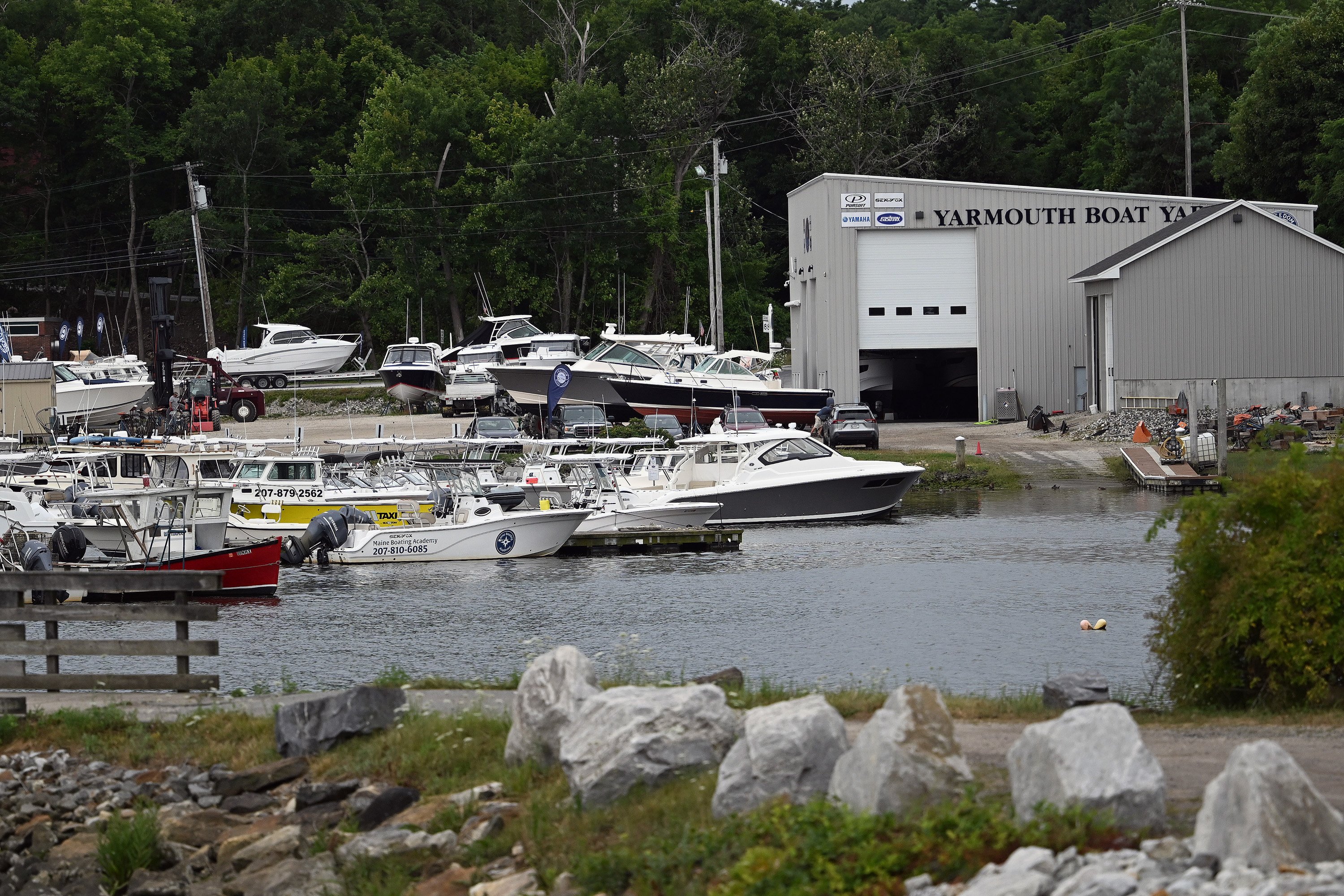
Yarmouth Boat Yard on July 29. Yarmouth marina businesses are concerned about the removal of the dams on the Royal River. (Shawn Patrick Ouellette/Staff Photographer)
“As the business owners, it was not an inclusive-type environment. An insurance policy doesn’t go far enough,” said Arnold, who lives in Cumberland.
Former Town Council Chair Karin Orenstein said she tried to solicit input from the marina leaders about what would best suit their needs. She didn’t hear back from them about whether they approved of the insurance policy, so the town had to move forward without them, she said.
“It was not a perfect process, not as collaborative as I would have liked it to be. But I still feel that we set out to do the right thing and we accomplished it,” said Orenstein.
Orenstein ended her term on the council in June, and Town Manager Scott LaFlamme left his position at the end of that month. Both crucial to organizing the dam removal project, they wanted to get the protection for the businesses in place while they still could, said Orenstein.
“We were at the point where we had to make a decision and put something in place before we were out of the picture,” said Orenstein.
As the first pieces of concrete are towed away from the Bridge Street Dam, both the town and businesses will have to wait until after the Elm Street Dam is removed to see what comes down the river.
“Honestly, time will tell,” said Arnold. “Hopefully we don’t need to use it.”
Copy the Story Link
Tagged: dams, marine industry, Royal River

Sophie is a community reporter for Cumberland, Yarmouth, North Yarmouth and Falmouth and previously reported for the Forecaster. Her memories of briefly living on Mount Desert Island as a child drew her. More by Sophie Burchell