With an eye toward pedestrian safety, Portland may try to set its own speed limits


Traffic on Forest Avenue in Portland on July 29. (Brianna Soukup/Staff Photographer)
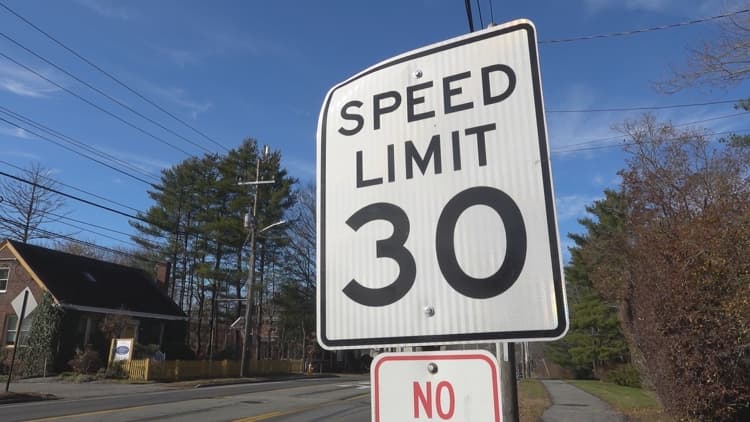
Officials in Portland have asked city staff to identify a legislative pathway for lowering speed limits on major arterials like Forest and Brighton avenues ― a decision now made at the state level.
The move, coming this week out of the sustainability and transportation committee, is the latest in a City Hall effort to reduce pedestrian fatalities and serious injuries in Portland. It could also have statewide implications for how speed limits are set.
Portland’s bicycle and pedestrian advisory committee, which has advocated for several initiatives in the wake of five pedestrian deaths in 2025, has driven much of the discourse over speed limits, arguing that lowering vehicle speeds is the most cost-effective and impactful way to address road safety.
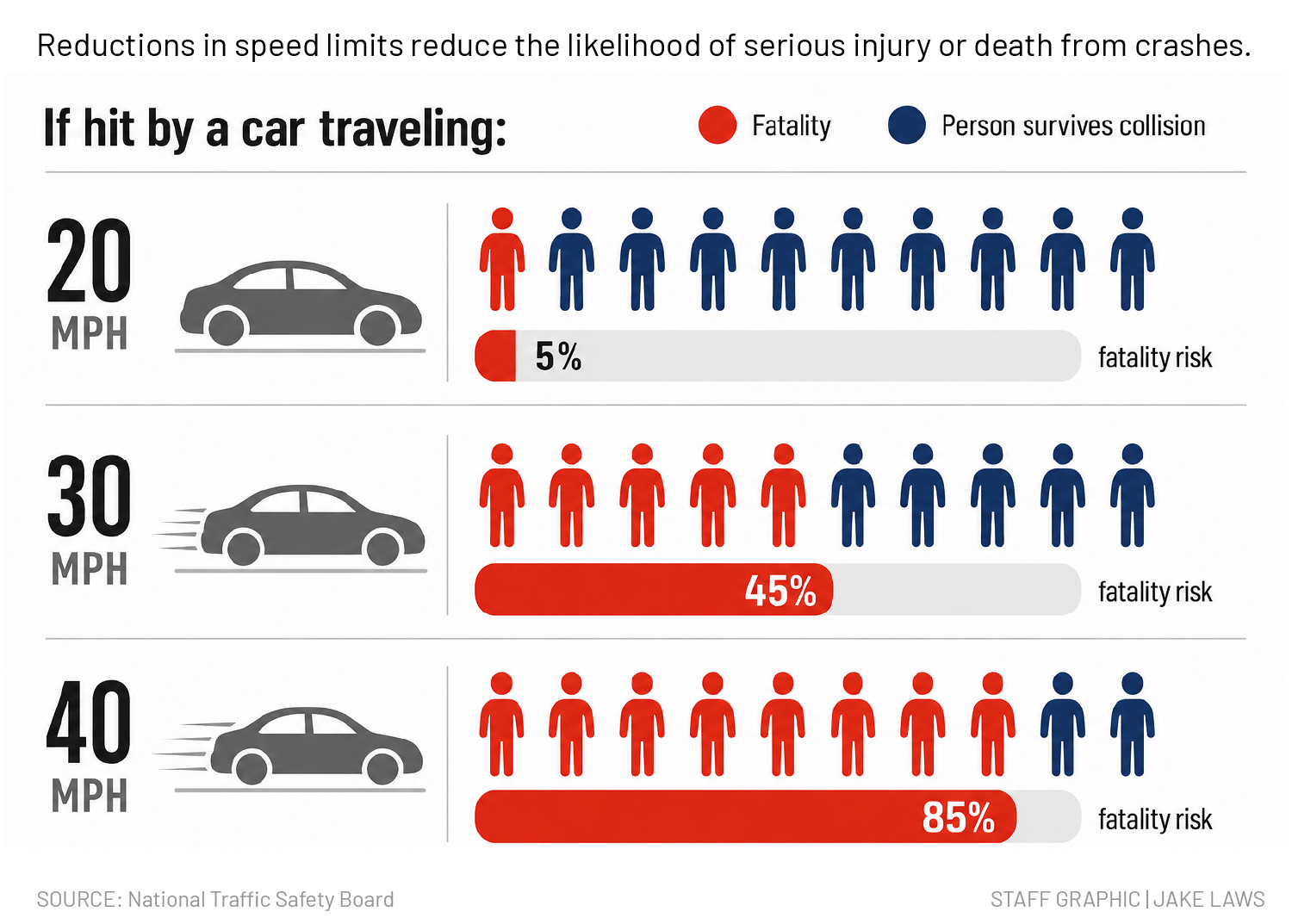
The group believes Portland, like other major municipalities including New York City, should set a citywide speed limit of 25 mph — unless otherwise posted, as with 15 mph school zones — and local officials appear to agree that the most impactful change would be reducing speeds on major roads like Franklin Street and Forest and Warren avenues, where the bulk of serious injuries and deaths occur.
The power to set speed limits on those roads, however, lies with the Maine Department of Transportation, which is reluctant to change how it approaches setting speeds.
Under state law, MaineDOT is the controlling authority for state-owned highways, major-minor arterials, and collector roads, which are ranked 1-4 in the department’s five-priority classification system.
Advertisement
State law allows local speed-setting authority for priority 5 roads, which are neighborhood streets that are mostly already set at 25 mph.
Priority 1 roads in Portland include Interstate 295 and corridors like Brighton and Forest avenues, while priority 2 includes roads like Congress Street and Warren Avenue. According to city data for 2025-26, nearly 70% of traffic fatalities and serious injuries occurred on priority 1-2 roads.
According to a staff memo, MaineDOT leadership has communicated a willingness to support statutory changes that would give municipalities speed setting authority for priority 3-4 roads (places like Marginal Way and Veranda Street), but would not support any statutory changes related to priority 1-2 roads.
Related
Could reducing speed limits to 20 mph make Portland roads safer?
In a statement Friday, MaineDOT reiterated this position, saying it is open to working with Portland to discuss the potential for giving the city the authority to set speed limits on priority 3 and 4 roads.
“These roads are considered collector roadways and generally connect local streets with major transportation roads (priority 1-2) that move people and goods regionally or statewide,” the statement said. “We welcome additional conversation to determine how this might work in practice.”
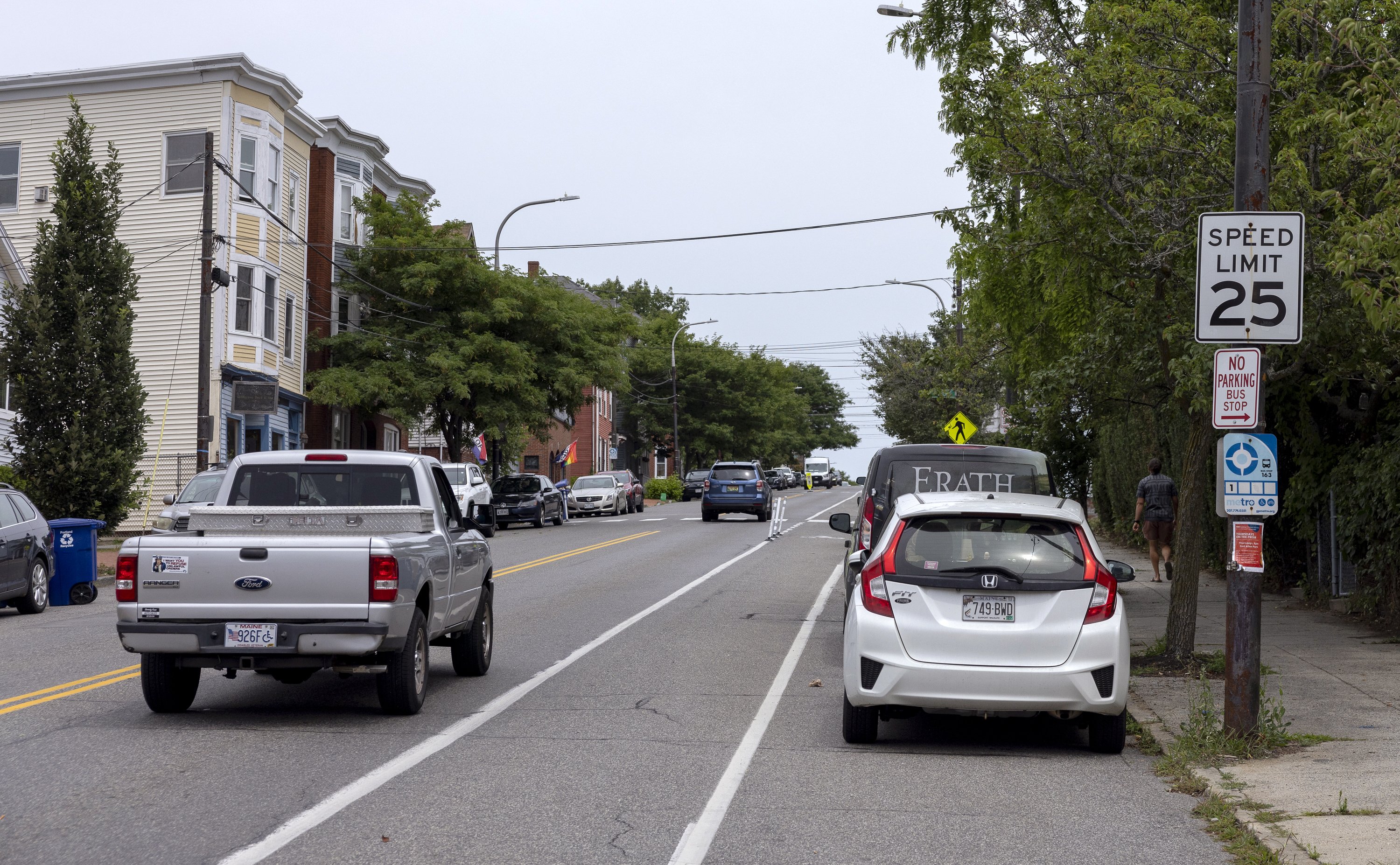
A speed limit sign on Congress Street in Portland’s East End is seen July 29. (Brianna Soukup/Staff Photographer)
Councilor Anna Bullett, who made the motion Tuesday to direct staff to pursue legislative avenues, acknowledged that the effort is a “much more uphill challenge,” but said “it makes the most sense if what we’re trying to do is stop pedestrian fatalities from occurring.”
Advertisement
Bullett also said that although she is interested in potential changes to state law around speeds on state roads, she is sensitive to the city’s partnership with MaineDOT on several ongoing projects, including the Franklin Street redesign.

Related
Portland City Council advances plan for overhauling Franklin Street
Assistant City Manager Greg Jordan said if the city does pursue a legislative pathway for priority 1-2 roads, MaineDOT would not support it, and he believes it would have a tough time making it through the Legislature.
The last time there was an attempt to change the law, which was spearheaded by Sen. Rick Bennett in 2023, MaineDOT opposed a bill that would have given municipalities the authority to lower speed limits to 20 mph on a single street without taking speed-setting responsibility for all roads in the municipality.
The bill was supported by several organizations, but the city of Portland was the only municipality that testified in favor of it.
Myles Smith, chair of the city’s bicycle and pedestrian committee, said in the end, he doesn’t care who holds the authority to set speed limits. He just wants the decisions to be based on best practice and available data, and he believes MaineDOT’s system is extremely flawed.
“(MaineDOT) has chosen to implement an opaque, onerous, slow, and ineffective policy which takes years to enact,” Smith said, referring to the multi-year speed studies required for changing a speed limit.
Advertisement
He said the state’s system uses an algorithm that still classifies some roads in the urban core as suburban, making them eligible for speeds of up to 45 mph. These include western Commercial Street, outer Congress Street, Marginal Way, Franklin Street, and Riverside Street, several of which have seen recent fatalities.
Other streets classified as urban, which are supposed to have maximum speed limits of 30 mph, are set at 35 mph. They include Baxter Boulevard, Canco Road, Allen Avenue and Auburn Street.
The committee says there is now solid evidence to support lower default speed limits based on data from places like New York City, Seattle, Madison, Wisconsin and Somerville, Massachusetts, which have had similar default limits in place for years.
Smith said based on guidance from the National Association of City Transportation Officials, which is recognized by the federal government as a valid basis for state DOT’s and municipalities, the recommended speed limits on almost all Portland streets would be 25 mph or 20 mph.
Portland has seen three pedestrian deaths this year. In June, Jason Ayers was struck and killed at the intersection of Preble Street and Marginal Way. Nichele Roakes, 57, was killed Aug. 25 in a hit-and-run on outer Forest Avenue, and Abdulrahman Mohammed, a 13-year-old Scarborough student, was killed on Warren Avenue in September.
Related
How a dangerous Portland intersection is sparking debate about pedestrian safety
Under MaineDOT’s system, Warren Avenue is considered a “suburban minor arterial,” which is eligible for a 45 mph speed limit, but it’s currently posted at 35 mph. Smith and the committee believe it should be 25 mph.
Advertisement
During Tuesday’s meeting, city staff said they are developing a list of streets that should have reduced speed limits, which could be used as a template for future changes with or without changes to the state law.
If the city were to proceed with setting new speeds on several roads, the final cost is uncertain. City staff told the committee that changing most residential streets from 25 mph to 20 mph would cost about $750,000 to install about 1,400 signs, and that’s after conducting required speed studies.
Jeremiah Bartlett, a traffic engineer for the city, said another complication would be that Portland would be making these changes outside of what neighboring municipalities are doing, meaning motorists could have conflicting rules across city lines.
“It would have to be set up in such a way that it’s clear to the traveling public what these speeds are and what the expectation is,” he said.
Copy the Story Link
Tagged: Portland City Council

Andrew Rice is a staff writer at the Press Herald covering the city of Portland. He's been working in journalism since 2012, joining the Sun Journal in 2017, then the Press Herald in 2026. He lives in. More by Andrew Rice