Why Democrats might need Republicans to fix Maine’s $1.3B budget gap

As the state faces down a $1.3 billion structural gap in the state budget, Democratic leaders say they have a plan.
They will look to resume bonding and to change state income tax brackets to address the projected shortfall — the largest in more than a decade.
But to once again issue bonds for things like transportation, school construction and housing, Democrats will have to work with Republicans — at least in the state House of Representatives — since it takes a two-thirds vote in each chamber to send a bond question to voters. Democrats hold a supermajority in the Senate, but not in the House.
Related
How candidates for Maine governor say they’ll fill a projected $1B budget gap
After years of largely being sidelined during the budgeting process, Republicans might once again have a seat at the table.
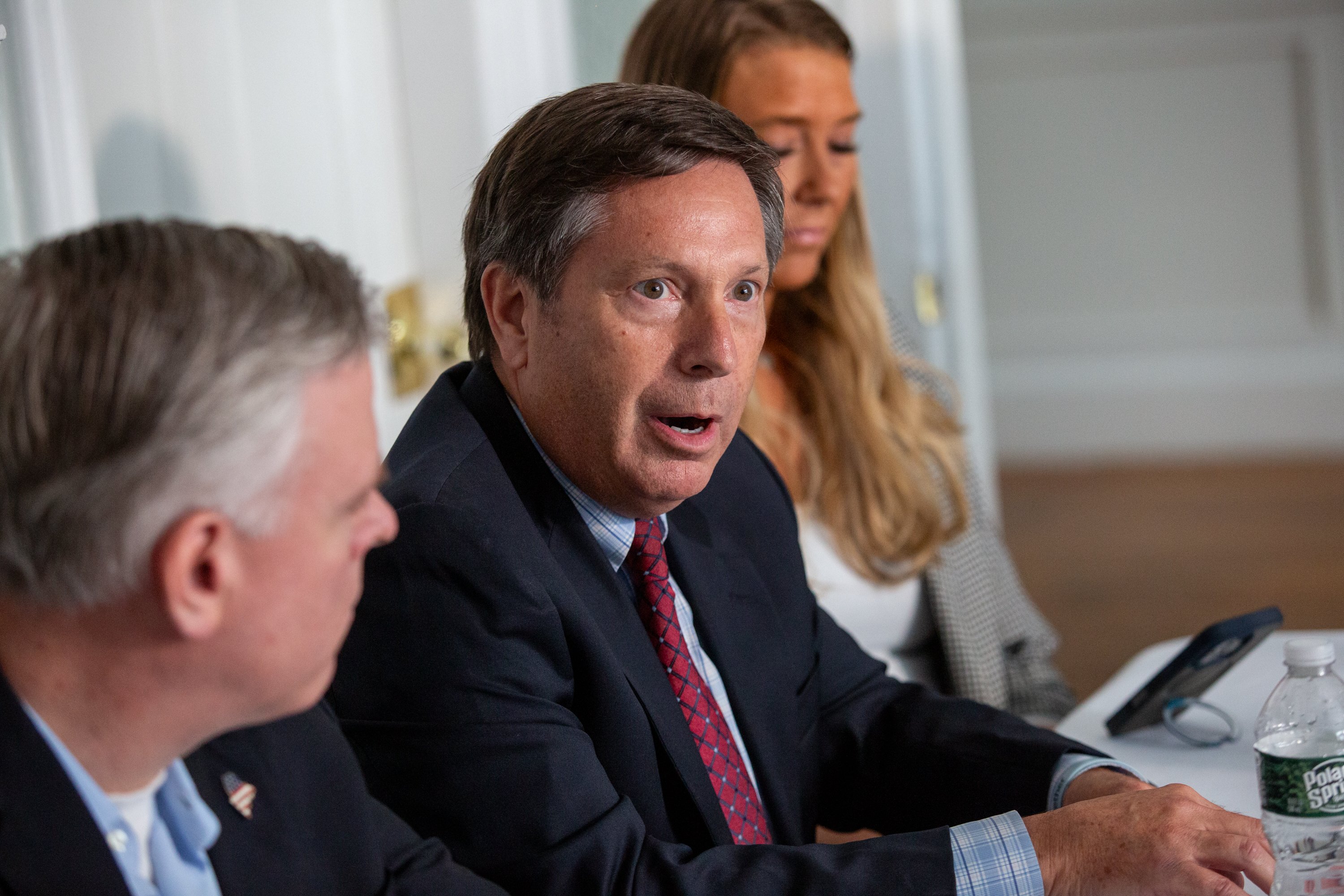
Ken Fredette, the incoming House minority leader from Newport, speaks during a September roundtable hosted by Republican congressional candidate Paul LePage in Lewiston. (Libby Kamrowski Kenny/Staff Photographer)
Incoming House Minority Leader Ken Fredette, R-Newport, said Republicans will try to find common ground on the budget, but they will continue to “fight tooth and nail” for the party’s values, which includes opposing broad-based tax increases.
“I think out of the gate, we are not going to be the party of ‘no,'” Fredette said.
Advertisement
The state’s four-year budget forecast, released in October, predicted a nearly $1.1 billion deficit in the state’s General Fund and an additional $256.7 million shortfall in the Highway Fund by the 2028-29 biennium.
That estimate contains caveats. It is based on March revenue projections and assumes that all programs will be funded at their statutory level, which is not always the case. Revenue projections are regularly updated.
But whether the state’s estimate proves correct or not, Gov-elect Hannah Pingree acknowledged that the budgeting challenge is real. Her predecessor, Gov. Janet Mills, has asked state agencies to tighten their belts. And a spokesperson for Mills said the outgoing governor is currently working on a budget framework for the incoming administration to consider.
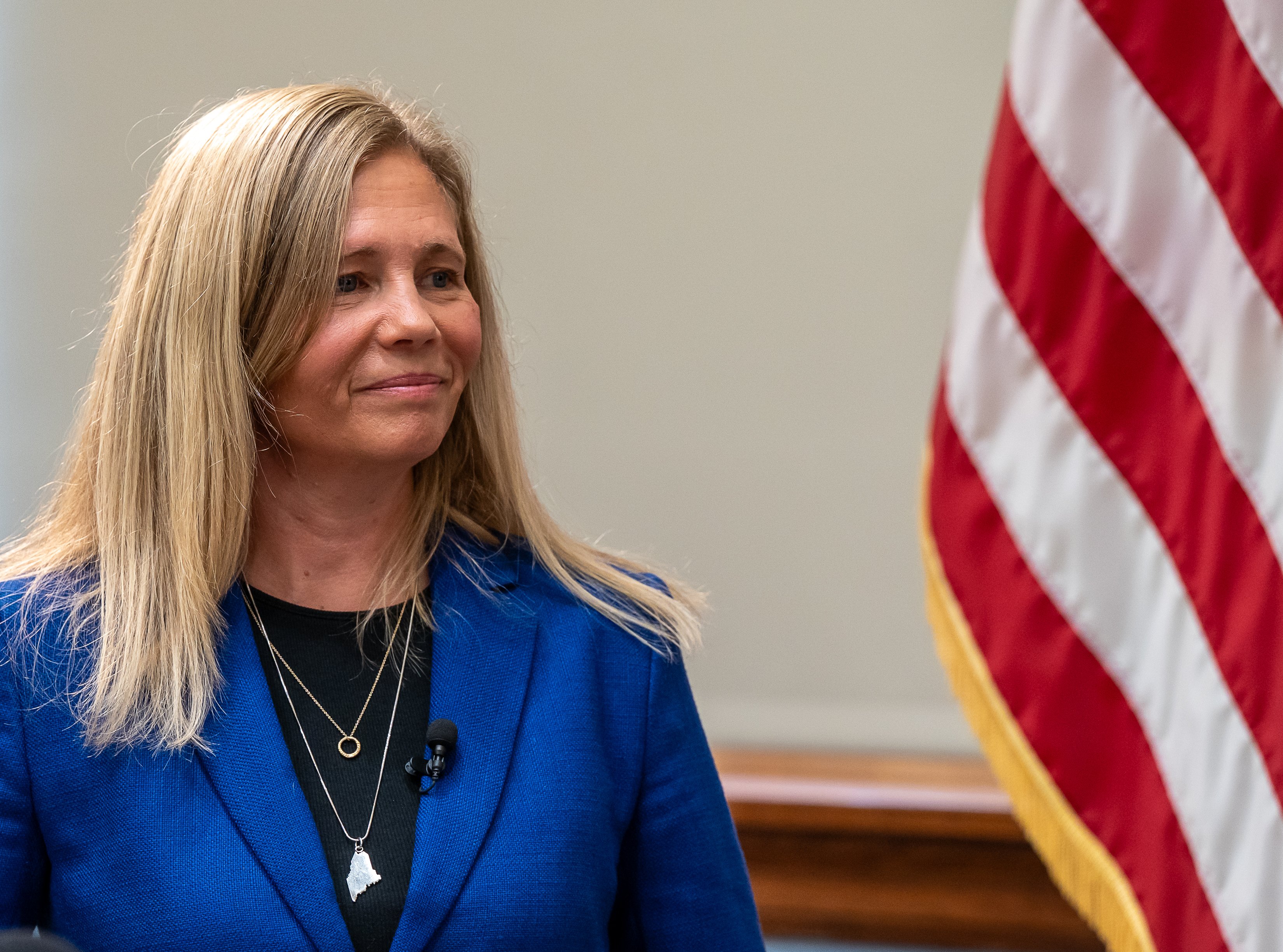
Gov-elect Hannah Pingree at the State House in Augusta this month. (Russ Dillingham/Staff Photographer) Purchase this image
“We’re going to have to make hard choices,” Pingree said in an interview last week. “You have to be realistic and reprioritize.”
Pingree has not yet said how she will close the gap. Her first two-year budget is due in early February. And that spending plan must also address steep Medicaid cuts enacted by Republicans in Congress that won’t take effect until next year.
Pingree said that she will prioritize healthcare and housing, while working with both parties to address the structural gap. The governor-elect expects the lack of new state revenue to be an incentive for the parties to work together.
Advertisement
“I actually think this context of not having a lot of additional revenue is going to bring people to the table in a different way than we’ve seen play out over the last four years,” Pingree said.
Republicans were sidelined in budget negotiations during Mills’ tenure because Democrats used their majorities in both chambers to pass baseline budgets to remove any possibility of a government shutdown. Such shutdowns are a major source of leverage for a party in the minority. Robbed of that leverage, Republicans had little influence on the state’s financial outlook.
Related
Maine Legislature passes budget over Republicans’ objections
But Republicans might get to have more of a say this year.
As they await Pingree’s first budget, Democratic legislative leaders say they want to resume bonding to help free up money in the budget. House Speaker Ryan Fecteau, D-Biddeford, said the state is primed to begin borrowing again, pointing to its high bond rating, which can lead to lower interest rates.
“It’s a real shame that we’re not using our high credit rating,” Fecteau said.
Bonds have long played a role in state spending. But in recent years, lawmakers have resisted sending many to voters, since the state has been flush with cash because of heavy federal investments since the COVID-19 pandemic.
Advertisement
Fredette said Democrats must change course if they expect Republican support for measures requiring a supermajority, including bonds.
“None of this is done in a vacuum,” Fredette said. “If Democrats are going to go it alone on passing a $15 billion, two-year state budget, it’s hard then to reach out to Republicans and say, ‘Oh, by the way, we’d like your support on bonding.'”
Fredette noted that roughly 80% of state spending goes to education and health and human services programs. He said Republicans would like to see more accountability for spending and outcomes within each department.
“I think there are real concerns about not only the level of spending, but what are the results that we’re getting from those investments,” Fredette said.
But Democratic leaders believe that their expanded majorities were not just a repudiation of President Donald Trump and Republican leadership in Washington, D.C. They believe voters rewarded them for their last eight years in control at the state level.
Senate President Mattie Daughtry, D-Brunswick, noted that her caucus gained a supermajority by picking up Republican-held seats in western Maine. While she’s urging her members to keep the needs and interests of rural voters in mind, Daughtry is not ready to capitulate to the minority.
Advertisement
“I have to know that people are there to operate in good faith and negotiate in good faith,” Daughtry said in an interview last week. “I’m not going to play partisan games.”
Both Democratic leaders pointed to the upending of the 2025 supplemental budget as a reason for their skepticism of Republicans’ willingness to negotiate in good faith.
Related
Republicans in Maine Senate balk at budget compromise
That year, the budget committee recommended a bipartisan spending plan, with the Democrats making concessions on General Assistance and redoubling efforts to root out Medicaid fraud, waste and abuse.
The budget passed with a supermajority in the House, but fell short of that threshold in the Senate because some Republicans opposed it.
That prompted Democrats to pass their own version without those compromises, leading to a delay in much-needed Medicaid payments to hospitals.
Senate floor leaders traded blame. Daughtry accused Republicans of reneging on a deal, while then-Senate Minority Leader Trey Stewart, R-Presque Isle, said he offered no assurances of Republican support.
Stewart did not respond to requests for an interview for this story.
Copy the Story Link
Tagged: hannah pingree, maine legislature, mattie daughtry, ryan fecteau

Randy Billings is a government watchdog and political reporter who has been the State House bureau chief since 2021. He was named the Maine Press Association’s Journalist of the Year in 2020. He joined. More by Randy Billings