

Who pays for search and rescue operations in Maine?


An information sign stands at the Bald Mountain trailhead on May 17. The Bald Mountain Trail in Oquossoc sees frequent rescue calls. (Quentin Blais/Staff Writer)
Earlier this month, four teenagers from New Jersey started a challenging hike on Franconia Ridge in New Hampshire’s White Mountains at 3:30 p.m. on a Friday without headlamps, adequate water or warm layers.
Hours later, as darkness fell, they called for help.
Rescuers from the New Hampshire Fish and Game Department and the Pemi Valley Search and Rescue Team found the hikers, all 18-years-old, at 1:15 a.m. and guided them down the mountain, according to a news release. They arrived at the trailhead just after 9 a.m. Saturday.
“Everybody had to put themselves at risk,” Col. Kevin Jordan of the New Hampshire Fish and Game Department said in an interview Thursday.
The hikers might be required to pay potentially high costs. State law in New Hampshire allows the department to request reimbursement from people who had to be rescued because they were negligent or reckless.
Maine has a similar law, but almost never uses it.
Advertisement
Sgt. Harry Wiegman said the Maine Warden Service responds to between 450 and 500 calls every year for inland searches and rescues. Many involve hikers, but other common calls include people who fall off boats or who are experiencing memory loss.
So where does the money for those responses come from?
The Maine Warden Service gets its budget from the state’s general fund, Wiegman said. Between 2022 and 2024, the most recent data available, the department spent an average of $430,000 each year on search and rescue operations. Local fire departments and other first responders are often also involved in calls for service, which can cost them thousands of dollars annually.
The cost to state and local governments would be higher without skilled volunteers from the Maine Association for Search and Rescue, who work for free and pay for their own equipment.
Related
As the weather warms, Maine rescue workers emphasize hiker safety
Wiegman said the state has the option to bill in cases like the one in New Hampshire. The department did not respond this week to a question about how many times Maine has used that law in recent years, but Wiegman said it is rare.
“We have been pretty conservative with doing that historically,” he said. “The biggest concern was, will that dissuade people from calling if they need help?”
Advertisement
FUNDING MODELS VARY
Unlike Maine, New Hampshire does not get money from the state’s general fund for search and rescue operations. For years, Jordan said, the department paid for those missions with $1 from every ATV, boat and snowmobile registration.
“For a few years, back in 1989, that covered the cost,” he said. “Today, it doesn’t even come close.”
Related
Who foots the bill when Maine responders rescue hikers in unorganized territories?
The department spends nearly $500,000 every year on search and rescue and started dipping into revenue from hunting and fishing licenses to make up the difference, he said. Then, in 2015, New Hampshire launched the Hike Safe card as a way to raise money for those operations.
The card costs $25 for an individual and $35 for a family and is good for one year of outdoor recreation. In 2015, Jordan said, the state raised nearly $75,000 from them. In the last fiscal year, he said, the revenue was more than $440,000 — the highest yet.
The state says people who buy one generally would not need to repay costs if they are rescued, although they could still be liable if they meet the criteria for recklessness or negligence under the law. Jordan said the department has never billed someone who had a card.
Only a few states, including Colorado, have similar programs. Maine does not.
Advertisement
Jordan said the department’s funding model requires alternative revenue sources, and he believes the warnings to hikers about rescue costs are a deterrent to risky behavior.
“We have to pay the bills on Monday when the rescue is over,” Jordan said.
He said New Hampshire bills about a dozen or so people every year for rescue operations — a small fraction of roughly 180 missions the department has in a year.
The rescue from Franconia Ridge is still under review. Jordan said on Thursday that he had not yet seen the report to know what the cost to the hikers could be. Such a bill would need to be approved by him and the New Hampshire Attorney General’s Office, and the hikers would have the opportunity to appeal.
SHORT ON MANPOWER
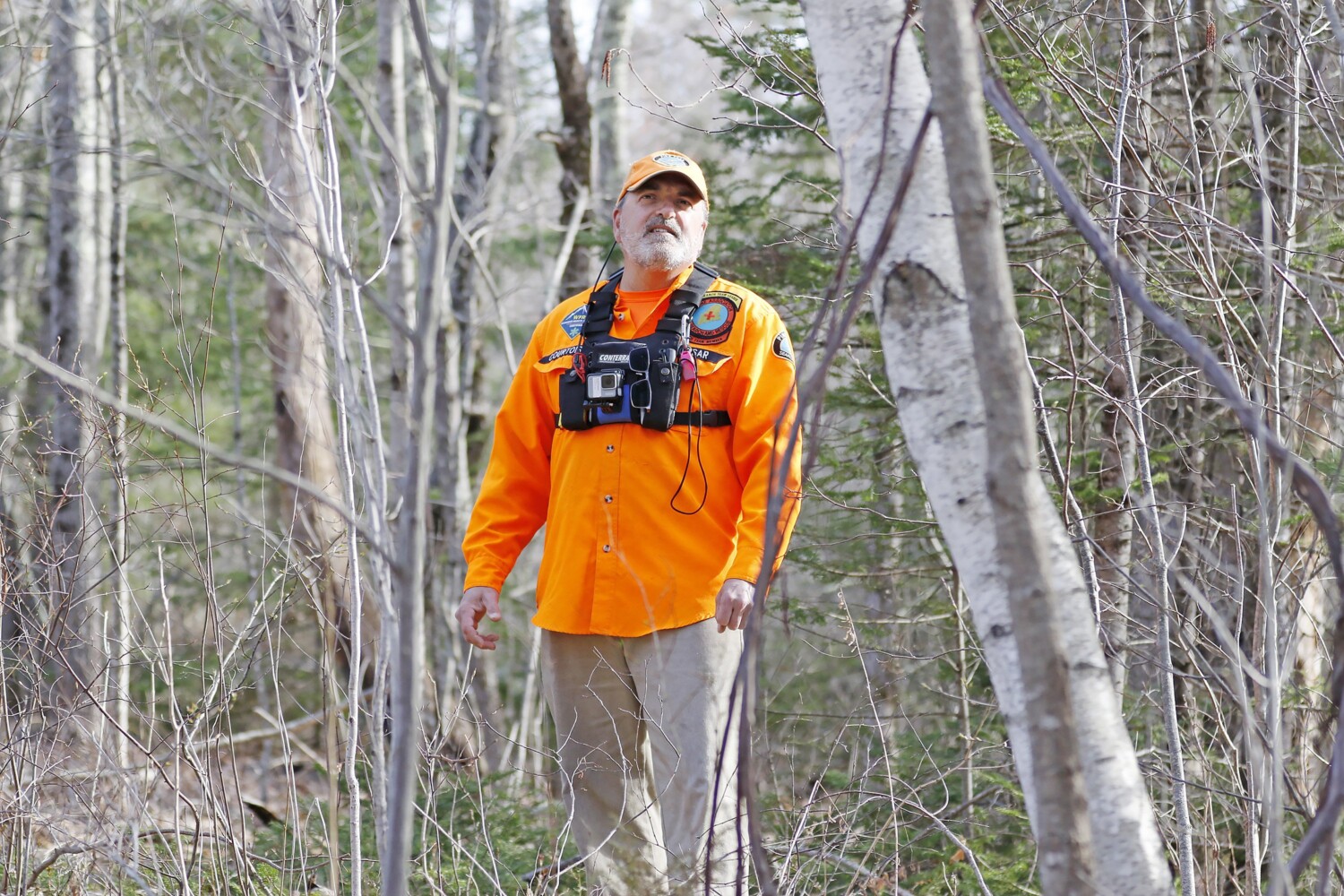
Bryan Courtois of Saco, pictured here in 2022, is president of Pine Tree Search and Rescue, and education director for Maine Association for Search and Rescue. (Jill Brady/Staff Photographer) Purchase this image
Both Maine and New Hampshire rely heavily on unpaid volunteers for search and rescue operations.
“The warden service just doesn’t have the manpower,” said Bryan Courtois, president of Pine Tree Search and Rescue and education director for the Maine Association for Search and Rescue.
Advertisement
Courtois said the association has 12 member teams across the state with varying skillsets. Some are experts in technical rescues using ropes, while others work with dogs or horses.
Related
Search-and-rescue volunteers provide vital assistance to Maine Warden Service
These organizations rely on donations and grants to cover their administrative costs and expensive equipment, Courtois said, and individual members mostly bring their own gear on operations.
“We do it because we want to do it,” he said. “We get some personal satisfaction from a mission well done. We’re going to be paying for these things out of our own pocket. That’s one of the things we accept going into it.”
The Maine Association for Search and Rescue says on its website that it has more than 100 individual members across the state, and Courtois said they could deploy dozens of volunteers at a time.
The state has 95 game wardens when fully staffed, Wiegman said, and more than 20 positions are vacant right now.
“They’re prepared, they’re knowledgeable, they’re effective,” Wiegman said of the volunteers. “A lot of them have wilderness medical training. They have extra supplies. They do a fantastic job for us and for everybody in Maine.”
Copy the Story Link
Tagged: hiking, maine warden service

Megan Gray covers the outdoors and tourism at the Portland Press Herald. A Midwest native, she moved to Maine in 2016. She has written about presidential politics and local government, jury trials and. More by Megan Gray