

What house is Maine’s oldest?


By using dendrochronology, which determines the age of timbers by analyzing the tree rings in the wood, researchers say that the McIntire Garrison House in York is the oldest house in Maine. (Gregory Rec/Staff Photographer)
In our series AskME, we explore your questions about Maine's history, culture and customs. What have you been wondering? We’ll work to find an answer. Explore the questions, or submit your own, at pressherald.com/ask-me.
Maine has one of the oldest housing stocks in the country, with hundreds of structures dating to pre-Revolutionary War times. But which home is actually the oldest?
It’s a little hard to pinpoint exactly when the first residence in Maine was built, State Historian Earle G. Shettleworth says. Countless historic homes have been lost to fires, Colonial warfare or age.
There are remains of a 17th- and 18th-century fishing village in Bristol, hints of 13,000-year-old Paleoamerican life in Rangeley’s western peaks, and an ever-present history of Indigenous tribes occupying Maine’s lands for thousands of years.
But possibly the oldest surviving English home in Maine is the McIntire Garrison House in York.
The dark two-story home sits in a salt marsh, unoccupied as it keeps watch over the York River, as it has for hundreds of years. But even its exact conception date has been debated.
Records show that the McIntire Garrison House was built sometime between 1707 and 1713, though the “legendary traditional date of construction is 1645,” according to an original nomination form that, in the 1960s, earned the house a spot on the National Register of Historic Places.
Advertisement
Related
Read our answers to previous AskME questions
The Old York Historical Society’s Executive Director Catherine Duffy said that date could have been an embellishment to get it into the national registry, or that locals incorrectly estimated the home’s age because dating technology wasn’t nearly as accurate as it is today.

An embellished date listed in a 1960s document led to an incorrect plaque on the side of the McIntire Garrison home. (Gregory Rec/Staff Photographer)
In January 2024, researchers set out to get a final answer through a dendrochronological study, or the science of dating wooden artifacts through tree ring growth patterns. They took core samples from several of the home’s thick timbers and analyzed the rings under a microscope. The results showed that most of the timbers were felled primarily in the winter of 1712, with one piece dating to 1713. A plaque on the side of the home still reflects the nomination document.
The house remained in the McIntire family for more than 300 years until it was handed over to the historical society in 2024.
In the 1660s, Micum McIntire arrived in York County — then part of the Massachusetts Bay Colony — after being deported from England for supporting Scotland during the Third English Civil War, according to state records. He was sold as an indentured servant to work in New Hampshire sawmills, and one in South Berwick. He would stay there until 1668, when he found himself in York’s Scotland district.
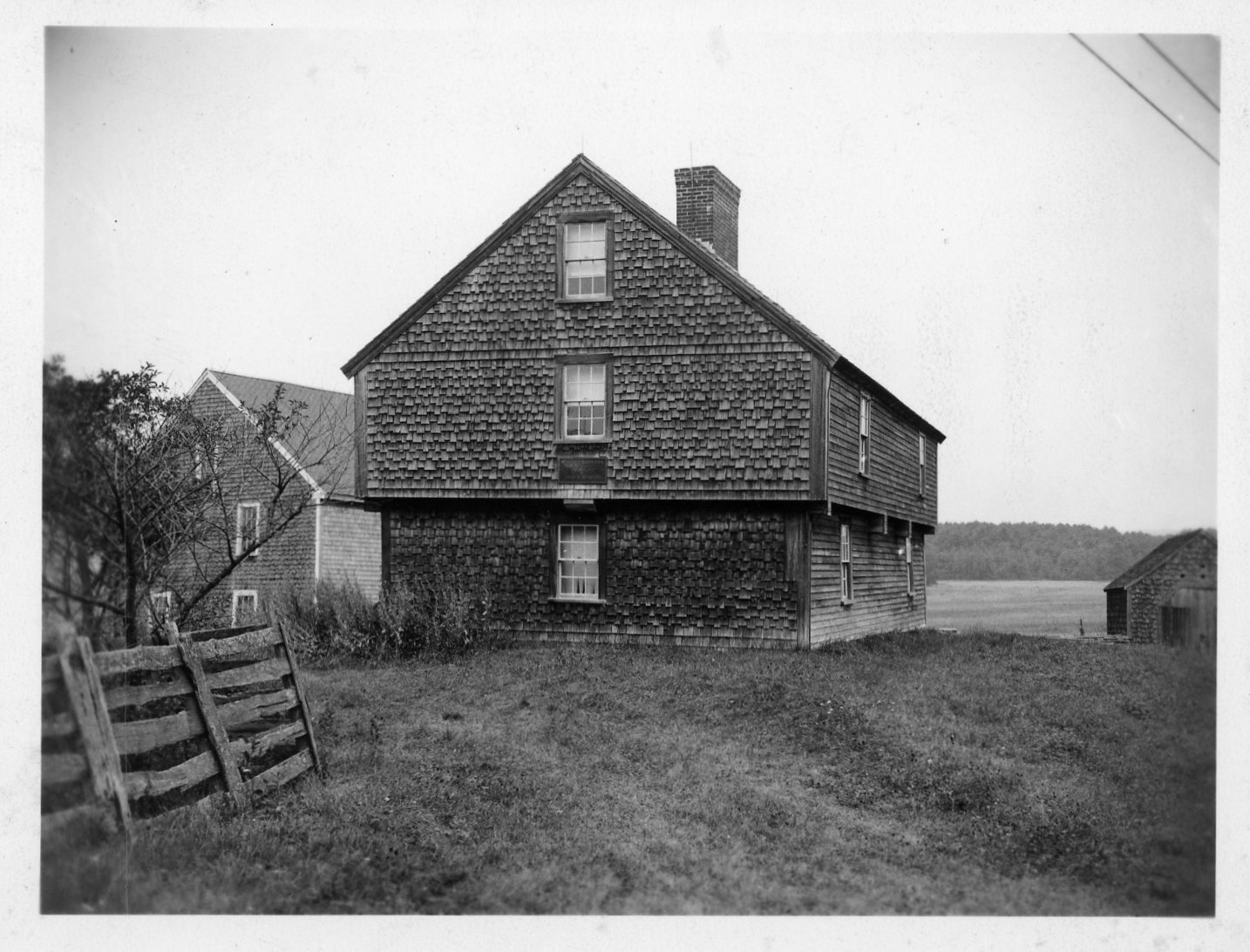
The McIntire Garrison House after its restoration in 1910. (Courtesy of Old York Historical Society)
It was there that he got his first land grant, married his wife, Dorothy, and had three sons, including John McIntire, who later built the home.
The name “Garrison” refers to a style of colonial architecture that originated in New England in the 17th-century. It’s both functional and aesthetic. The second floor juts out slightly over the ground floor, fortifying it against overhead attacks, and giving the home a sleek look.
Advertisement
The building was never officially used for anything other than a family home, though John’s granddaughter several generations later, Mary McIntire, set it up as a museum with classical furnishings and vignettes for visitors. A break-in in the 1960s or ’70s led the family to remove everything from the home.
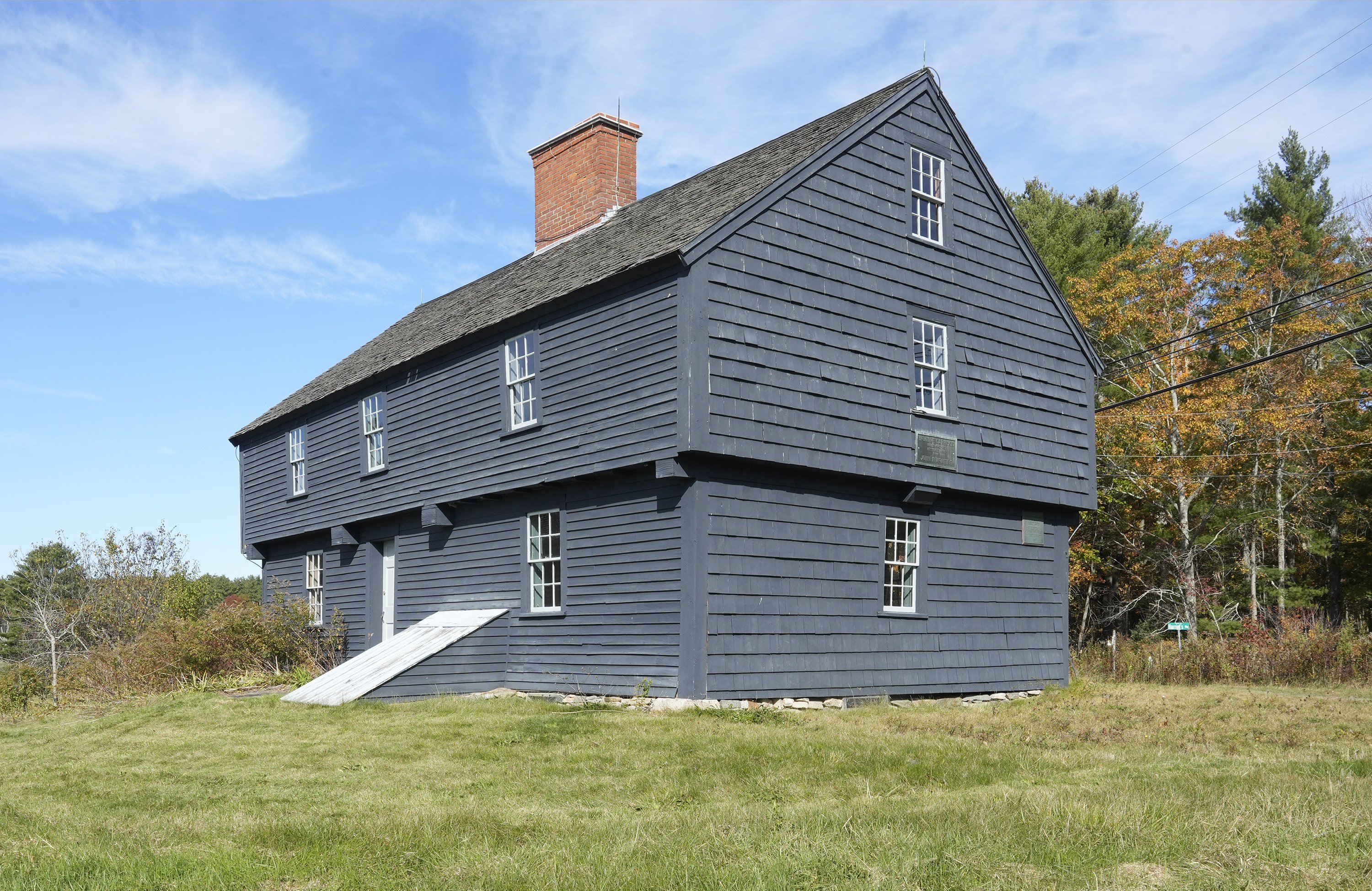
The distinct Garrison style was common in New England in the 17th century. (Gregory Rec/Staff Photographer)
It was used mostly for storage after a restoration in 1910, and the last McIntire moved out in the 1920s. But the family still holds yearly reunions in York, using their ancestral home as a centerpiece for the celebration, Duffy said.
“The fact that it’s remained in the same family line since the early 1700s is a pretty remarkable piece of history on its own,” Duffy said. Only a handful of other historic homes in the state can make that claim.
Duffy says the McIntire Garrison House is unsafe for visitors right now, but crews have been working on restoring it since 2025. They’re starting with a revamp of a cider house behind the residence, which dates to the early 1800s. Eventually, after lots of work in several phases, she hopes it’ll become an interactive glimpse into York’s history.
Archaeologist and Salem State University professor Dr. Emerson Baker says there are some other old houses that could one day dethrone the McIntire Garrison House, once they’re officially dated. Others have tried, like Bray House in Kittery which was proven to be close to 100 years younger than the owner claimed.
For now, the McIntire Garrison House remains the oldest English home in the state.
Got a question about Maine you’d like answered? Ask it here:
Loading…
Copy the Story Link
Tagged: Ask ME

Isabelle Oss is a community reporter covering Kittery, Berwick, North Berwick, South Berwick, York and Ogunquit. Born and raised in Colorado, she moved to Maine in April 2026. Isabelle holds a master’s. More by Isabelle Oss
