

The best experiences with public art can be hands-on and personal | Column

The World Cup, cohosted by our country, approaches its final frenzy with an ominous, sweaty rumbling sound. It is almost as if we do not know exactly what forces we have unleashed, fed, and multiplied. Whole countries are snuffed out on a daily basis, scandals form and dissolve like mushrooms after a rain, and spectators call upon anything they can think of to coax victory into their camp.
When rules, referees, and replays fail to satisfy all these emotions, rational thought surrenders and art enters the game.
Inside Mexico City’s Metropolitan Cathedral of the Assumption of the Most Blessed Virgin Mary into Heaven (1573-1813) — one of the most central, famous, and public spaces in the country — is a life-size plaster figure depicting child Jesus dressed in the Mexican national football team’s uniform: “El Niño Futbolero.”
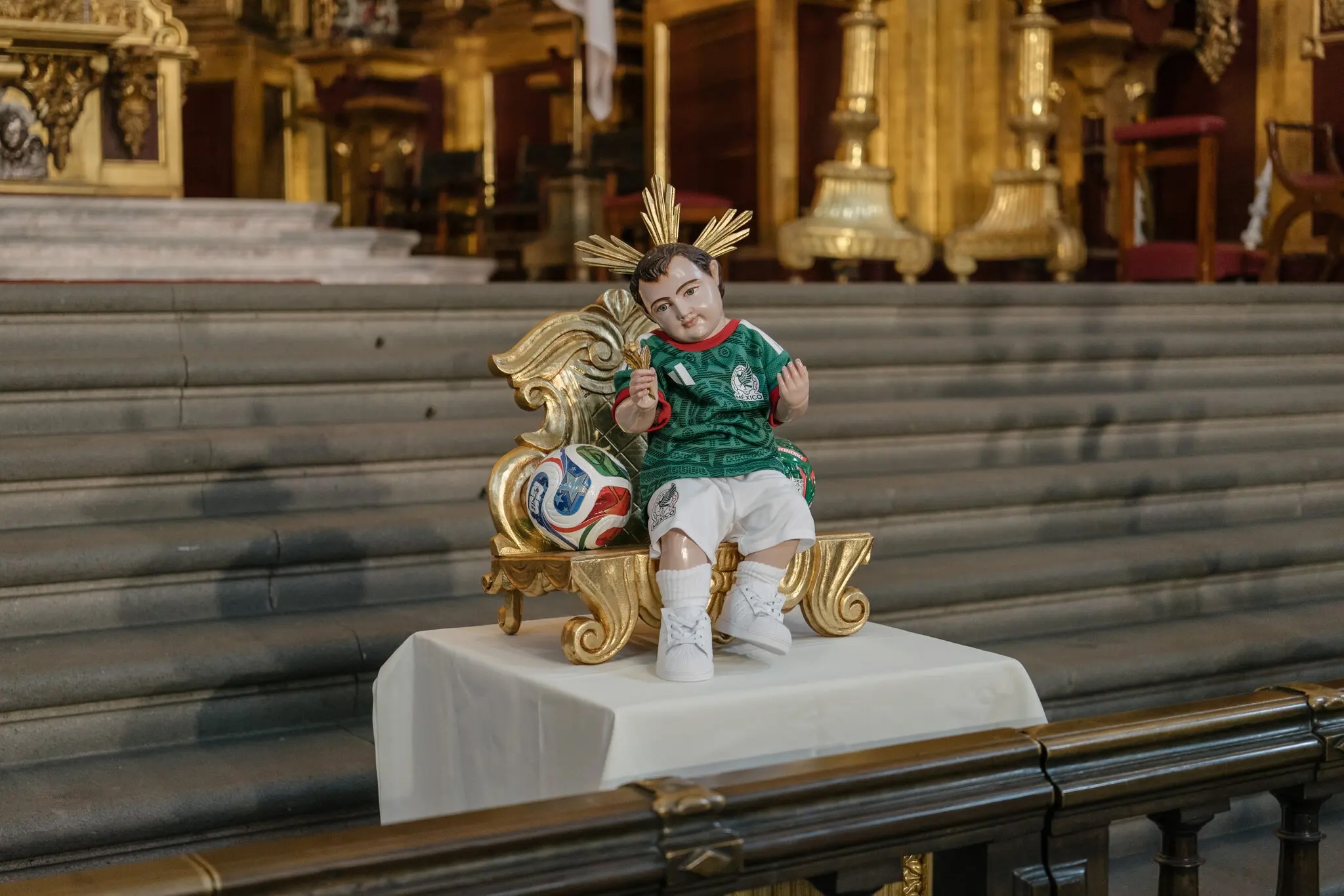
El Niño Futbolero in Mexico City’s Metropolitan Cathedral. (Photo by Jon Calame)
This public art installation was a reply to strong, focused demand from members of the congregation at the outset of the World Cup, according to Canon Manuel Corral Martín. “It’s not disrespectful,” one devout visitor told a reporter from the New York Times. “In other states in the country, for example, baby Jesus is dressed up as a doctor, a teacher and various professions. More than anything, it’s to give thanks and to be on our side.”
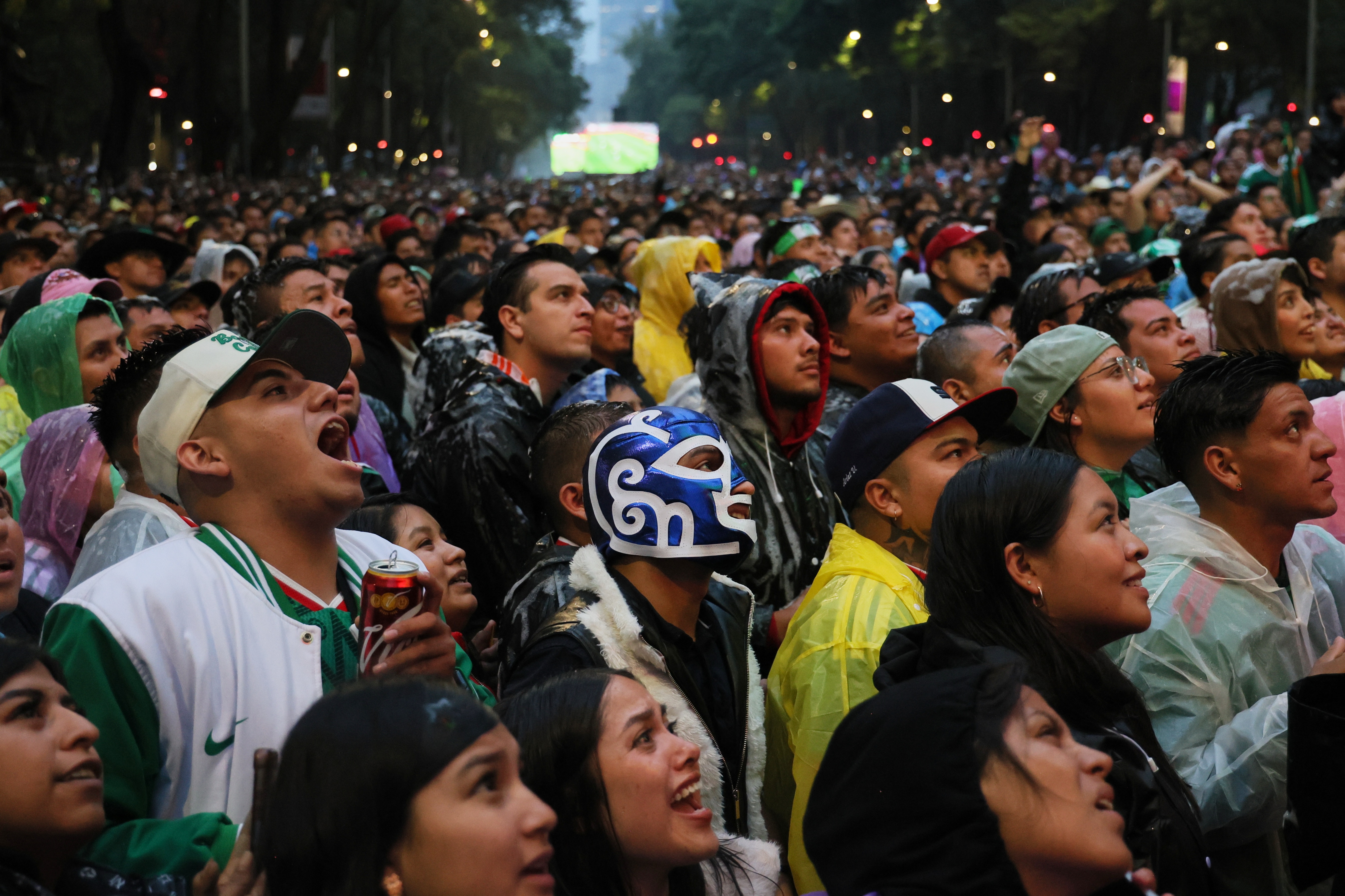
Fans gather to watch the World Cup round of 16 soccer match between Mexico and England in Mexico City on July 5. (AP Photo/Ginnette Riquelme)
This is right, and then some. Dressing up, and dressing under, religious sculptures have a long arc. In the early colonial period in Mexico, indigenous people would hide Aztec figurines under the skirts of full-scale Madonna statues, cleverly worshipping old and new deities at once without risking their necks. More recently, the Candelmas holiday (Feb. 2, our less-fascinating Groundhog Day) encourages worshippers to dress up dolls in a wide assortment of costumes related to normal occupations.
This can make things wonderfully particular, like the effigy of a young Dr. Jesus with his golden stethoscope. How did he make it through medical school so quickly?
Advertisement
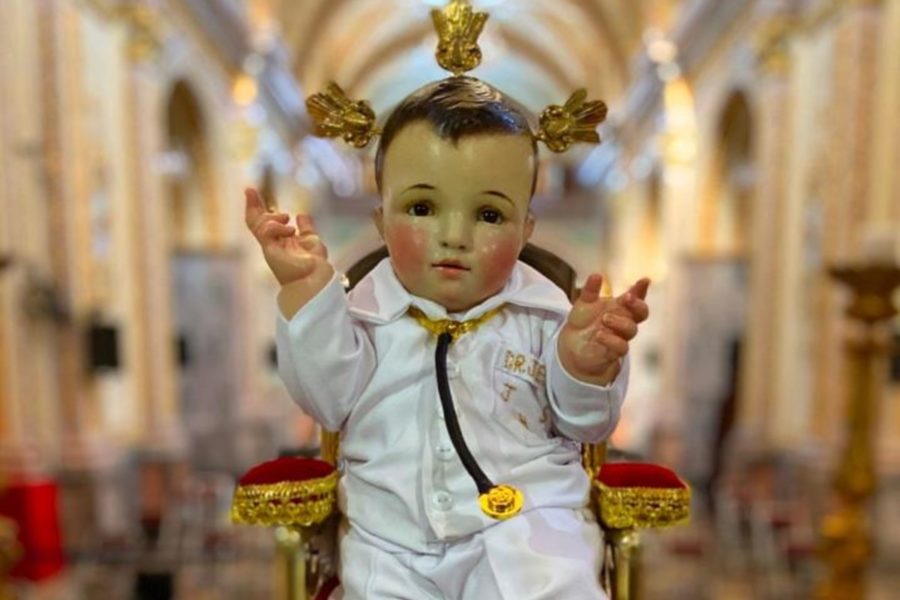
El Niño Jesús Doctor de los Enfermos de Tepeaca, Mexico. (Photo by Jon Calame)
These modified religious figures are practical and excellent; they are not shown here in order to cringe or scoff or sneer. Quite the reverse; in many ways they seem to show public art in its best, most sincere, least snobby form. Since most of us are afraid of sickness and dying, why not let El Niño Jesús Doctor subtract from our minds a bit of that fear? Why not ask for some help winning the World Cup for a team (Mexico) whose “side” is torn and reeling from reckless drug wars?
Since the updated El Niño Futbolero was installed, both Mexico and the United States have been knocked out of the World Cup. Some miracles must simply wait. Yet the athletic Jesus reveals a lot about how we might think about art in its traditional, fundamentally magical potentials. He reminds us, it seems to me, that art is not terribly interesting or powerful when it remains just precious objects hung on a wall.
He proves once more that art attracts us strongly when it promises to pull us into a dialog. I dress you up in a special costume and talk to you, you let Mexico beat England. A crude contract, some might say. Yet might it also be said that any living, active exchange (with an artwork) is better than none. Better than silent, sterile contemplation.
Some rings of the dialog are very wide, very spacious. For example, the Cathedral in which we find this small Football Jesus is situated in the former Aztec sacred precinct of Mexico City, near the Templo Mayor on the northern side of the 16th century Plaza de la Constitución. This is the very center of the city’s historic core. The giant, rather galumphing church was a strong colonial statement which smothered, entirely on purpose, a recently conquered society’s most sacred temples, using their stones as a quarry. The Cathedral remains one expression of a vastly cruel, costly, and lopsided dialog between Aztec and Spanish political systems.
So the soccer-loving boy inside may be felt as an emblem of sect, sport, city, society and nation, while also symbolizing the peculiar ways nationalism and colonialism can collide in time and space. In a world commanded by images on a screen, it is important that this small effigy is stubbornly three-dimensional, local and tucked serenely into a massively over-decorated sanctuary beside the baroque Altar of the Kings. We might enjoy the picture of El Niño Futbolero for a passing moment, but to receive his help, you really just have to be there. He does not do social media.
What a pleasantly broad, varied history this approach to sacred sculpture has had! In the Hindu tradition, sculptures of deities are often fed, clothed, and showered with gifts. These rituals give them life and power. Devotees bathe and purify themselves before presenting the statues with special food, called prasada. (The spirit inhabiting the sculpture ingests the essence of these dishes, leaving the physical remains for worshippers to share.) Chants, music, and incense are offered to further purify the space, preparing it for a transfer of graces. A conversation is begun and nurtured with immense hospitality.
Advertisement
In the Tibetan Buddhist tradition, Ku Nhamja is the practice of “enrobing” statues of the Buddha, bodhisattvas, and other deities in special ritual clothes. This dressing is thought to activate the positive spiritual potential of the figures, coordinated by monks as a demonstration of respect for extremely enlightened beings. Once switched on in this manner, the figures are assumed to be capable of benefitting their human caretakers by offering good karma and aiding meditation.
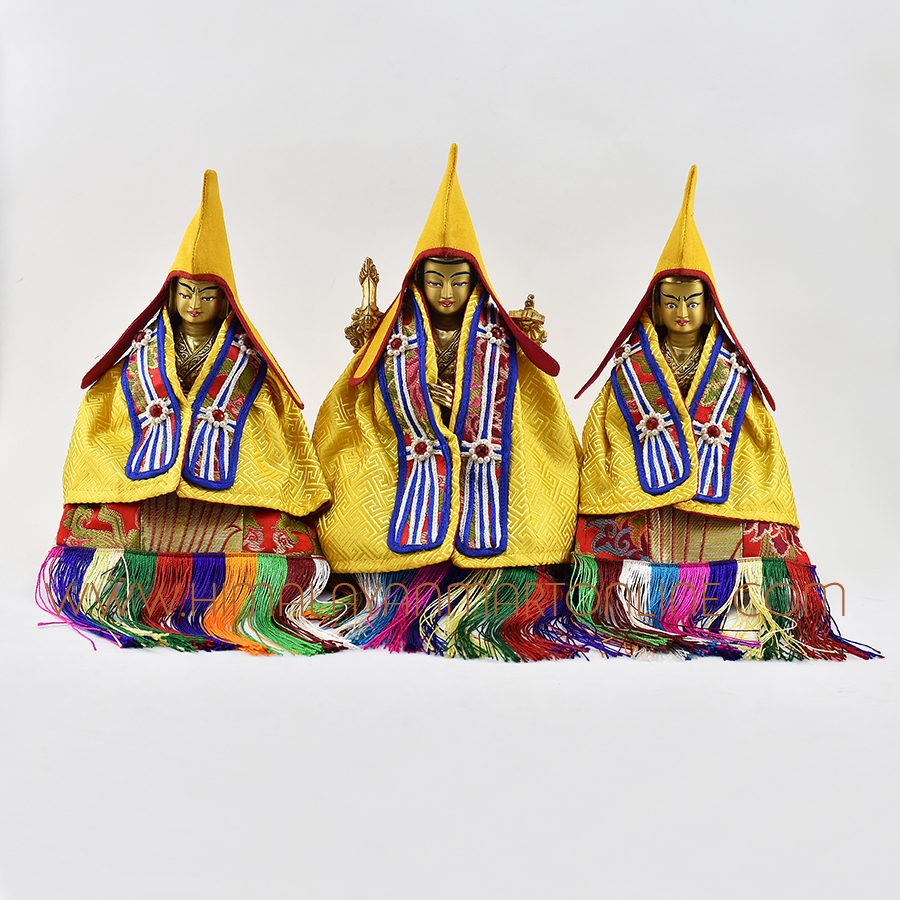
Enrobed Buddhist figures. (Photo courtesy of Jon Calame)
Why stop at food and clothing? Many traditions, Christianity foremost among them, point to situations in which sacred artworks produce precious bodily fluids like tears, oil, sweat, blood, and milk. Notably we have the myth of the miracle of Saint Bernard, a hard-working, studious monk if ever there was one. He was, so the story goes, rewarded for his devotion one night while praying to the image of the Virgin Mary in either sculptural or painted form, depending. So pleased was Mary with his labors that she squeezed her breast to offer a stream of divine milk to the long-suffering Bernard.
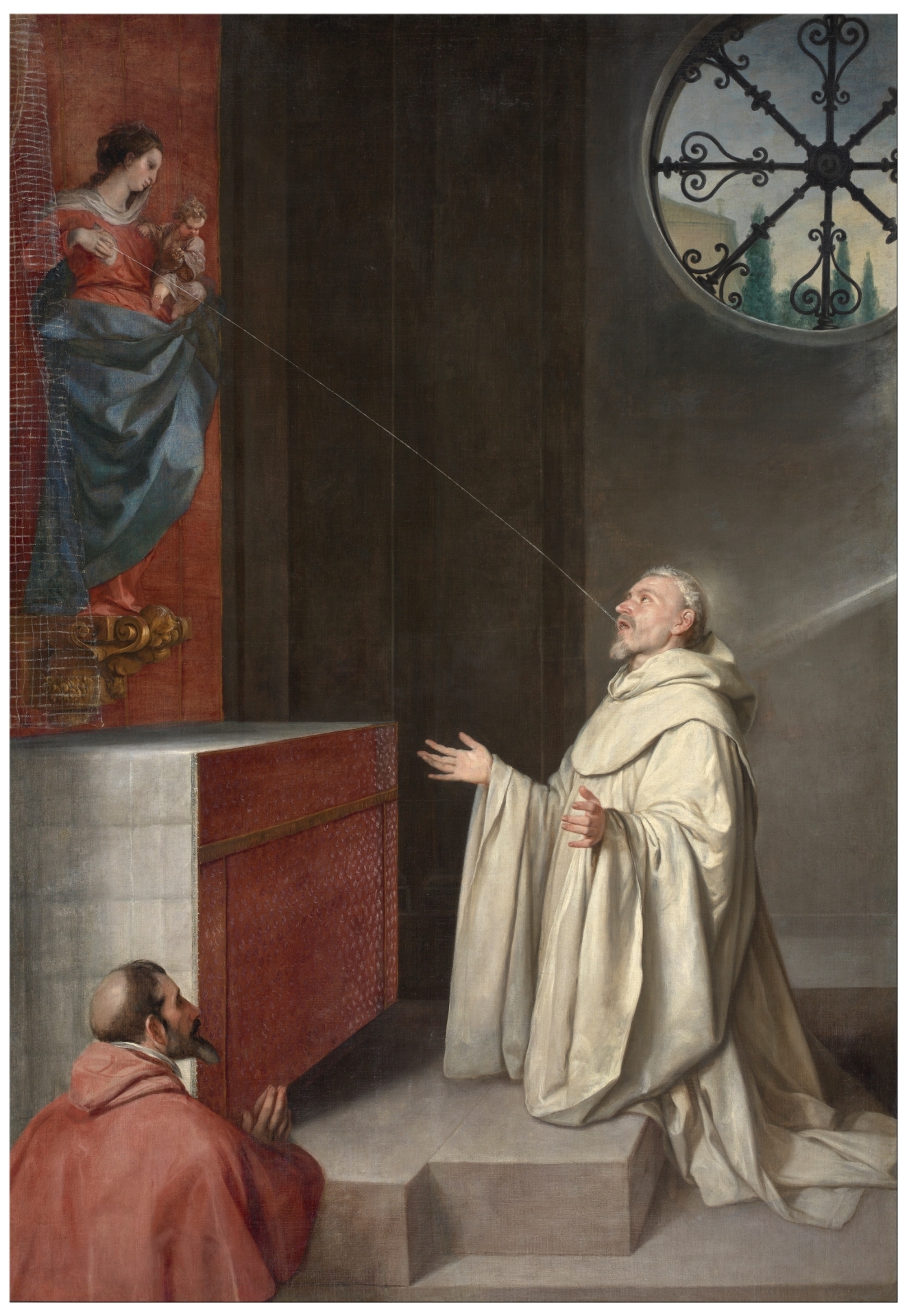
Saint Bernard and the Virgin by Alonso Cano, c.1652. (Photo courtesy of Museo del Prado, Madrid)
The suggestions here are probably not so much sexual as maternal, creating a kind of parallel between Christ (for whom the holy lactation was surely intended) and the celibate monk (for whom an occasional reward seemed justified). This mythic spritz, known as the Lactatio Bernardi, is supposed to have given Bernard either wisdom, or proof of Mary as his spiritual parent, or relief from a painful eye infection, or all of the above. In any case, the key fact is that human conversation is believed to activate a sort of familiar, living, biological process in an otherwise inanimate object. This activation, in turn, bestows enormous and astonishing benefits on human witnesses.
The milk may flow both ways. In India, prasada was perceived to reach a new, sanctified level in 1995 during what is called the “Ganesha Drinking Milk Miracle.” Beginning at dawn on Sept. 20, experienced simultaneously all across the country, stone statues of the god Ganesh (usually represented as half-human, half-elephant) were observed to drink spoonfuls of milk, as if drawn up through his trunk. Word spread quickly, and similar sippings were reported among devout Hindus living in England, Malaysia, Fiji, Kenya, Canada, the United Arab Emirates, and the United States. Traffic jams, milk shortages.
No comment is possible on the nature of these miracles. It is enough to satisfy the modest appetites of this column to simply admire the uniformity of the myth: public art coming to life, bestowing gifts, receiving gifts, feeding and being fed. We approach these artworks with assorted needs in hand, but when the needs are great, we treat them as we would be treated — with love, food, warmth, and fancy clothes — out in the open, amongst friends.
Jon Calame holds a master’s degree in historic preservation of architecture and is a Fellow of the American Academy in Rome. He currently teaches art history at the University of Southern Maine. This column is free to access through support by The Dorothea and Leo Rabkin Foundation.
Copy the Story Link