
Sea Dogs chase their dreams while living the ever-changing life of a minor leaguer


Portland Sea Dogs infielder Mason White takes a look at third base before making a throw to first during practice on July 30 (Staff photo by Derek Davis/Staff Photographer) Purchase this image
View 5 photos
PORTLAND — It’s an off day. Some rare time away from the 138-game marathon that is a minor league baseball season.
Max Carlson and Hayden Mullins are likely headed to play golf, and maybe engage in some good-natured trash talk with other pitchers. Mason White will probably play some video games, though he doesn’t play MLB The Show as much as some of his teammates.
Carlson, Mullins and White are minor league baseball players for the Portland Sea Dogs, the Double-A affiliate of the Boston Red Sox.
They play different positions — Carlson and Mullins are pitchers, White is a shortstop — but they equally understand the all-consuming and topsy-turvy life attached to playing professional baseball.
“It’s definitely a unique lifestyle and it’s not for the faint of heart,” said Carlson.
Carlson, who was drafted in 2023, is in his first season with Portland. Like many Sea Dogs, he had to work his way up from Single-A with the Salem RidgeYaks and High-A with the Greenville Drive to reach Double-A.
Advertisement
Joining teams for temporary — and indefinite — amounts of time means frequent change.
“Constantly dealing with changes in atmosphere, changes with scenery, new teammates, new coaches,” White said. “You’re in different cities and different states all the time. So just being OK with change and being OK with dealing with difficult conditions you can’t control.
“But it’s super fun if you learn to enjoy it. It can be hectic at times, but that’s why we’re doing this, because that’s what you want to do. You signed up to be kind of thrown around and told to do all these different things.”
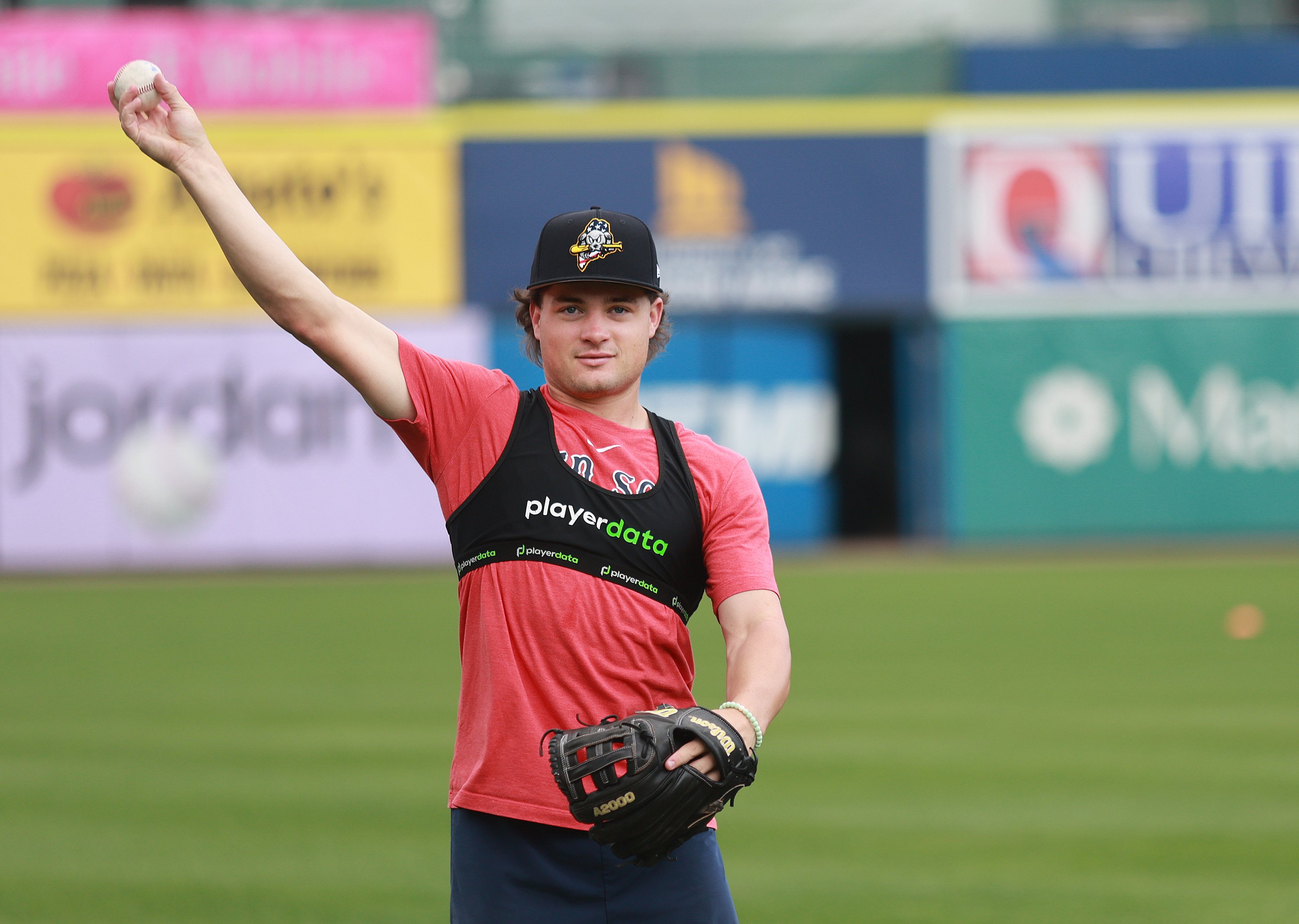
Portland Sea Dogs infielder Mason White warms up on July 30. (Staff photo by Derek Davis/Staff Photographer) Purchase this image
That turbulent lifestyle isn’t for everyone. Sea Dogs players must come to terms with being away from home and their loved ones for most of the year.
“It’s definitely a different life,” Carlson said. “It’s not a two- to three-month season like the college season, and you’re on the road half the time. Literally half the time you’re not home. So it’s tough, and especially for girlfriends, wives, stuff like that; it’s not easy.”
Jumping from level to level at unpredictable junctures is also part of the deal.
Advertisement
Mullins was drafted in 2022. This is his first full season with the Sea Dogs. He was called up to Triple-A with the Worcester Red Sox last month, but was assigned back to Portland four days later.
White, on the other hand, has only been with the Sea Dogs since July 18, having moved up to Double-A after half a season in Greenville.
“Everyone’s on a different timetable,” White said. “It’s not the same time frame for everybody. Everyone’s different ages, different experience, injuries, these different things you have no control over.”
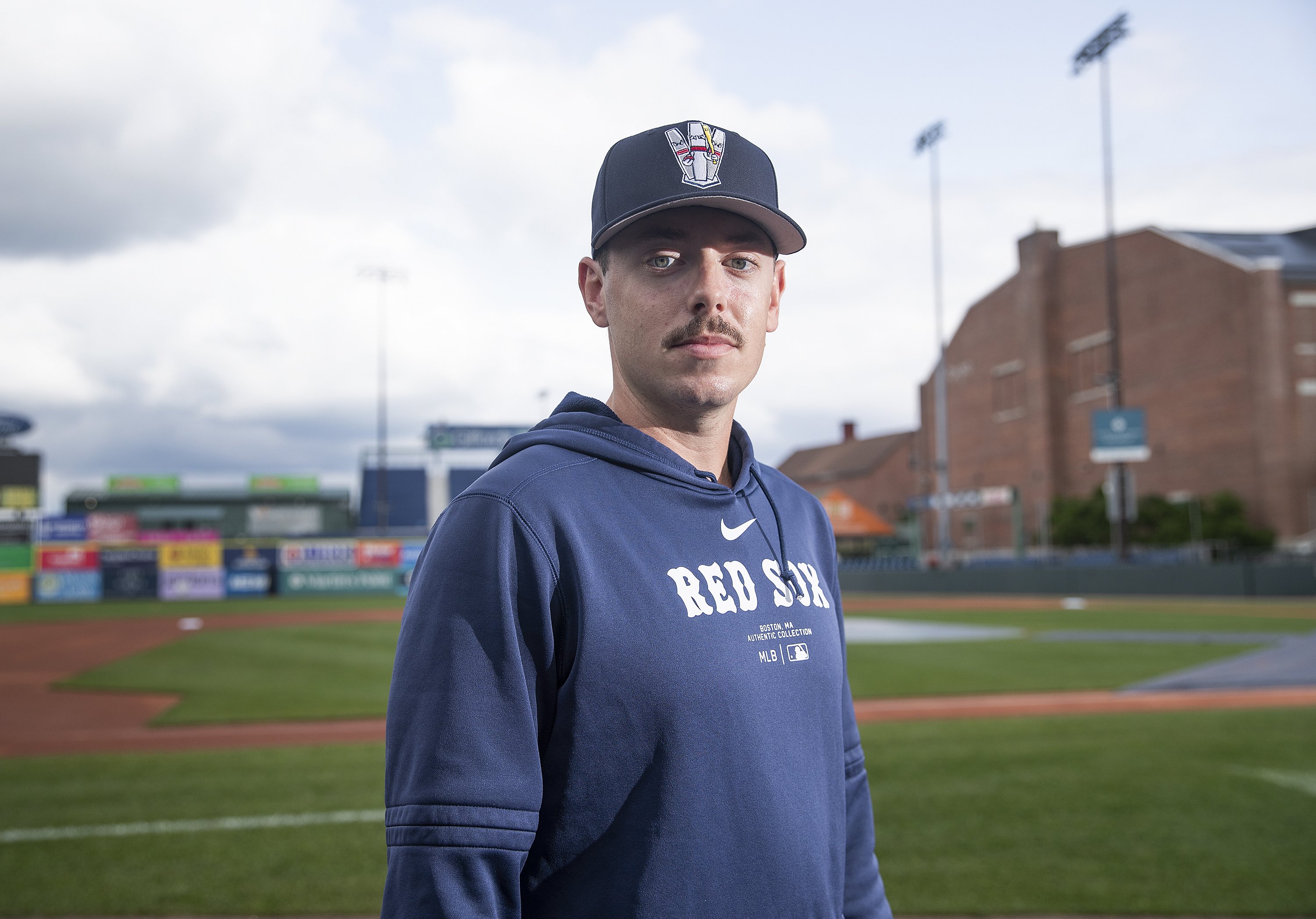
Portland Sea Dogs pitcher Hayden Mullins. (Staff photo by Derek Davis/Staff Photographer) Purchase this image
Most players with a car live in Scarborough, while those that don’t have one live in Portland, within walking distance of Hadlock Field at Delta Dental Park, where the Sea Dogs practice and play their home games.
Housing, two meals on working days, as well as mental health resources and other medical benefits are provided to players thanks to minor league baseball’s Collective Bargaining Agreement, which was signed in 2023.
“They’ve done a great job with (the CBA) and getting us some benefits and some great working conditions,” Mullins said. “… I mean, if you talk to a minor league baseball player from 10, 15 years ago, they probably wouldn’t have the same story.”
Advertisement
These accommodations are helpful, especially given a minor leaguer’s salary and the cost of living in an expensive city like Portland.
According to the CBA, in 2023, the minimum salary for a Double-A player was set to increase from $13,800 per year to $30,250 per year, with “slight annual pay increases” coming in 2025, 2026 and 2027.
Players don’t typically hold other jobs, but during the offseason, many run camps or baseball clinics.
The improvements made possible by the CBA have eased, but not erased, the challenges of minor league life.
Baseball players are in a unique position of potentially spending their entire careers working their way through the ranks all to have it not pay off with a spot on an MLB roster and an MLB contract. For some, Portland may mark the final stop of their baseball careers.
Mullins notes that in other sports like football and basketball, players are immediately with the teams that drafted them. Baseball players, however, may have three to seven years of minor league service time before sniffing the major leagues, if they do at all.
Advertisement
“I think it gives us time to mature as players and as men, and kind of get to know the business a little bit more,” Mullins said. “But in the same sense, it’s really tough because you don’t really see the light at the end of the tunnel until you get up to the higher levels and you’re like, ‘Oh, I’m one phone call, two phone calls away from really making a difference in my life.'”
That can be psychologically taxing, especially when an entire team of players is vying for the same Triple-A and MLB roster spots that are few and far between.
“You can run into jealousy, envy, things like that, things that put your mind in a place where you might start struggling with that a little bit,” Carlson said. “You might start thinking, ‘Oh, why am I not there? Why am I — whatever?’ But at the end of the day, I think a big thing for me is, this season especially, is I’ve been where my feet are. And seeing guys go up like that … and now they’re one step away from the bigs, that’s pretty damn cool.”
Minor league baseball players must compartmentalize so many different variables throughout a season, so what keeps them committed to this lifestyle? What keeps them coming back to a game that, in most cases, they’ve been playing since they were kids?
Everyone has different motivations. For many, part of it is an unwavering passion for the sport.
“You never lose that love for the game, that itch to just go out there with a group of guys and have fun,” Carlson said. “I won a lot as a kid and that was a lot of fun, so I crave winning and I crave the ball in big times, big moments. Some people like jumping off cliffs, I like my heart beating with 40,000 people watching me. That’s just something that I craved my whole life.”
Advertisement
Play ball
It’s game day, the afternoon before a 6 p.m. first pitch.
Carlson and Mullins have already gotten up and thrown. White has infield drills on deck.
The Sea Dogs have already surpassed 100 games on the season. They’ve watched teammates come and go, and are still patiently waiting for their turn. Yet there’s still an energy during warm-ups reminiscent of when these players first put on a glove or picked up a bat.
“It’s difficult because there’s a lot of baseball players,” Carlson said. “It’s a small group, but it always feels like there’s a million guys in front of you. And I think a big thing with staying within yourself, staying where your feet are … that’s a big way to just keep a fresh mind.”
In the meantime, it’s Harry Potter night at Delta Dental Park. The Hadlock faithful are ready to support their favorite team.
And even amidst the seemingly never-ending quest to one day make it to The Show, the players are ready to put on a show of their own tonight and every game night.
Copy the Story Link
Tagged: portland sea dogs

Jimmy covers sports for the Sun Journal, primarily contributing to the Varsity Maine team. He is from Hagerstown, Maryland, and graduated from the University of Richmond in May of 2025 with a B.A. in journalism. More by Jimmy James