Refugee father and son face uncertainty and fear after immigration check-in in Scarborough is rescheduled
A 15‑year‑old boy and his father, who fled unrest in West Africa, are receiving community support in Maine as they prepare for separate immigration check‑ins scheduled for November.
The family, whose names have not been released, escaped conflict in their home country and arrived in the United States on a humanitarian parole program. After arriving, they were placed in a temporary housing program managed by the U.S. Citizenship and Immigration Services (USCIS) and have been living in Maine while awaiting their individual immigration hearings.
Local residents and volunteers have stepped in to help the family adjust to life in the U.S. Community members have offered the father, who is illiterate in English, a mentor to learn the language and a guide to navigate the complex immigration system. A volunteer from the local library has been meeting with the 15‑year‑old to help him practice English and prepare for his upcoming school integration.
The family’s support network includes a community outreach program run by a Maine nonprofit that provides legal assistance, translation services, and cultural orientation. The program has arranged for a lawyer to meet with the father to discuss his case and to prepare the boy for his separate check‑in with immigration officials. In addition, the nonprofit has organized a small welcome event for the family, allowing local residents to greet them and provide information about local resources.
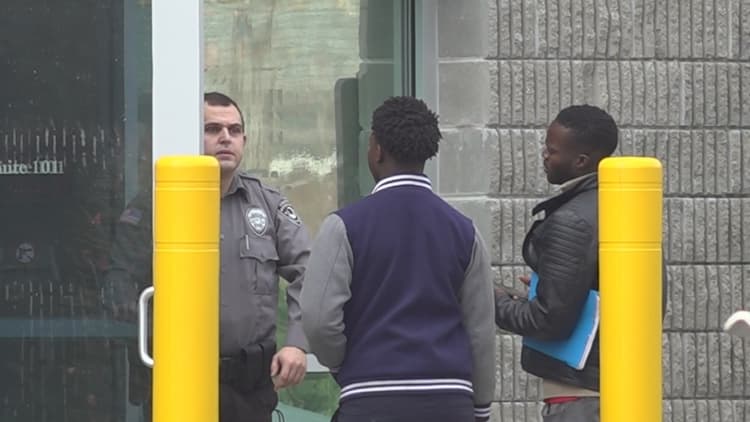
The two check‑ins will take place in separate locations in November. The father’s hearing will be held at the U.S. Citizenship and Immigration Services office in Portland, where he will present his case for asylum or deferred action. The 15‑year‑old’s hearing is scheduled at a separate USCIS office in Bangor, where he will present evidence of his age, his status as a minor, and the family’s circumstances.
According to officials, the separate hearings are required because the father and the son will be evaluated on individual merits and documents. The immigration system requires separate check‑ins when family members have different legal status, different evidence, or different priorities for relief.
The family’s case has received attention from local lawmakers, who have urged USCIS to expedite the process to provide timely protection for refugees. A Maine state representative has requested that the state provide additional funding for the community outreach program to support the family’s transition.
In a statement, the nonprofit director said, “We are proud to see the community come together to support this family. Their resilience and our collective help make it possible for them to have a stable path forward.”
The family’s story reflects a growing trend of West African refugees arriving in the United States seeking safety from regional instability. According to the U.S. Department of State, West Africa has experienced a rise in civil unrest in recent years, prompting many to seek asylum abroad.
Maine officials say that the state’s welcoming policies and community resources have played a key role in helping refugees integrate. The state’s Department of Human Services has a dedicated Refugee Resettlement program that coordinates with local charities to provide housing, job training, and language classes.
The boy and his father remain hopeful that the November hearings will lead to permanent protection in the U.S. In the meantime, the family is adjusting to life in Maine, learning English, attending school, and building relationships with neighbors.
The community support network continues to provide resources to the family, including tutoring for the 15‑year‑old, transportation to the immigration offices, and legal guidance for the father. The family’s journey highlights the importance of local support for newcomers navigating a complex immigration system while coping with the trauma of leaving their homeland.