

Portland Planning Board supports repeal of downtown entertainment buffer

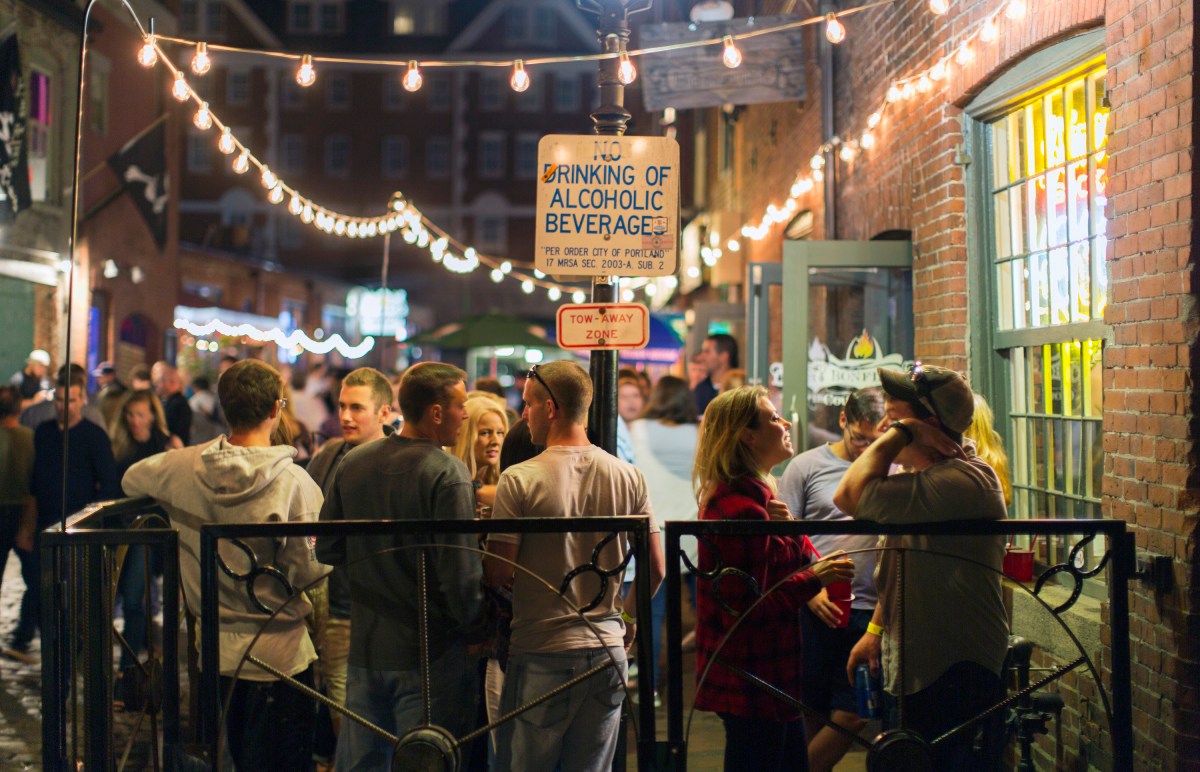
Bar patrons carouse at Bonfire Country Bar in the Old Port in July 2017. The Portland Planning Board agreed this week that the city's 100-foot entertainment buffer — designed in the '90s to address concerns about the Old Port — should be repealed. (Ben McCanna/Staff Photographer)
The Portland Planning Board agreed Tuesday that the city’s 100-foot entertainment buffer should be repealed, sending a favorable recommendation on to the City Council.
The unanimous vote in favor signals broad support for removing a three-decade-old rule that requires a 100-foot separation between businesses with entertainment licenses.
While one business owner has led the charge, other downtown businesses and organizations have supported the ordinance amendment, arguing that it will give them more flexibility at a time when sustaining a downtown business can be difficult.

Related
Could removing a 30-year-old zoning rule invigorate Portland’s nightlife? Some businesses hope so.
Isaac MacDougal, owner of Cocktail Mary on Market Street, has pushed city leaders to reconsider, saying that since his bar moved from the East End, it hasn’t been able to host a typical lineup of dance and drag nights due to the rule.
The 100-foot “business dispersal requirement” dates back to the 1990s, and according to staff, was intended to “prevent the overconcentration of nightlife establishments” in the Old Port, as well as concerns related to the noise — and a few fights — that came with bars letting out after last call.
However, MacDougal and others have argued that the rule is outdated, and officials and city staff have so far agreed.
Advertisement
The planning board expressed general support for the change during in initial workshop last month, and city planning staff have said the change is in line with the city’s comprehensive plan because it creates opportunities for business growth and new jobs.
Staff also say licensing requirements, noise ordinances and police operational standards now address many of the negative impacts the buffer was originally intended to mitigate.
The police department said it supports the change because a concentration of nightlife activity would allow for “efficient resource deployment.”
MacDougal told the board Tuesday that he sees the measure as not just important for Cocktail Mary, but for overall business growth and keeping young people in Portland. He has also argued that bars and clubs can no longer solely rely on alcohol sales due to a national downward trend in drinking.
The City Council is expected to vote on repealing the buffer language on Aug. 24. It will require two readings, but councilors may move to pass the item as an emergency.
Because of concerns that the process to repeal the language would last into the fall and take away peak season business, the council passed an emergency measure last month that exempts single-day permits from the required buffer.

Related
Portland council passes downtown entertainment license work-around
According to staff, there are 98 active entertainment licenses in the city, and 41 of them are located within the two downtown zones where the 100-foot buffer currently applies.
Councilor Wes Pelletier first brought the proposal to the housing and economic development committee in November, at the same time that he proposed a 750-foot buffer between large entertainment venues related to the controversial Portland Music Hall project. However, the committee declined to take it up at the time, wanting to keep the issues separate.
During a committee discussion, some residents questioned whether the removal of the 100-foot entertainment buffer could impact pending litigation involving the city and the developers of the proposed 3,300-seat venue that was shot down by the council.
Copy the Story Link
Tagged: old port, Planning Board, Portland City Council, portland city government, portland city hall, portland police department

Andrew Rice is a staff writer at the Press Herald covering the city of Portland. He's been working in journalism since 2012, joining the Sun Journal in 2017, then the Press Herald in 2026. He lives in. More by Andrew Rice