Portland landlord, tenants union agree to $3.6M settlement over years of complaints

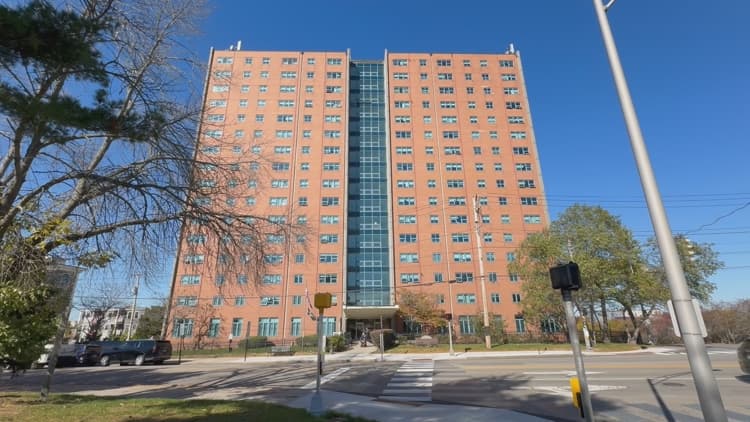
PORTLAND – In a dramatic press conference on Monday outside the 102‑unit Trelawny Building on Congress Street, tenants from the city’s two main renter groups announced a $3.6 million settlement with landlord Geoffrey Rice that will wipe out years of rent‑control violations and refund tenants for overcharges.
The agreement, reached after four months of negotiations and a 20‑hour mediation session with a city mediator, requires Rice—an octogenarian who owns 19 residential properties in Portland—to roll back all rents on his units to the legally allowable rate that was in effect on December 1, 2022. Any amounts collected above that baseline will be paid back from a dedicated escrow account. The escrow will also cover a $250,000 fine to the city.
Under the terms, the Trelawny Tenants Union and the Portland Tenants Union will pause all complaints against Rice for past violations in exchange for the financial restitution and compliance plan. The settlement applies to Rice’s entire portfolio, which includes roughly 300 units and more than a thousand current and former tenants. The unions will conduct a full audit of each property to determine exact amounts owed and will pay refunds with 10 % interest, meaning many tenants could receive several hundred or even thousands of dollars.
“We have been on a long road to get here, but I am hopeful we are finally seeing the light at the end of the tunnel,” former Portland mayor Ethan Strimling told reporters. Strimling, who serves as a spokesperson for the Trelawny Tenants Union, said Rice had likely come to the negotiating table in order to clear his record before selling some of his properties, a possibility that is now implied by the agreement. He added that the settlement “covers all of Rice’s residential properties, which include some 300 units and more than a thousand current and past tenants.”
Rice’s attorney, Jeremy Dean, characterized the deal as a comprehensive mechanism to bring every one of the landlord’s units into full compliance with the city’s rent‑control ordinance. “No stone will be left unturned, and Mr. Rice’s tenants are the primary beneficiaries of the process that was agreed upon,” Dean said. He noted that the escrow account would also receive additional funds as Rice sells properties, giving the unions leverage over future transactions.
Tenant union member Ian Jacob expressed gratitude toward Rice, saying, “He’s done the right thing for all of his tenants.” Giselle Taylor, who helped mediate the settlement, highlighted the power of collective action. “When we come together as tenants we will always have so much more power than we have when we’re just alone,” Taylor told the press. She added that the union will audit all properties to ensure timely reimbursement and that the unions have already rolled back rents at the Trelawny Building and at 59 State Street, a 42‑unit building.
The city council is expected to consider a resolution later tonight that would formally affirm the settlement’s terms and recognize the role of the city’s rent‑control ordinance. Mayor Mark Dion called the deal a “significant legal win” for the tenants and said the resolution would underscore the city’s commitment to enforcing rent‑control laws. He also praised the legal staff’s work in bringing the parties to mediation.
City Councilor Wes Pelletier, a former Trelawny Tenants Union member, said the settlement sets a “clear precedent” for handling violations of the ordinance. “We can’t rely on the city alone; we have to rely on each other to make this stuff happen,” he said.
The settlement comes amid recent discussions about strengthening the city’s rent‑control enforcement. Earlier this year, the council passed a resolution to overhaul the ordinance’s implementation, including an online rental registration system that flags missing or incorrect information and a verification of base rents established in 2020. The Housing and Economic Development Committee is scheduled to review potential changes to the ordinance next Tuesday.
For tenants, the settlement is expected to be a welcome relief. The unions have launched an online form on their website to gather updated contact information from current and former renters to ensure accurate refund distribution. The Trelawny Building’s façade work, which had been a focal point of a lawsuit between Rice and the city, is now nearly complete, symbolizing the end of a long legal battle.
The agreement also provides a framework for future compliance. The unions will hold mortgages on ten of Rice’s properties as part of the settlement, giving them leverage should any further violations arise. Funds will be added to the escrow account as Rice sells units, ensuring that new tenants are protected from past overcharges.
While the settlement resolves the immediate disputes, it also signals a shift in how Portland’s landlords and tenants approach rent‑control compliance. As the city continues to refine its enforcement mechanisms, the $3.6 million deal with Geoffrey Rice stands as a landmark case for renters nationwide.