

Photo project illuminates hidden homelessness in rural Maine


A woman named Stephanie takes a picture of her bare feet. She was among a group of people in Bridgton who participated in a project led by University of Southern Maine researchers to document the experiences of rural homelessness. (Photo courtesy of Stephanie via Lake Region Photovoice)
The woman’s feet are bare. The nail polish on her toes — mostly pink, but one blue — is chipped. Her feet are planted on the pavement, just visible beneath the hem of her yellow dress. She has sores and blisters on her ankles, the tops of her feet, her toes.
But she has to keep moving.
The photo, titled “Blisters,” was taken by a woman only identified as Stephanie.
It’s one of a collection of photos taken as part of a University of Southern Maine project documenting the often invisible realities of housing instability and homelessness in rural Maine.
In Bridgton, the USM team found a group of eight people who have experienced or are currently experiencing housing instability. Then they handed them cameras to document their lives.
The photos in the series each tell different stories: A hose by Highland Lake for tourists to spray down their boats that is locked at night; a turquoise sleeping bag tossed over a makeshift bed resting on the beat up floor of a cheerfully painted but abandoned cabin; a cupboard with three colorful boxes of cereal picked up from a food pantry. The expiration dates have come and gone.
Advertisement
The Lake Region Photovoice Project aims “to create advocacy messages about what they want their community to understand,” a university spokesperson said. The photos will be on display starting Friday and through Labor Day weekend at the Magic Lantern Theater and Innovation Center in Bridgton.
Tracey Martin, one of the photographers for the project and director of the Lakes Region Recovery Center, said that ultimately, the message is simple: “I’m not just some homeless girl on the street. I am a person, I am a human, I have feelings, and sometimes you just need a little help.”
Related
Lake Region Photovoice Project 2026
NOT JUST AN URBAN ISSUE
Kristen Gleason, chair of the USM psychology department, has studied housing instability in rural Maine for about a decade and through that work, discovered that homelessness in these areas is largely invisible. It’s often thought of as an urban issue.
“A lot of rural community members don’t really see houselessness or homelessness as something that impacts their community,” she said.
There’s limited research and less data on homelessness or housing insecurity in rural areas, partly because it’s less visible than in urban areas.
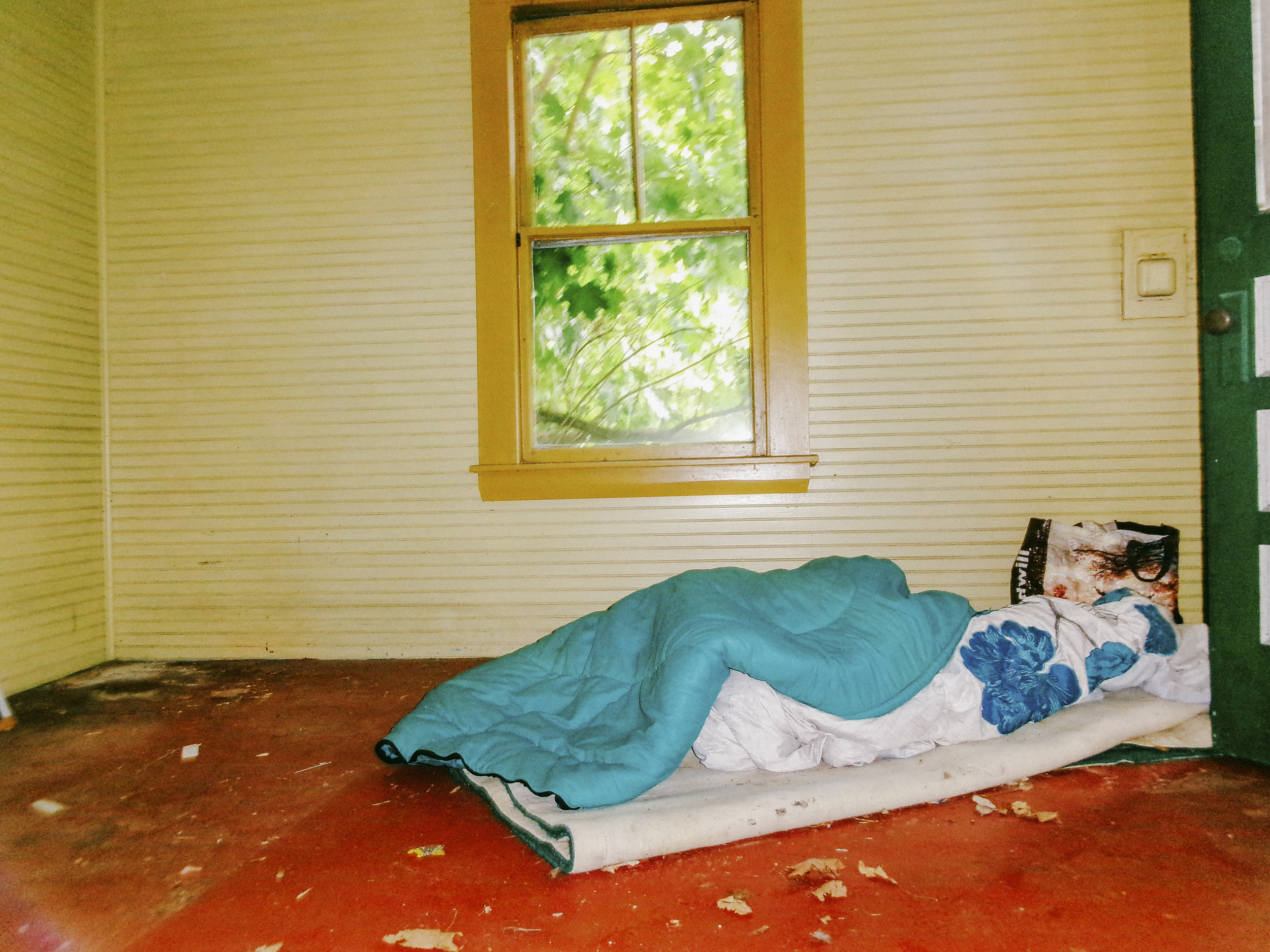
A sleeping bag on a rolled up rug at an abandoned cabin in Bridgton where a person experiencing homeless sometimes slept. (Photo courtesy of Jessica via Lake Region Photovoice)
In Maine, the annual point-in-time count found 2,126 people experiencing homelessness this year on the night of the count in January, an almost 12% decrease from 2025 and the fourth consecutive year of decline. The report breaks the numbers down by “hubs” (largely counties), race, whether the household has children and other subpopulations, but does not single out rural communities in what is a largely rural state.
Advertisement
Related
What’s behind the drop in Maine’s homelessness numbers?
Nationally, people experiencing homelessness in rural areas last year were more likely to be unsheltered, according to the U.S. Department of Housing and Urban Development’s 2025 homelessness assessment. Overall, people in rural areas accounted for about 14% of the overall national homeless population but 20% of the unsheltered homeless population.
The USM project defines housing insecurity broadly, something that Gleason, who spearheaded the project, said is important when working with a rural population. Her previous research has found that in rural areas, homeowners are still frequently vulnerable to instability, with many at risk from substandard conditions and high utility costs.
Because these communities often don’t have shelters, more people are “doubling up,” bunking with friends.
“Most people experiencing housing struggles are not chronically living on the streets,” Gleason said. “A lot of folks who are struggling with housing instability are just one crisis away from not having housing.”
She chose photovoice — a qualitative research method combining photographs and narratives for social change — to give participants control over their stories.
HOPING FOR CHANGE
Bridgton was a natural fit.
Advertisement
“It’s a very touristy vacation area. The service providers in the area were very aware that there are folks living there who are unsheltered, that there are some housing struggles (and) other kinds of housing instability,” she said. But that same awareness didn’t seem to extend to visitors, residents or officials.
“There wasn’t necessarily a lot of movement with the decision makers in the area in doing anything to help,” Gleason said. “There was a lot of rich discussion about the ways that the community excludes and makes folks with economic struggles feel unwelcome.”
The Cumberland County town of about 5,000 residents sits about an hour outside of both Portland and Lewiston. The community, home to Pleasant Mountain (formerly Shawnee Peak) and bordering both Long and Highland lakes, is heavily reliant on tourism and recreation.
The area median income for parts of Cumberland County including Bridgton, Harpswell, Brunswick, New Gloucester, Naples and others, is $110,800 for a family of four, according to the U.S. department of Housing and Urban Development.
The median home sale price has varied widely from month-to-month in the last year (likely due to the small number of homes selling each month), ranging from just $287,500 in February to $620,000 in March, according to MaineListings. On average it has hovered in the $400,000s, in line with the statewide average.
Related
Maine met its housing goals last year, but not where it’s most needed
The town has also been working to boost its housing stock.
Advertisement
Bridgton permitted 69 buildings last year, according to statewide housing data released in June. That’s roughly 12 permits per 1,000 residents – more than double the statewide average. But of those, none were considered affordable.
Martin said that feels intentional.
“I almost feel like, by not creating affordable housing, it’s like pushing the problem off to somebody else,” she said.
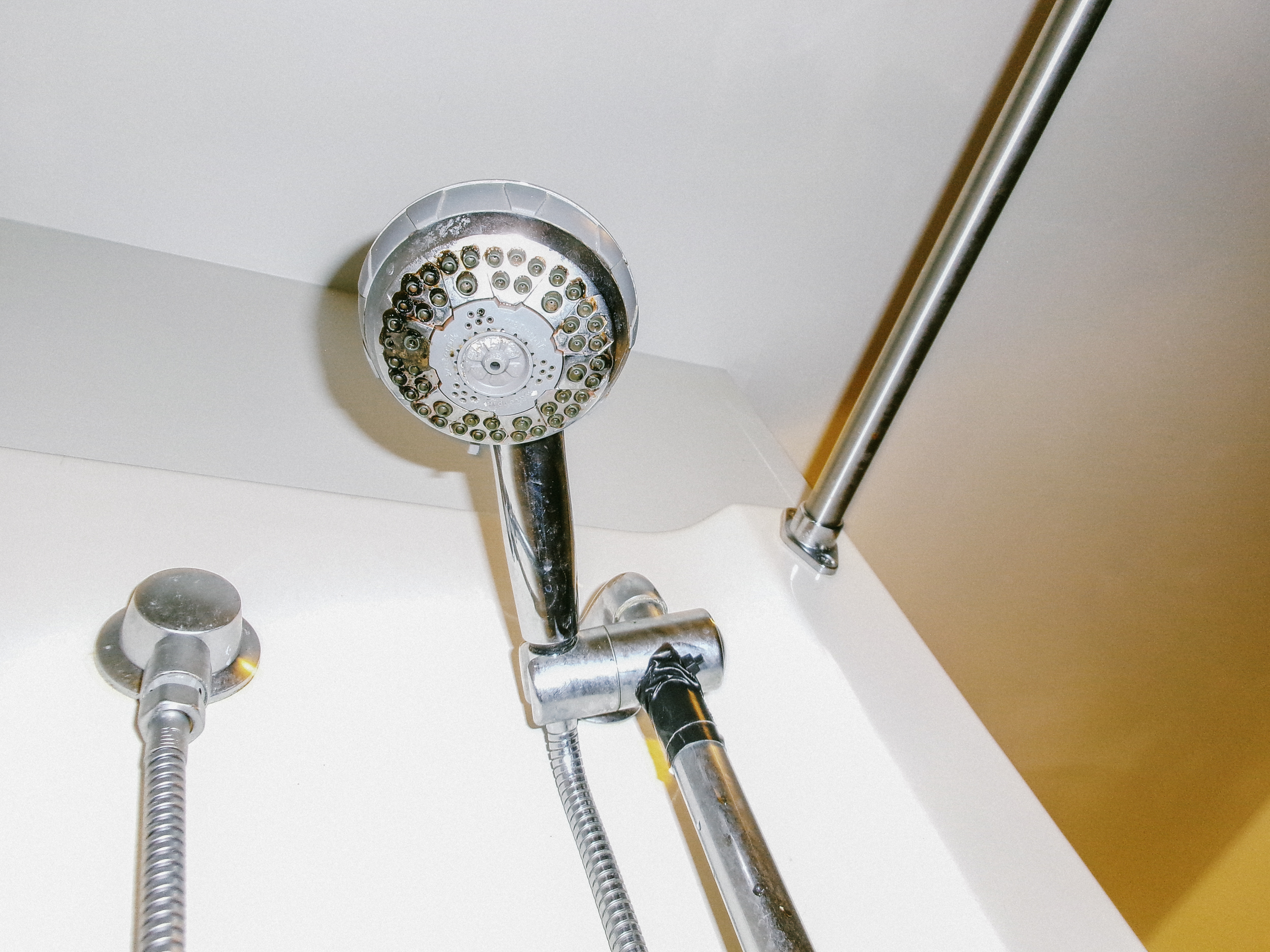
Finding a place to take a warm shower is one of the biggest challenges for homeless individuals living in rural areas without shelters. (Photo courtesy of Mojorizen via Lake Region Photovoice)
Bridgton doesn’t have a homeless shelter. It also doesn’t have heating or cooling shelters for extreme weather. There’s less housing as a whole. There are fewer high-paying jobs and a lack of reliable transportation.
“In Portland and the bigger cities, you see folks that are on the street, they’re holding signs,” Martin said. “You don’t really see that here … but there are people living in their cars, there are people living on snowmobile trails.”
Martin, who now owns a home but has experienced homelessness before, said she hopes the project will not only raise awareness for both residents and town officials, but also lead to change.
“We’ve had people get interested in what goes on in rural Maine … and it always feels like we put all this work into meetings and data and all these things and it doesn’t go anywhere,” she said.
She hopes this time will be different.
Copy the Story Link
Tagged: affordable housing, bridgton maine, homeless, homelessness, Housing crisis, rural maine

Hannah is the housing reporter at the Portland Press Herald, covering all aspects of Maine’s housing crisis - real estate and development, home ownership and rental issues and the lack of both affordability. More by Hannah LaClaire