

Maine towns push to swap turf lawns for wild native habitats

Jim Cole spent his pandemic nights under the glow of a headlamp, digging up Munjoy Hill sod to build a refuge for birds, bees and butterflies amidst the salted streets and sun-baked sidewalks in Maine’s biggest city.
The Portland filmmaker is part of a quiet revolution transforming the state’s urban landscape, one yard at a time.
“With this style of gardening, it’s less planting and more, like, initiating,” Cole said. “You start it off, set it on a trajectory and then nudge it this direction or that… These are native plants. They are meant to thrive here. It’s all about getting out of their way, really.”
Portland is the latest Maine community to encourage residents to replace manicured turf grass with native habitats. By rewilding suburban and urban yards, communities aim to protect vital coastal watersheds, foster disappearing pollinators and boost human well-being.
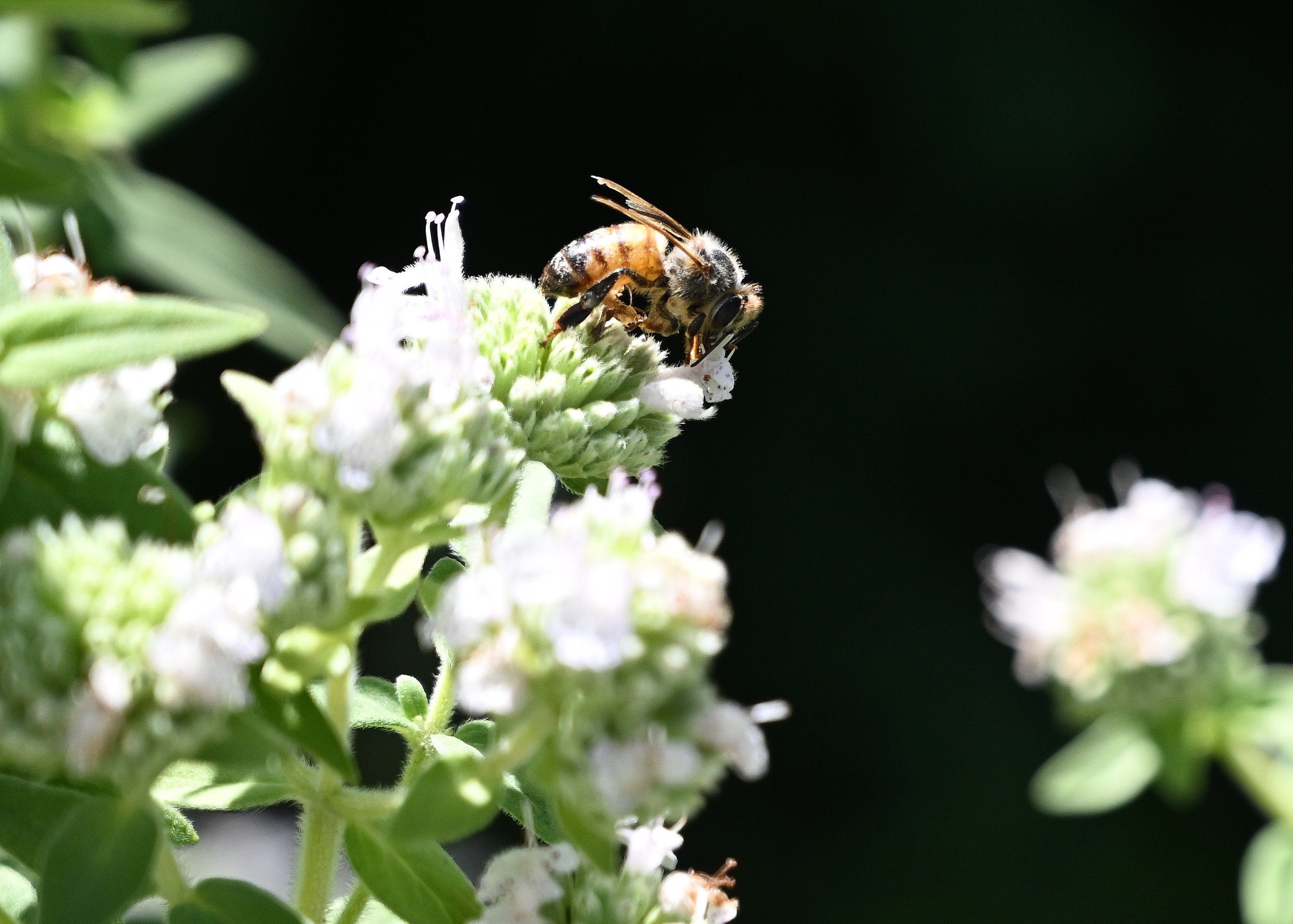
A bee visits a mountain mint in the rewilded yard of Samantha Smith of South Portland Friday. Smith enrolled last year in South Portland’s Resilient Yard program which encourages people to replace turf lawns with native gardens. This year she is a coach. (Shawn Patrick Ouellette/Staff Photographer)
HOW WE GOT HERE
For decades, the chemically treated lawn stood as the ultimate symbol of American suburban conformity, according to Andrew Tufts, manager of Maine Audubon’s Bringing Nature Home program. Pristine lawns began as a status symbol for European aristocrats.
To maintain this uniform aesthetic, which really took off after World War II, cities passed strict laws penalizing overgrown yards. But decades of heavy watering, synthetic fertilizers and pesticides turned many into ecological dead zones, Tufts said.
Advertisement
Today, entomologists like Doug Tallamy urge landowners to plant native species to save collapsing insect and bird populations. While dry western states mandate lawn removals through “cash-for-grass” rebates, Maine is taking a different approach, Tufts said.
In Maine, as is so often the case, local communities led the way, with some banning pesticides or fertilizers or both, Tufts said. Most do not limit grass heights. In 2023, legislators adopted a law protecting low-impact, water-conserving landscaping from homeowner association bans.
The local movement is anchored in South Portland, which restricted synthetic pesticides in 2016 and fertilizers in 2020. In a coastal state, lawn care chemicals do not stay in the soil. “They run off into the bay,” said Robyn Landes, an AmericaCorps fellow in the city’s sustainability office.
Related
South Portland passes cosmetic pesticide ban
The runoff carries nitrogen and phosphorus that fuels toxic algae blooms, acidifies ocean waters and puts the clam flats in Casco Bay at risk, Landes said. South Portland and Portland have agreed in their joint climate action plan to take steps to build soil health and clean up runoff.
Since 2023, South Portland has helped 230 households plant native gardens through its Resilient Yard program, which costs about $5,000 a year to run. With Grow Wild, Portland hopes to follow in its neighbor’s footsteps, but with a greater focus on renters and public spaces.
On Munjoy Hill, Cole’s native street-side plantings are being held up as a template for people who join Portland’s new habitat-based yard campaign, Grow Wild Portland. Participants will get weekly how-to emails, access to native garden planning templates and native plant starter kits.
Advertisement
Other communities have created demonstration gardens like the Mahoosuc Land Trust did in Bethel, or community tree nurseries similar to the one overseen by Lewiston and Auburn officials.
Meanwhile, Falmouth, Yarmouth, Gorham and New Gloucester are studying the South Portland model.
“The concept is really taking root,” said South Portland Sustainability Director Julie Rosenbach.
BENEFITS OF NATIVE GARDENS
The same native plants that help filter runoff can also turn forgotten spaces, like Cole’s sidewalk esplanade, into mini-ecosystems that can provide shade in an urban heat island, a carbon benefit due to no or low-mow requirements and critical food and rest pitstops for pollinators.
“If we want to have birds in our landscape, we need to have the things they need,” said Audubon’s Tufts. “That means insects, especially caterpillars. Caterpillars only eat native plants. If you want what’s at the top, you have to start at the bottom and work your way back up.”
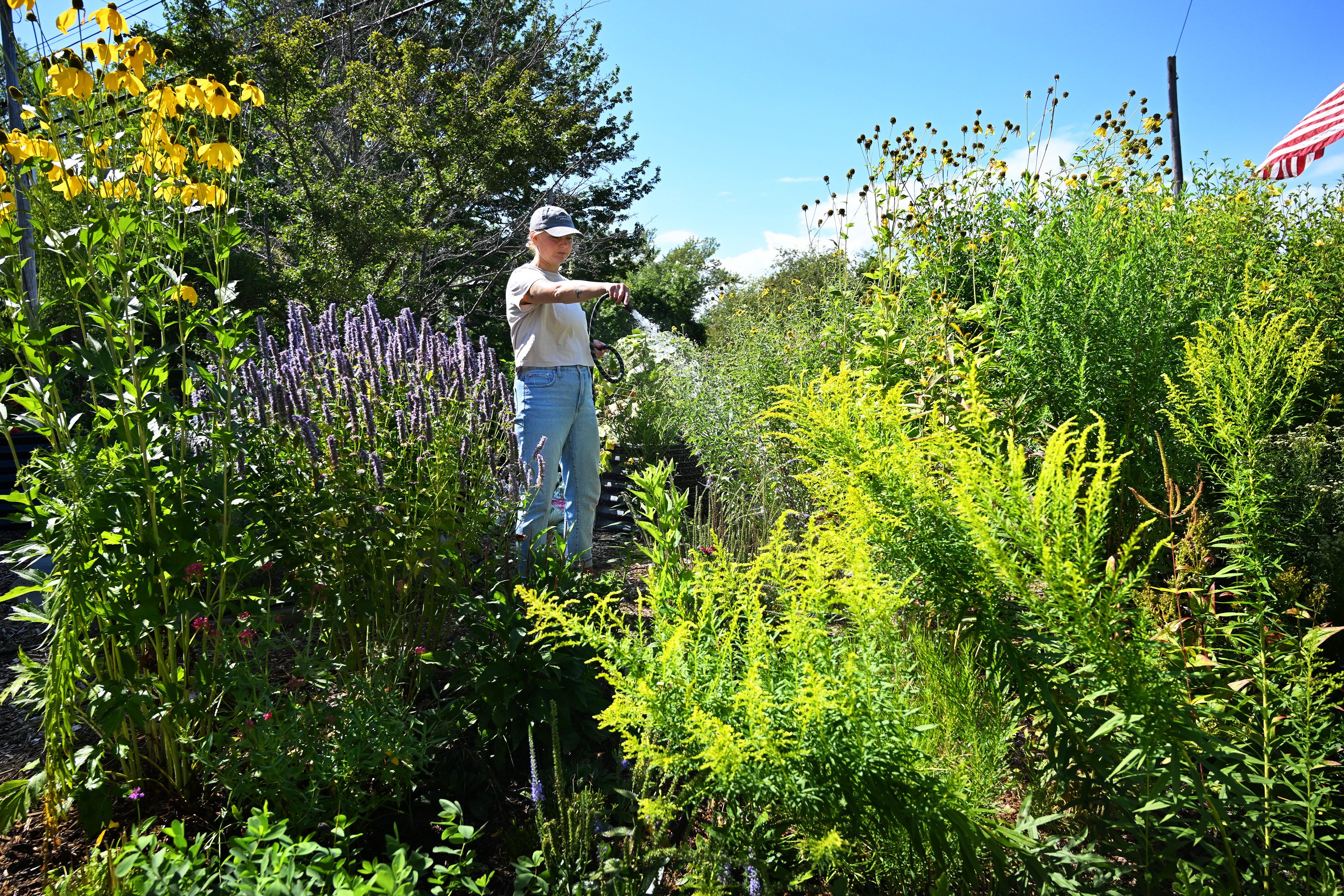
Samantha Smith of South Portland waters plants in her yard Friday. Smith enrolled last year in South Portland’s Resilient Yard program which encourages people to replace turf lawns with native gardens. She is coaching others this year. (Shawn Patrick Ouellette/Staff Photographer)
In Cole’s yard, the food chain is spectacularly alive. A plump bumblebee alights on a purple New England Blazing Star. Butterflies hover over a common milkweed. A passing dogwalker brushes up against swaying sweetfern, causing it to release a warm, cinnamon-like scent.
Advertisement
“Suddenly you start seeing different butterflies and birds,” said Portland Sustainability Director Troy Moon. “The gardens definitely get better every year as the native plants fill in the gaps, but you get the feedback right away, which is really great.”
Native plants can sometimes cost a little more than decorative ones, simply because there aren’t as many suppliers. Over time, native gardening is cheaper than traditional because native plants spread quickly, require no fertilizer, and very little water, said native gardener Bre Chamberlain.
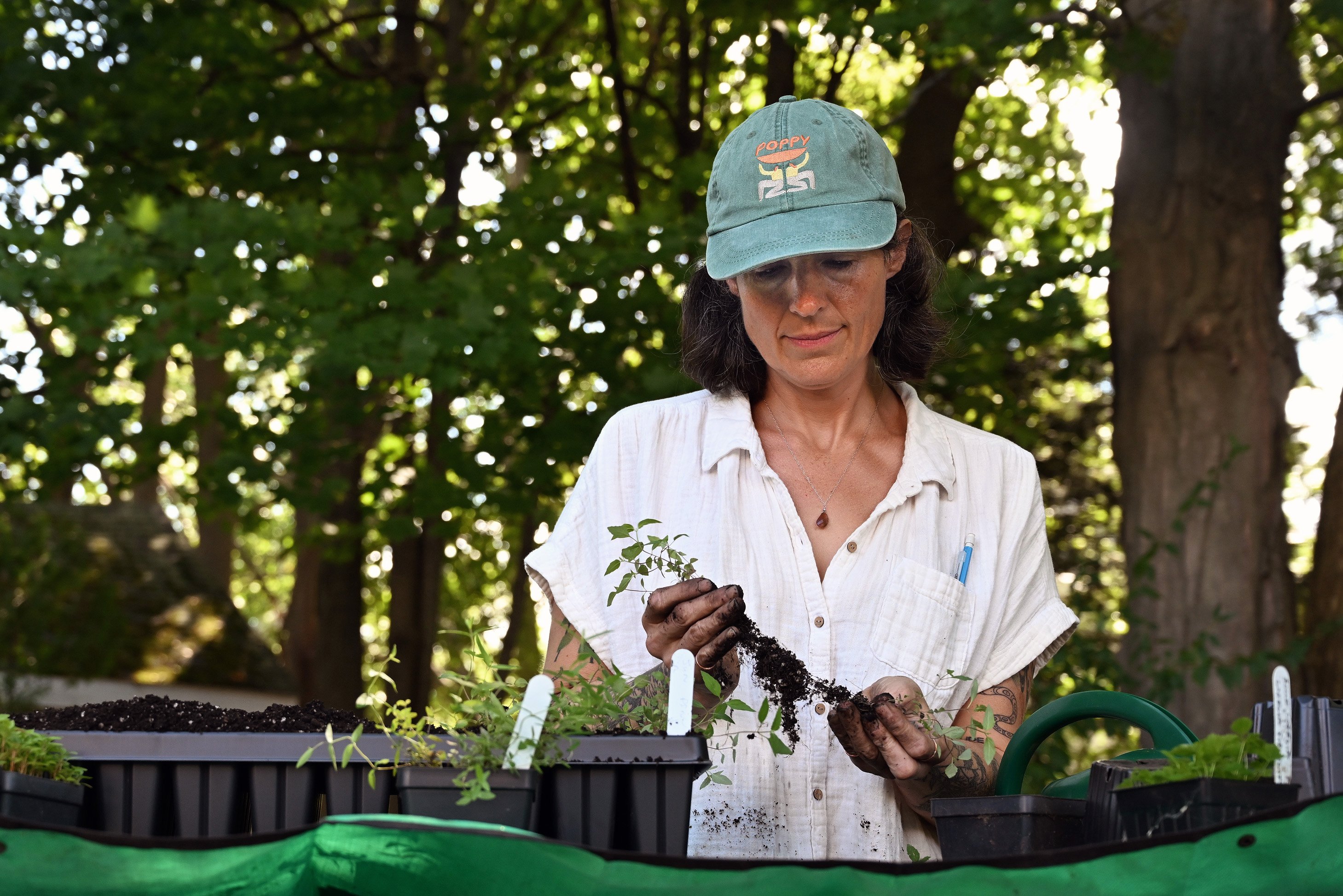
Bre Chamberlain, owner of Sideyard Nursery, repots native plants in her home-based Portland nursery Tuesday. (Shawn Patrick Ouellette/Staff Photographer)
Native plants are “an easy yes” for low-cost gardening, said Chamberlain, who launched her own small native plant company, Sideyard Nursery, from her converted Portland backyard three years ago. Sideyard is one of the local nurseries that will be working with Grow Wild Portland.
“You can plant a couple native plants one season for a low cost and, if they like where they are, they may multiply in subsequent seasons,” Chamberlain said. “Your investment multiples. You can also collect seeds from a plant and share them with friends, neighbors, and communities.”
She noted that blue wood aster, for example, can produce hundreds of seeds in a single season.
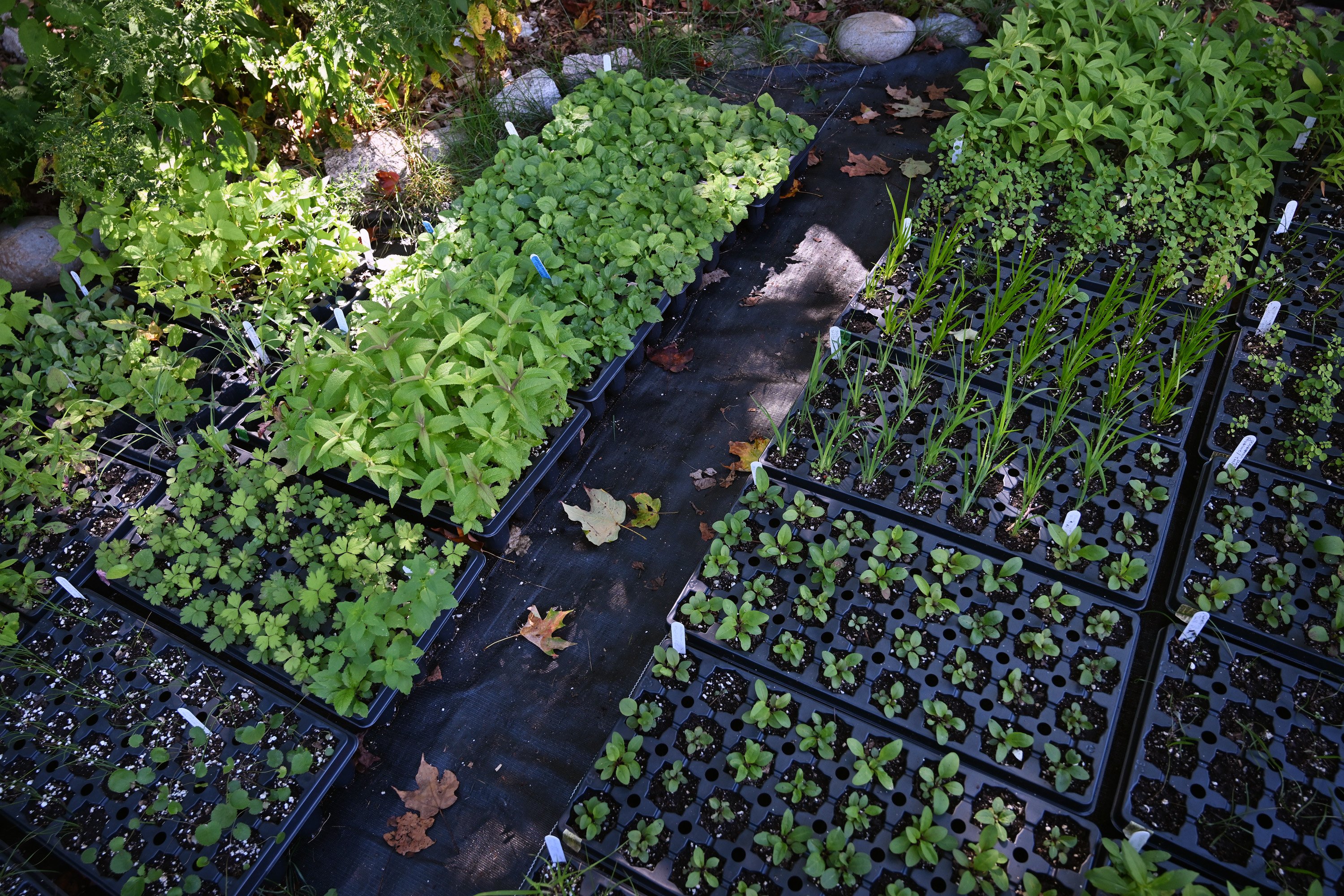
Plants at Bre Chamberlain’s Sideyard Nursery, in Portland Tuesday. (Shawn Patrick Ouellette/Staff Photographer)
CONNECTING COMMUNITIES
Making the switch can feel daunting to novices, but local programs are breaking down barriers. On Sawyer Street, 76-year-old retired biology professor Karen Talentino volunteers as a South Portland coach, showing neighbors how to smother their grass with cardboard and wood chips.
Advertisement
“After a year or two, it is actually much easier to care for a native garden than a traditional grass lawn or ornamental garden,” Talentino said. “You don’t need to fertilize, and once established, you don’t need to water. You hardly need to weed.”
Down Broadway, Samantha Smith helped a young couple plant nine native “plugs” in their yard in under an hour one hot August evening. She was teaching them to do what Talentino showed her last year.
The young homeowner also shared a few tips she had learned on her own. To make the physical work easier, for example, Smith brought an ice-fishing auger to drill planting holes through the cardboard, as if to prove a point about how easy native gardening can be.
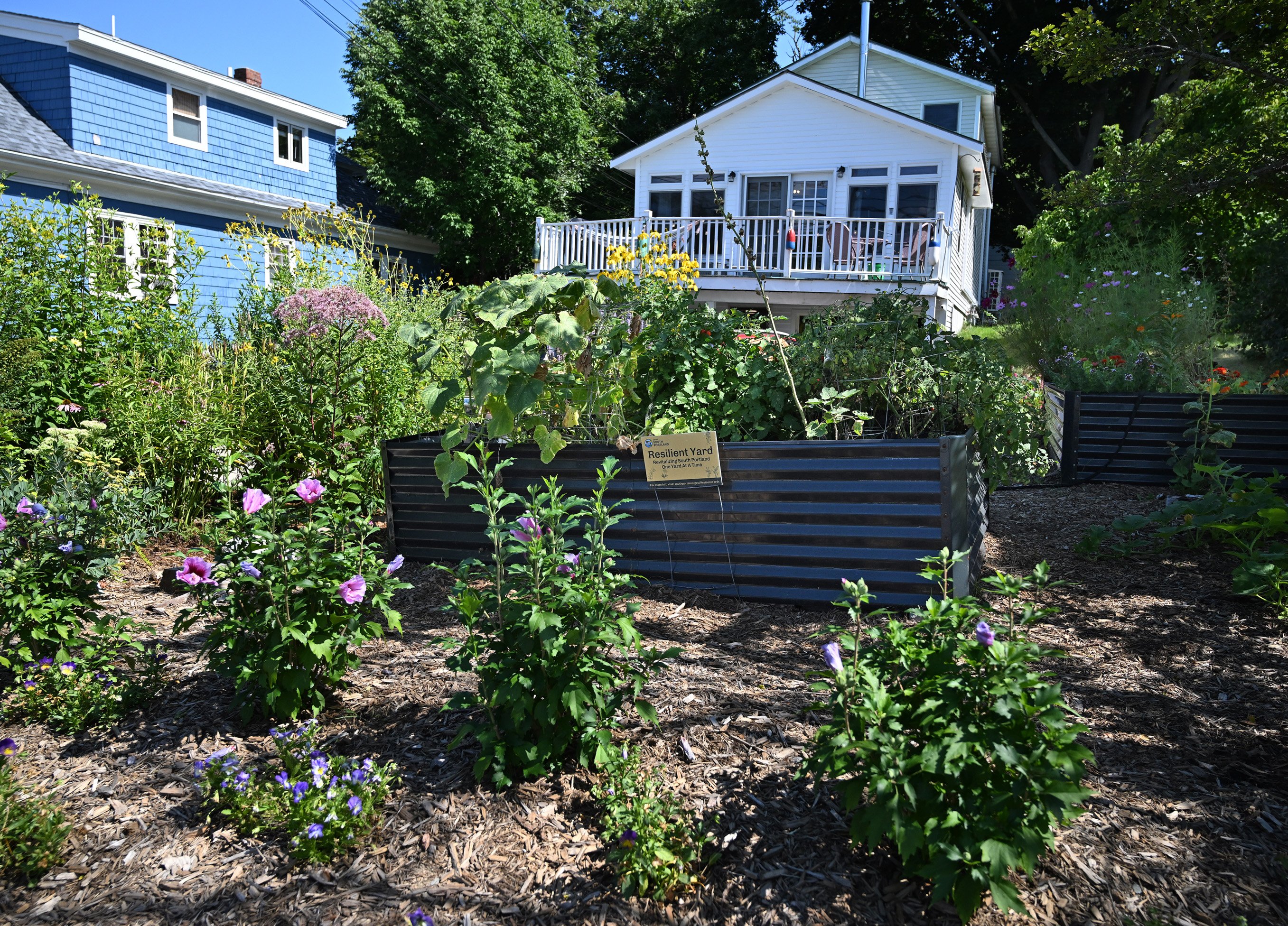
Samantha Smith’s rewilded yard in South Portland Friday. Smith enrolled last year in South Portland’s Resilient Yard program which encourages people to replace turf lawns with native gardens. This year she is a coach. (Shawn Patrick Ouellette/Staff Photographer)
While Smith loves the principle of native gardening, she said the social aspect of sharing ideas, and even plants, with her neighbors was a big reason why she, a Covid-era transplant, decided to join the program and an even bigger reason she decided to continue on as a coach this summer.
“The biggest wins have been seeing the monarch caterpillars,” Smith said. “But it’s done wonders for my mental health, too. Gardening is almost meditative, and talking to neighbors who stop by to ask questions has helped me build a sense of community in my new neighborhood.”
Related
South Portland bans synthetic fertilizers
Critics in other states have sometimes argued that rewilded yards look messy, lower property values and harbor ticks. Advocates counter that intentional design, like mowing clean borders, and adding educational signs can address these concerns.
For Rosenbach, South Portland’s sustainability director, the heart of the program is hope and community. Neighbors connect over fences, trading seeds and stories, she said. And a sod-to-sustainable lawn conversion might persuade someone to try composting food scraps next.
“We’re not asking you to solve global ocean acidification,” said Rosenbach, who says she would like to expand the South Portland program to focus on renters next year. “Just take care of your side of the street. If everybody does their part, it adds up to a whole bunch of change.”
Copy the Story Link
Tagged: environment, gardening, sustainability

Penny is excited to be the Portland Press Herald’s first climate reporter. Since joining the paper in 2016, she has written about Maine’s lobster and cannabis industries, covered state politics and. More by Penelope Overton