

Maine’s first recovery high school opens to help teens get off drugs


Powell Hall on the University of Maine at Fort Kent campus will house the inaugural class of the Upper St. John Valley Recovery High School. (Photo courtesy of Brooke Nadeau)
Brooke Nadeau spent part of last week decorating dorm rooms. She wanted them to feel welcoming for a small group of high school students who would soon arrive on the campus of the University of Maine at Fort Kent in far northern Aroostook County.
The students have each struggled with drugs or alcohol and are coming to campus for an opportunity to address their struggle before it defines — or even ends — their lives.
They are the inaugural class of the Upper St. John Valley Recovery High School.
“I know if we can make a difference in just one child’s life, it’s going to be huge,” said Nadeau, an educator with the public school district based in Fort Kent and a creator of the new recovery high school.
The school is the first of its kind in Maine, funded mostly by a small portion of the millions in opioid settlement funds that have flowed to the state in recent years. It’s a chance for The County to keep kids local while it fights the scourge of drinking and drug use, which has plagued Maine into adulthood.
If it works, its students and backers can prove to the rest of the state that this idea can help other communities, too.
Advertisement
Although Aroostook County is below the state average for the percentage of people with substance use disorders according to the Maine Drug Data Hub, the state as a whole has the highest drug overdose death rate in the northeast and among the highest in the country, per the U.S. Centers for Disease Control and Prevention.
For too long, The County has seen its kids sent out of state to get help or put into the correctional system, said Claire Nichols, another Aroostook County educator. She’s on the board of Michael’s Active Recovery in Fort Kent, inspired by a local man Michael Anthony Robertson, who died of an overdose when he was in Virginia seeking support. She’s closely watched the development of the new high school and sees its promise.
The logo for the Upper St. John Valley Recovery High School.
It will be the only recovery high school in New England outside of Massachusetts, and the only one in a rural area in the U.S., according to the Association of Recovery Schools.
Nadeau got the idea while working for her local school district and simultaneously earning her Ph.D. She had to write a 300-page dissertation to finish the doctorate degree.
“I thought I could sit and type this giant paper, but didn’t feel like I was making enough of an impact to point out our flaws,” she said.
She told her supervisor in the district that a recovery high school could help. She and collaborator Peter Caron, the district’s coordinator of innovation and community outreach, have spent three years researching the idea, developing it and working with the University of Maine at Fort Kent to create agreements about where students would live and study.
Advertisement
Nadeau cried tears of joy when funding came through in March 2025 — $616,000 in opioid settlement funds from the Maine Recovery Council.
She has had many conversations with prospective students, their families, guidance counselors and others.
“Some families know their child would benefit from a program like we’re starting, but the stigma surrounding it is just too much to grasp and they don’t want to enroll their child,” she said, while other families “said yes right away,” though none of them wanted to speak to a reporter about their participation.
There is no other option like it for young people in Maine, said Ryan Paige, who with his wife Cynthia founded the Biddeford-based AccessDirect Recovery Network. He fields thousands of calls each month from around the state and helps connect people to services. Student surveys run by the state show tobacco, alcohol and cannabis use among teens has gone down, but Paige said the number of inquiries he’s gotten for people under 18 has increased in the past year to about one a month.
And Maine doesn’t have many options for young people who want help getting off drugs and alcohol, particularly if the kids want to stay in school and be close to their families, Paige said.
For some of them, their substance use has become a problem — maybe it landed them in the criminal justice system, or stopped them from passing school. Or maybe it’s causing behavioral issues at home, or they lie to cover up how much they use.
Advertisement
In his own high school experience, Paige said using drugs and alcohol became his lifestyle, and he made friends who did the same thing. “There was nobody in my friend group who had stopped and found a way to not do that anymore,” he said.
He thinks having an environment that’s conducive to treatment and where kids can still learn is “ideal.”
HOW IT WORKS
The first recovery high schools in the country opened in the 1970s, according to the association. The schools gained momentum after 2000 and this fall there’ll be 50 nationwide.
When Maine legislators discussed the Upper St. John Valley Recovery High School pilot last year, the Maine Recovery Access Project submitted testimony, calling it “bold,” and something that’s needed “in a region that has been deeply impacted by the overdose crisis.”
“We need environments where education and healing are not treated as separate paths,” the organization said.
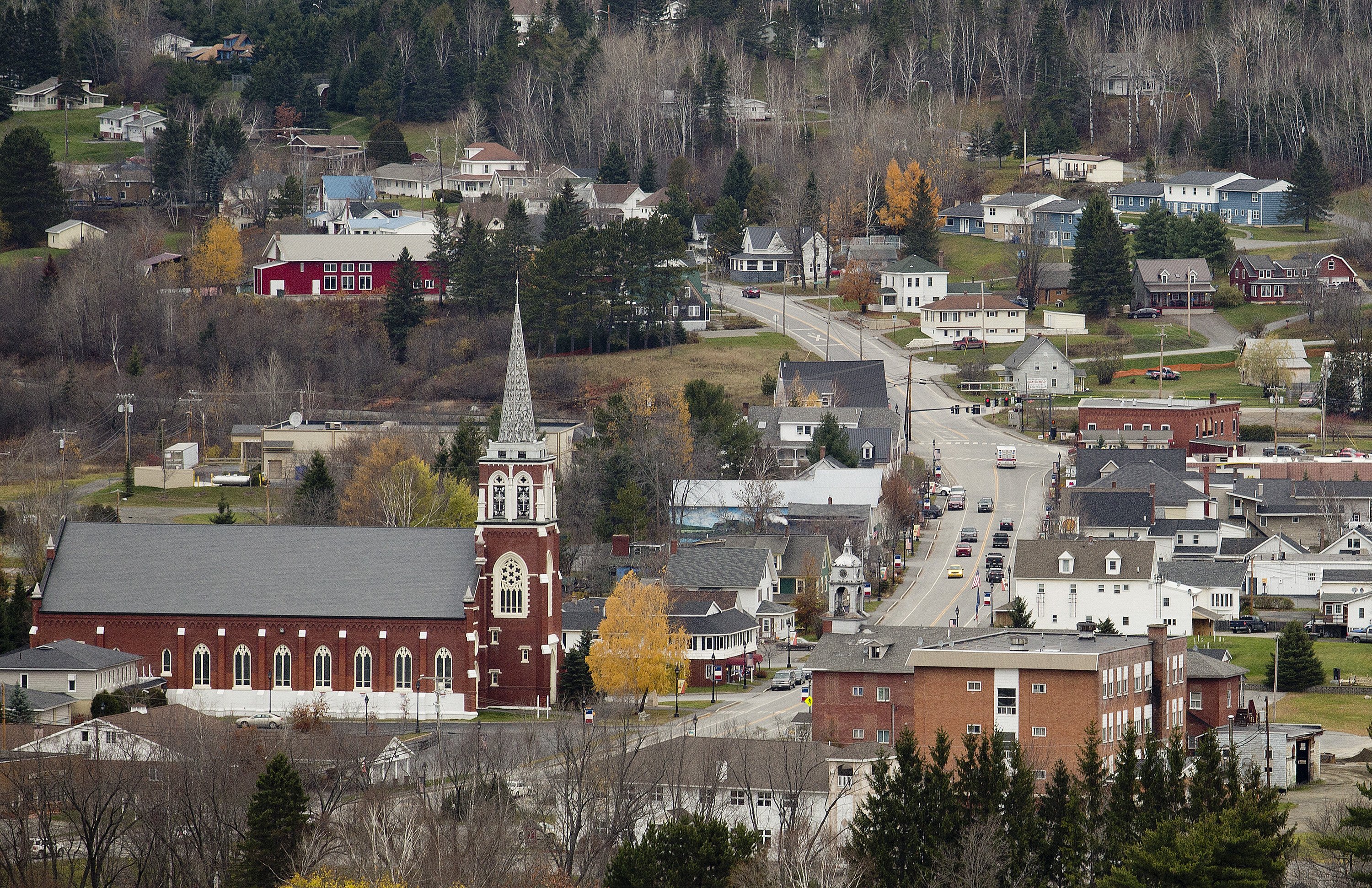
Main Street in Fort Kent is seen in 2014. (Gabe Souza/Staff Photographer)
Another unique thing it provides is social connection, said the Association of Recovery Schools’ Roger Oser, who is advising the founders in Maine. That can’t be replicated by at-home treatment options and the small number of residential facilities that serve young people with mental health issues, or by behavioral health services in regular schools, he said.
Advertisement
The inaugural class is four students, which Oser said is typical as schools like this have gotten off the ground, and the class could grow later in the year.
Students can live on campus five nights a week, something that isn’t offered at any other recovery high school in the country, Oser said. There’s also an option for students to go home each afternoon.
To enroll, students have to be willing to do the program voluntarily and have support from their families and their home school’s guidance counselor.
It’s also free for families. Funding for the first two years comes from opioid settlement funds, which companies are paying to states for their role in the drug crisis. A local state lawmaker, Republican Rep. Lucien Daigle, plans to try to shore up future years of funding in the next legislative session. In addition, 25% of a student’s costs are paid by the district where they would normally be enrolled, Nadeau said.
The students in the inaugural class have come to Fort Kent from all over Aroostook County. They’ll spend mornings at the St. John Valley Technical Center, where they have classes in the trades. They have afternoon classes online so that each student can learn according to their grade level and their home district’s academic requirements. Beyond academics, the idea is to develop better habits and coping skills.
They have physical activities, as well, and will eat together in the dining hall, Nadeau said. They’ll be supervised throughout the day, including during free time at night. A corgi named Waffles will provide emotional support.
Advertisement
In the classroom Nadeau will supervise the same way she does for her alternative education students, she said, something she’s been doing for five years.
When students go home at night or on weekends, Daigle said the goal is to avoid whatever environment helped foster their drug use. In the 2025 Integrated Youth Health Survey, nearly half of Maine high schoolers said it would be somewhat easy or very easy for them to get marijuana, the most serious drug Nadeau said is used by the school’s first group of students.
Nadeau and Caron will measure success through surveys — including questions about whether the students are less apt to use substances with the support they have at the high school. They’ll also drug test students weekly and at random.
Daigle, who was a dentist for four decades in Fort Kent, said the nature of the community will also help determine whether the school is successful.
“We live in a glass house here,” he said. “There are very few things that we don’t know.”
Oser of the national association said he’s impressed with how carefully Nadeau and Caron have planned the school in Maine, though he said funding and inconsistent enrollment can be challenges to keeping schools like this open long term.
Advertisement
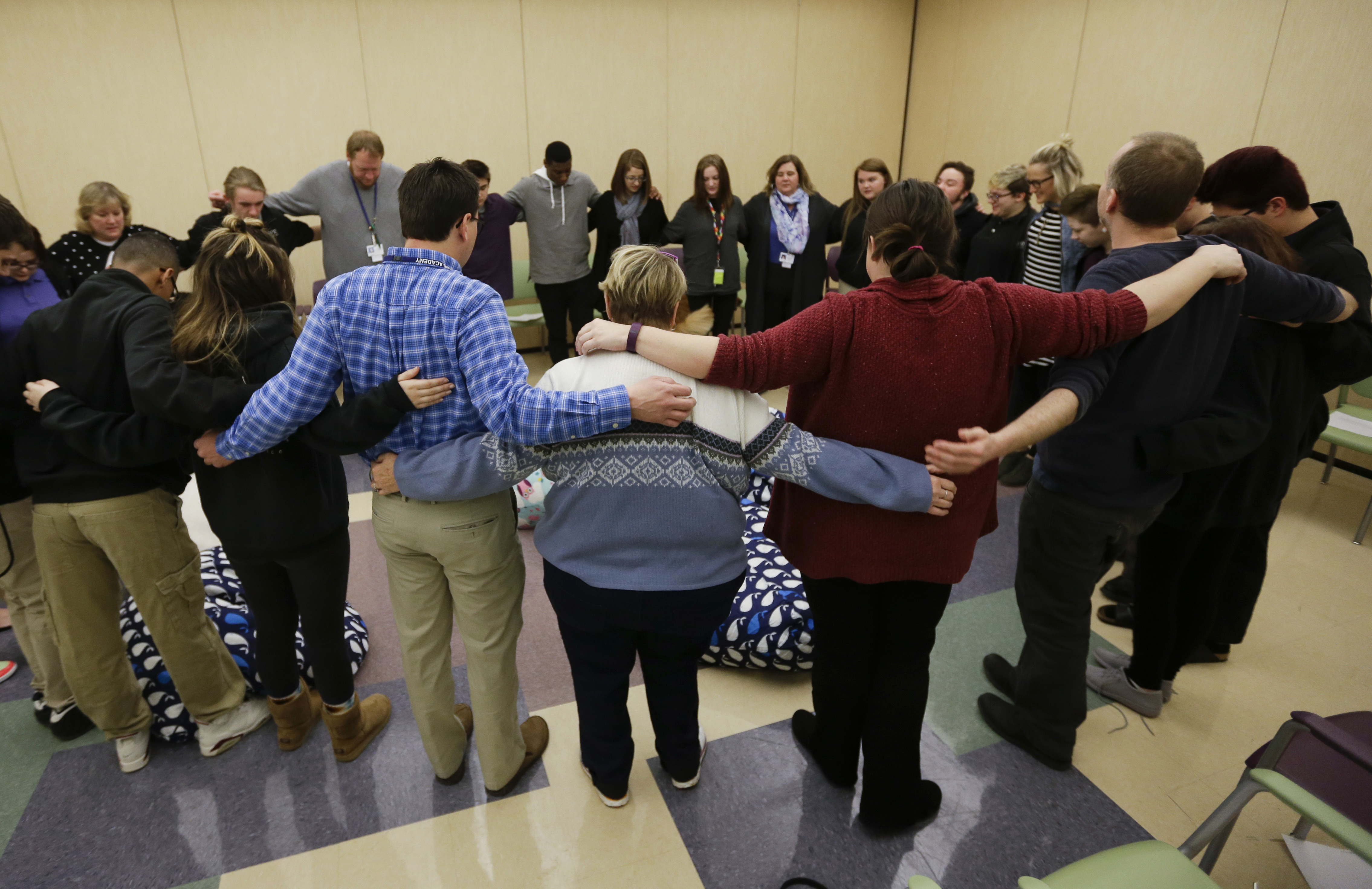
Students and teachers gather in March 2017 at Hope Academy in Indianapolis, one of about three dozen recovery schools in the United States at the time. (Michael Conroy/Associated Press)
FOCUS ON TEENS
When Paige of AccessDirect thinks about the big picture of how to curb drug and alcohol addiction in Maine, he uses a familiar metaphor: the ocean. He said the key to prevention is trying to get someone before they fall too deep.
“If you catch somebody before the riptide pulls them under,” he said, “It’s easier to swim them back to shore.”
The current created by a strong culture of drinking and substance use makes it hard, said Nichols.
“Alcohol is a huge gateway in the community,” she said. “Parents definitely do include their children in their lifestyle. I’m not saying that to pass judgement. It’s just a fact.”
Around the state, a third of high schoolers said on the state survey that they have lived with an adult who had a drinking or drug problem.
When Paige was in school, he went beyond the experimentation that many adolescents do. That’s what he hopes the recovery high school can prevent, and he sees potential for it to be replicated in places like Bangor, Lewiston or Portland.
Advertisement
Daigle said the ultimate goal is to build students’ resilience and ability to resist the lure of drugs.
“They want to break that cycle as young as possible so they can live productive lives,” he said.
That kind of focus, instead of punishment, matters to Nichols, the educator involved in recovery in The County. She said the school will help reframe what it means to be addicted at a young age. “Even just a positive message of, ‘No, you’re not bad, you just don’t know how to do this yet, and we’re gonna figure it out,’” she said.
Even though the first class of students is small, she thinks the return on investment will be priceless, and that having interventions at this young age could change whole generations in Maine.
Copy the Story Link
Tagged: aroostook county, opioid epidemic, rural life, rural maine

Rachel Estabrook is an accountability reporter at the Portland Press Herald. Before joining the Press Herald in 2026, Rachel worked in the newsroom at Colorado Public Radio for 12 years. She's originally. More by Rachel Estabrook