

How have rising gas prices impacted auto racing in Maine?

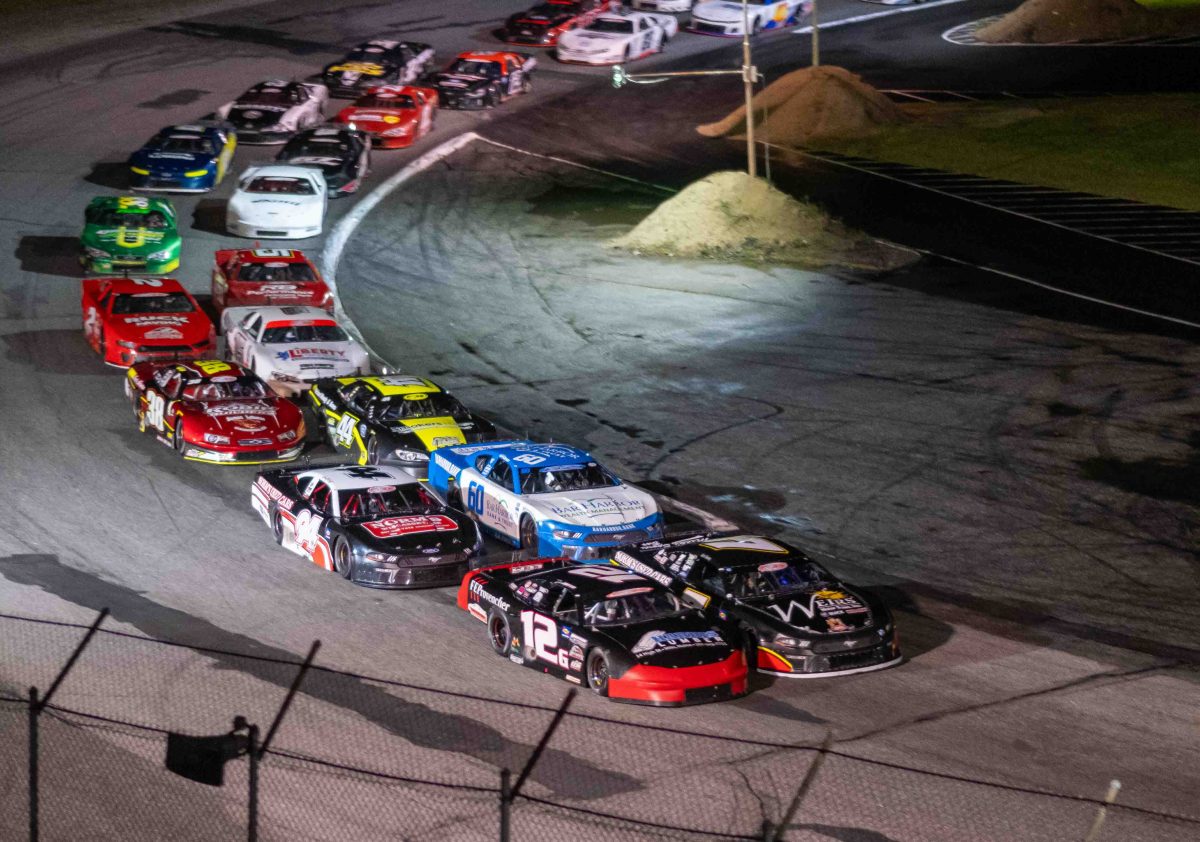
The field makes its away around the track during the 2024 Oxford 250. With racing gas prices, drivers say their teams have been impacted. (Brewster Burns photo)
OXFORD — Gas prices have risen across the country since March, and Mainers have had to stomach the costs. That includes auto racing teams competing this weekend in the Oxford 250.
“It’s costing us a lot more,” said Mike Rowe, a three-time Oxford 250 champion. “It’s costing everybody a lot more. And that’s why you got to finish up in the top three just to actually help you pay for things, and that’s what we’re hoping we’ll do.”
A Turner resident, the 76-year-old Rowe placed first in the event’s qualifier race on Aug. 15. His son, Ben, is also in the field for Sunday’s race and will be looking to join his father as a three-time champion.
Related
Mike Rowe geared up, and other takeaways from Oxford 250 Media Day
According to data tracked by NBC News, gas has increased by $1.20 per gallon in Maine, or 41.1%, since the start of the Iran war. On average, gas across the state costs $4.12 per gallon – three cents above the national average.
Although the cost of racing fuel hasn’t risen as much this year as regular gas, Mike Rowe said the cost of racing is more expensive as a result of higher gas prices. Travel is also more difficult, especially for out of state drivers like DJ Shaw, who notched a win at the Celebration of America 300 in July.
“We travel a lot more than most, and it’s something you have to budget for,” said Shaw, a resident of Center Conway, New Hampshire.
Advertisement
So how are auto racing teams dealing with steeper prices?
For some, sponsorships have helped.
“Obviously, it’s a lot harder to get to all these races, and thankfully, we’ve had some sponsors come on board like Scott’s Roofing (Services) to help us get through the rest of the season and stuff like that,” Jimmy Renfrew Jr. said. “So we’re very thankful for that.”
Scott’s Roofing Services is based in New Hampshire, where Renfrew is from. He said he’s also had support from his parents over the years. Shaw is backed by sponsors like Bar Harbor Bank and Trust.
Not every racing team can count on sponsors, however.
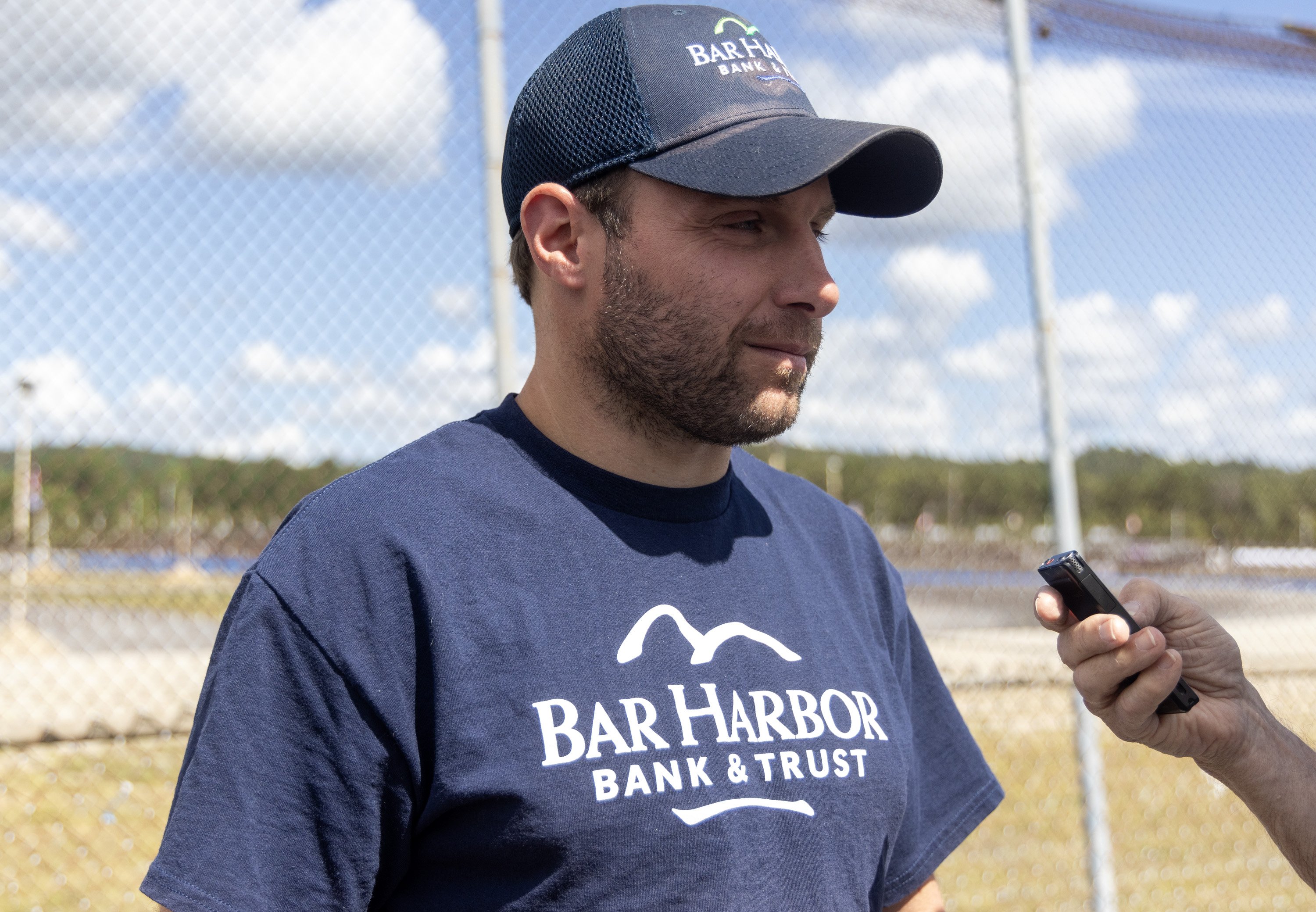
D.J. Shaw talks to reporters at Oxford 250 media day on Wednesday in Oxford. Shaw said sponsor help him with the impact of rising gas prices and allow him to race at numerous tracks, though he said he sees fewer drivers doing the same. (Anna Chadwick/Staff Photographer) Purchase this image
“We’re in a fortunate situation with sponsorship, but not everybody has the same luxury,” Shaw said.
Advertisement
Shaw spends weekends racing across New England.
Some weekends, he’ll be in Bangor on Saturday and in Epping, New Hampshire, on Sunday, but he said he’s seeing fewer racers who are traveling and racing as much as he is.
“Racing is inherently an expensive sport,” Shaw said. “It always has been. So that factor doesn’t help, but it just seems like these are just so much work … when (racers) have to choose where their money’s spent, it’s not on a race car every weekend, so there’s only a few of us left that choose to spend every race day available at the racetrack. So it’s my lifestyle and I wouldn’t have it any other way at this point.”
Drivers are thankful that at least the cost of racing fuel hasn’t changed much since last year’s Oxford 250.
“It used to be nine or 10 bucks a gallon when I first started racing, so it’s obviously gone up, but within the last couple years, it’s kind of stayed pretty steady,” Renfrew Jr. said.
Renfrew Jr. said fuel is now around $13 per gallon.
Advertisement
“It depends on where you go, where you get it, and it fluctuates everywhere, just like it does at the pump,” Shaw said. “But all in all, we love to do what we do, so we’d probably pay if it was 20 (dollars per gallon).”
Many drivers see the rising costs as something teams just have to deal with. In other words, it’s par for the course in today’s economy.
“It’s kind of ‘it is what it is,’” Joey Doiron said. “We have all this money invested in the race cars and equipment, and at that point, it’s hard to stay home when you already have all this money invested.”
Doiron is from Berwick. He said his car’s owner, Peter Petit, provides his team with everything they need.
Another racer, Brandon Barker of Westbrook, said prices would be something he would think about more if he were touring outside the northeast. He and his team have been racing weekly at Oxford Plains Speedway, so the relatively short travel distance helps with his fuel spending budget.
“It’s today’s world, right?” Barker said. “So you just wake up every day, and it’s nothing we can control. I’d probably have a lot of money if I could make gas, right? But just show up, go to work every day, you need a paycheck.”
Barker shared Shaw’s sentiment that even if prices were higher than they are now, he’d still be at the racetrack with his team, which speaks to the commitment many of these drivers have made to their sport. If there’s a track to race on, drivers will still show up.
“I don’t know when my decline’s going to come on the zest to (race as much as possible) as I get older, but I’m pushing 40 here in a couple years, so it’s not going to get any easier to do these double weekends all the time,” Shaw said. “But I’ll enjoy it while I still have the energy to do so.”
Copy the Story Link
Tagged: auto racing, oxford 250

Jimmy covers sports for the Sun Journal, primarily contributing to the Varsity Maine team. He is from Hagerstown, Maryland, and graduated from the University of Richmond in May of 2025 with a B.A. in journalism. More by Jimmy James