

Downtown Portland is gaining an unsavory reputation. Businesses say safety concerns must be addressed.


Se Jong Park looks out the front window of Sun Oriental Market, which his family has operated for 42 years. (Derek Davis/Staff Photographer)
PORTLAND — Se Jong Park has closed the front entrance to Sun Oriental Market, the Congress Street shop his family has operated for 42 years.
It’s prime downtown real estate — in the Arts District, between High and State streets —and a busy store known for its authentic and affordable Asian groceries and gifts.
Yet a sign on the front door directs customers to use an entrance at the rear of the building.
Related
Portland distributed and collected more needles than ever in 2025
Park said he chose to sacrifice sidewalk access to shield his business from problems that plague Maine’s largest city — namely homelessness, substance use disorder and illicit drug sales.
“They would shoot up in the alcove, then come in and pass out in here,” said Park, 50. “Somebody left their drug kit here. I don’t want that around my customers or my family.”
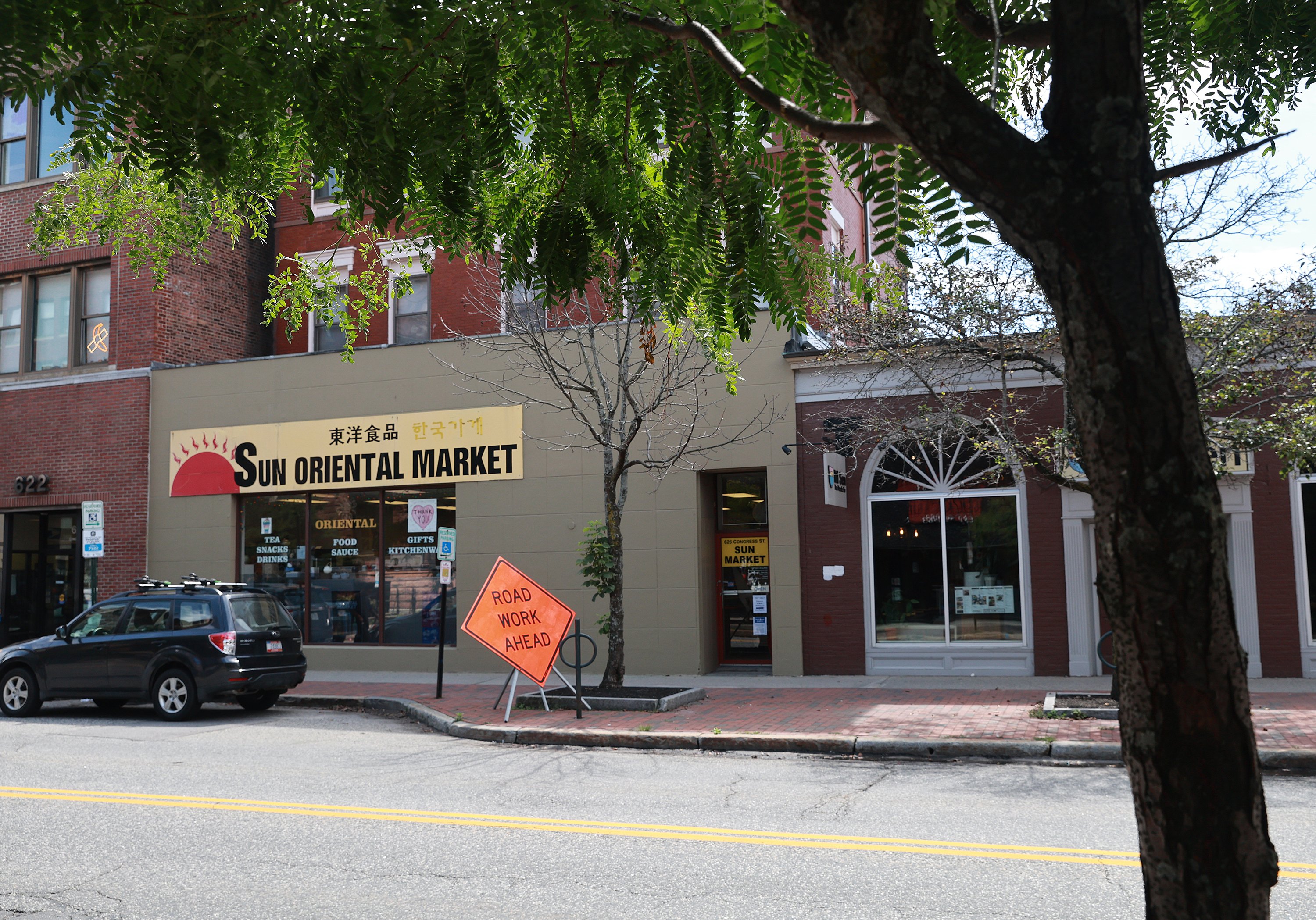
Sun Oriental Market on Congress Street in Portland. (Derek Davis/Staff Photographer) Purchase this image
Cutting off foot traffic from Congress Street has given Park some sense of control over problems that business leaders say have become untenable. Public safety calls in the downtown district from March through July have increased 29% in recent years, from 5,860 calls in 2023 to 7,879 calls in 2026, according to Portland police.
Advertisement
Many downtown business owners, homeless advocates and municipal officials agree that the city has reached a point of reckoning that requires a more concerted effort to find solutions that work for everyone and foster greater statewide support.
“We have to keep the business climate vibrant,” said Tom Grant, 67, owner of the Simply Scandinavian gift shop on Temple Street.
Related
Businesses in Portland’s Monument Square say safety concerns are growing
The Portland Regional Chamber of Commerce hosted a meeting with city and county leaders July 9 to discuss what more can be done to fix problems that are showing up regularly in public forums and social media rants.
References to open drug use, aggressive panhandling, shoplifting and going to the bathroom in public have spawned an unsavory reputation that some say must be addressed before it becomes entrenched and widespread.
Portland Press Herald readers left revealing comments on a recent story about potential uses for the former Renys department store at 540 Congress St., which is still vacant and on the market for $2.9 million.
“Until real issues like homelessness, drug use, vandalism, etc. are addressed, no business will find success there,” one reader wrote.
Advertisement
“I propose a safe space for the street junkies to shoot up and nod off so we don’t have to interact with them,” another wrote.
Related
Portland unveils plans to revitalize Congress Street amid growing safety concerns
Mayor Mark Dion has fielded biting emails from friends, acquaintances and officials in other Maine communities who say they no longer venture into the city to shop, dine or see a show.
“It’s uncomfortable for some people to hear it, but if we don’t confront the situation, it’s only going to get worse,” said Dion, who attended the chamber’s meeting.
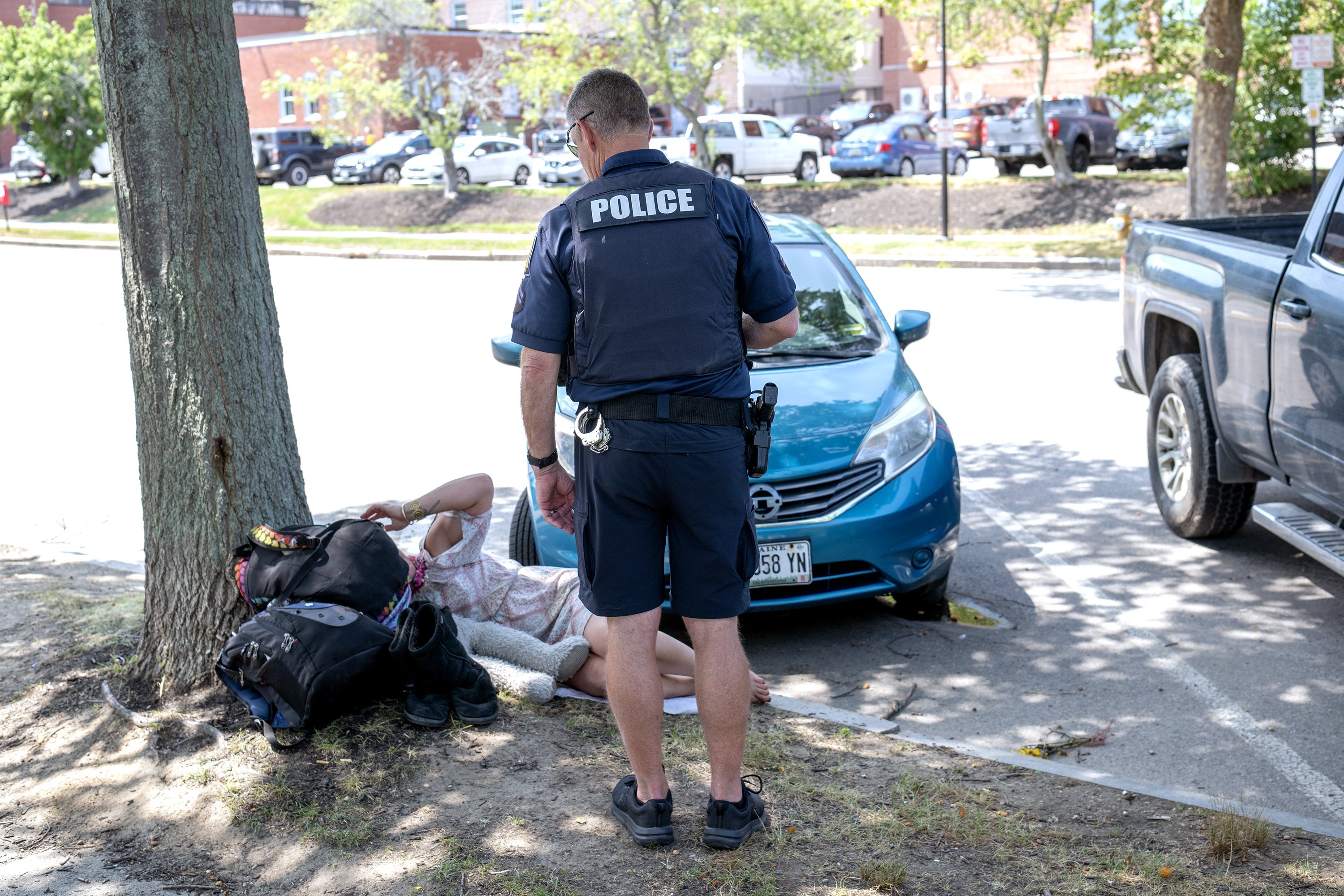
Portland police officer Dan Knight talks with a homeless individual on Spring Street in July. Knight asked the person to move along and she did. (Daryn Slover/Staff Photographer)
So far, the city has taken several steps to assist businesses in the downtown district — an area bounded by Cumberland, Franklin, Commercial and State streets — as well as people dealing with homelessness and often co-occurring mental health and substance use disorders.
It opened a $24 million, 258-bed homeless services center on the outskirts of the city and assigned staff to prevent homeless encampments from cropping up again. It started a program to encourage landlords to dress up vacant storefronts and increased the number of public bathrooms downtown. And it launched a hypodermic needle buyback program last year, paying clients 10 cents for every syringe returned — up to $20 weekly per person.
Related
New homeless services center opens, expanding shelter capacity in Portland
Despite these efforts, some downtown businesses are hiring security guards, installing metal gates on storefronts and escorting employees to their cars after dark. With each attempt to rein in bad behavior, the business community sees few consequences for the people responsible.
Advertisement
And because the Trump administration has made deep funding cuts in federal housing and homeless services that take effect in January, chamber CEO Quincy Hentzel said she fears Portland’s unhoused population will explode.
“People keep saying they’re working on the problem, but it’s complicated,” Hentzel said. “Well, we’re worried that it’s about to get worse.”
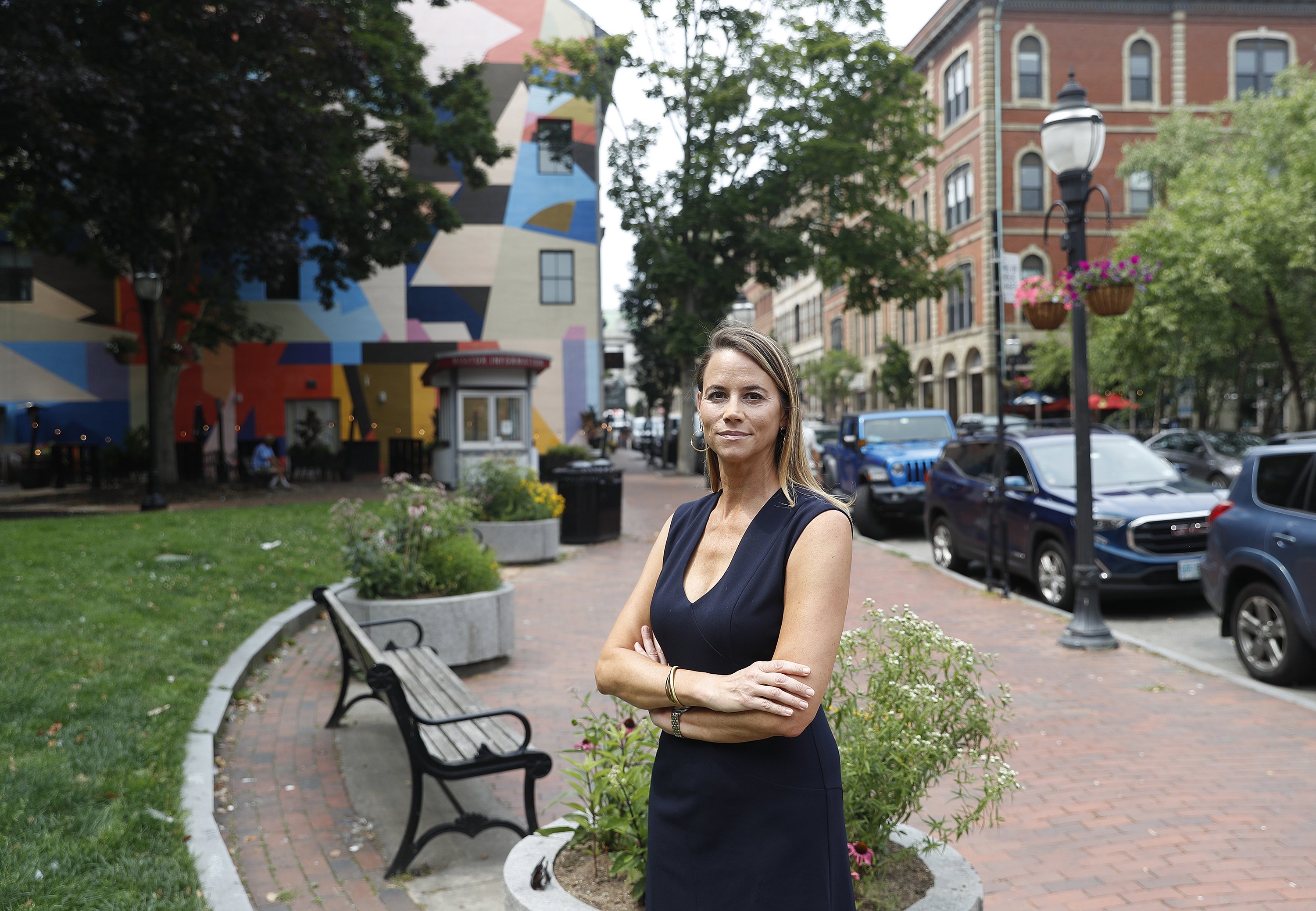
Quincy Hentzel, CEO of the Portland Regional Chamber of Commerce, stands on Exchange Street in Portland’s Old Port. (Derek Davis/Staff Photographer)
REPUTATION HAS LIMITS
Hentzel said she was shocked to learn Sun Oriental Market had closed its Congress Street entrance.
But she took similar steps at the chamber’s offices on Exchange Street after an indigent man was found rummaging through the refrigerator in the staff kitchen.
“He said he was looking for beer,” Hentzel said. “Now, we lock the door if there’s only one employee here, and I don’t like to do that because we’re here for the public.”
Portland’s tattered downtown reputation may be fairly limited. Hentzel said businesses contacted the chamber about safety and operational concerns rather than lost profits. Old Port tourists interviewed on a recent sunny day said they weren’t aware of the city’s downtown challenges.
Advertisement
A couple from Iceland said they noticed a few people panhandling, but it was nothing they hadn’t seen when traveling in other countries.
Jaied Khan, a New York City resident on a New England road trip with several friends, said he hadn’t heard anything negative about Portland. “It’s a beautiful city,” he said.

Jaied Khan of New York City said he hadn’t heard negative things about Portland before visiting in July. (Daryn Slover/Staff Photographer)
Hentzel and others note that the issues facing downtown Portland reflect challenges across the U.S., where the total of homeless people increased 18% to 771,480 in 2024, then dipped 3% to 745,652 in 2025, according to the National Alliance to End Homelessness.
A recent survey by Preble Street, an agency that serves Portland’s homeless population, found 102 people were living unsheltered on the streets of Portland last November.
MOVING PEOPLE ALONG
But it’s not just homeless people who are contributing to Portland’s downtown concerns. One of the city’s most persistent public safety problems is the illicit drug trade that operates along Portland Street, said Sgt. Sean Hurley of the community policing unit.
Stretching from Preble Street to Forest Avenue, Portland Street is studded with low-rent tenements and adjacent to the downtown district. It consistently attracts people who are selling or buying drugs and bringing related problems to the city, Hurley said.
Advertisement
Portland police work with state and federal investigators to make drug arrests, but the players are constantly changing, he said, so it’s a bit like a game of whack-a-mole. And arrests for minor drug violations, disorderly conduct and other quality-of-life crimes prove frustrating when suspects are released soon after they’re arrested, especially in a department that’s down 25-30 officers.
Related
New downtown Portland ambassador program aims to address growing safety, cleanliness concerns
“We can make arrests, but if we do, it can take hours to process, and then they’re right back on the street,” Hurley said. “A major push for us is to keep people from congregating because that’s when trouble starts. So we just keep moving people along.”
In a similar vein, Portland Downtown started an ambassador program last year, deploying staff to remove trash, graffiti, discarded needles and human waste from public areas, provide visitors with information and offer safe escort services.
And this summer, the police department launched a constable program, whose members aren’t sworn police officers, but they are trained to address downtown health and safety issues and keep people moving along.
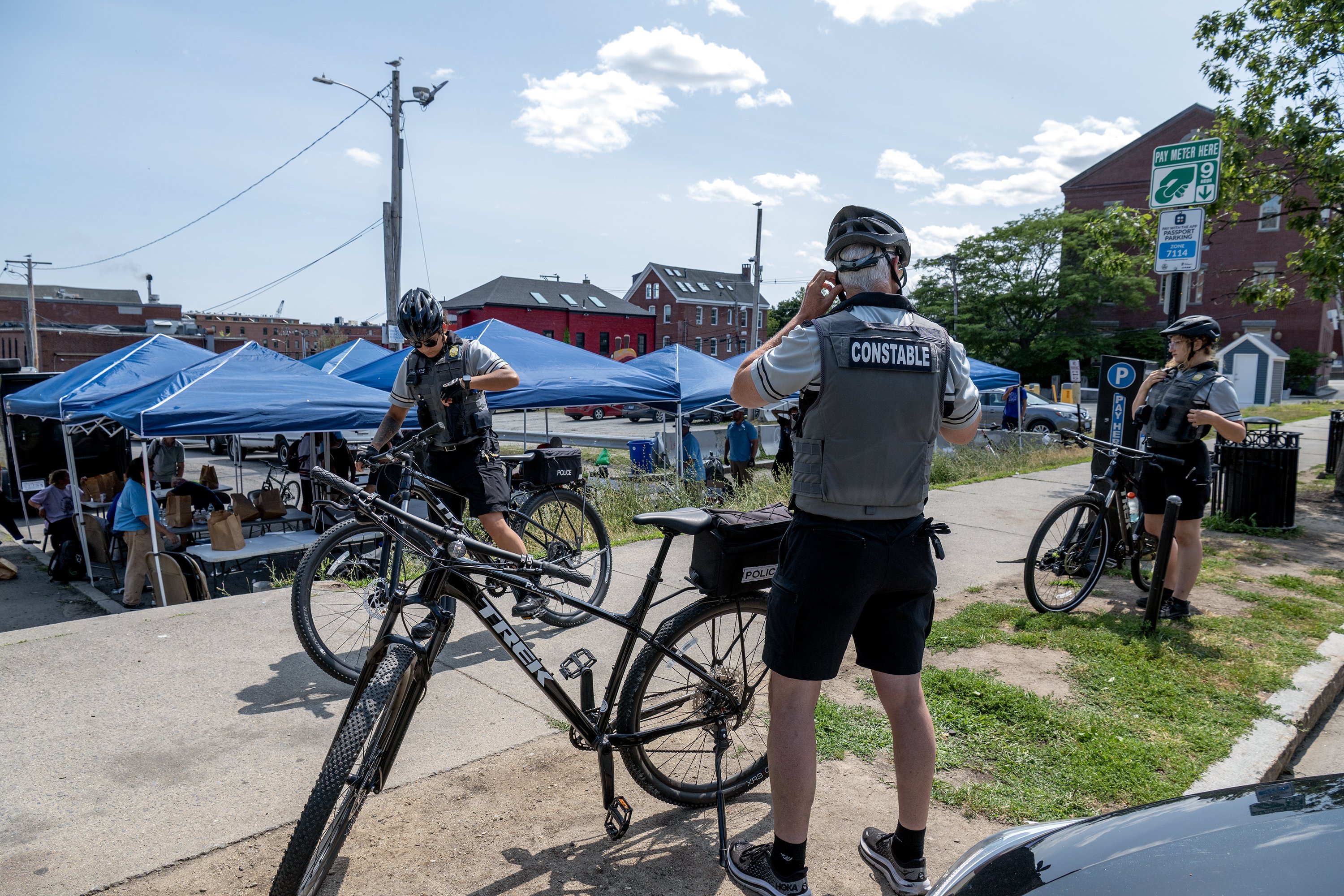
Portland police constables, from left, Aliyah Yates, Marty Ney and Lizzy Kampsen monitor the daily meal distribution program at Cotton and Spring streets in July. (Daryn Slover/Staff Photographer)
HOMELESS INDIVIDUALS SPEAK UP
J. is one of the people Portland police and others keep moving along.
She asked that her full name be withheld because she feared for her safety while living on the streets.
Advertisement
She was napping under a tree on Spring Street recently, surrounded by a knapsack and other belongings, when a police officer urged her to pack up and get going.
J. had been homeless for a few months, a circumstance aggravated by addiction issues, she said. At 37, she hoped to find housing and a job soon. In the meantime, the lack of a day shelter downtown and too few public bathrooms make it hard to get by on the streets.
“They don’t want people hanging out because it makes businesses look bad, but there’s no where for people to go and the lack of public bathrooms is a real problem,” she said.
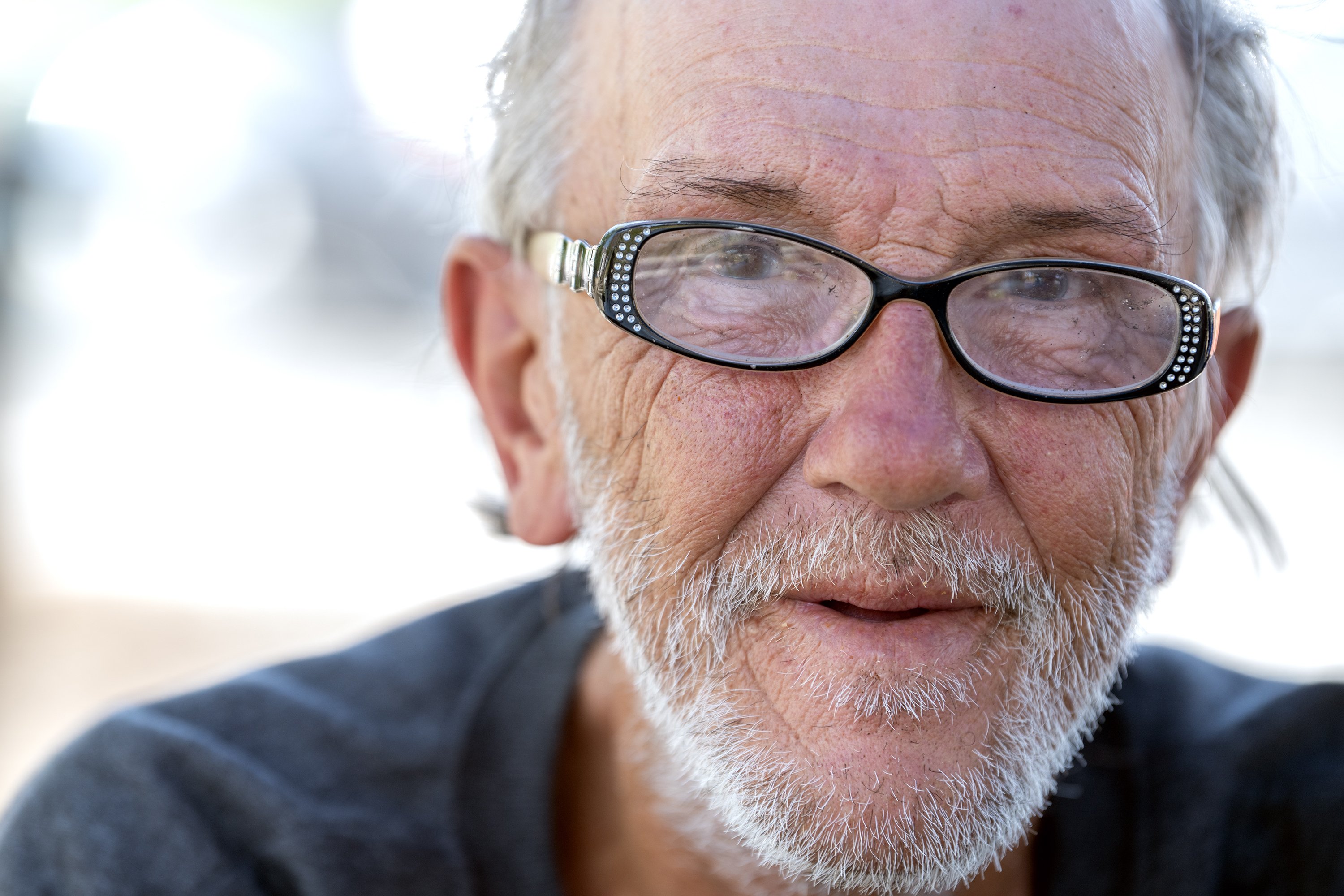
Joe Cianci has lunch regularly at a meal distribution site at Cotton and Spring streets at the edge of Portland’s Old Port. (Daryn Slover/Staff Photographer)
Joe Cianci, 59, has been living on the streets of Portland for more than a decade, he said. In that time he has seen changes in the homeless population.
While Cianci wrestles with alcoholism, he said, many others are using harder drugs, such as methamphetamine, fentanyl and other opiates. The harder drugs come with more unsettling behaviors, including the fentanyl lean, when users nod off standing up and bent at the waist.
“They should arrest people that are selling drugs,” Cianci said.
Advertisement
COTTON STREET MEALS PROGRAM
Cianci and J. are among 80 people who typically access free meals served daily under a tent at Cotton and Spring streets. The program operates outdoors year round with support from the city, Preble Street and other nonprofits.
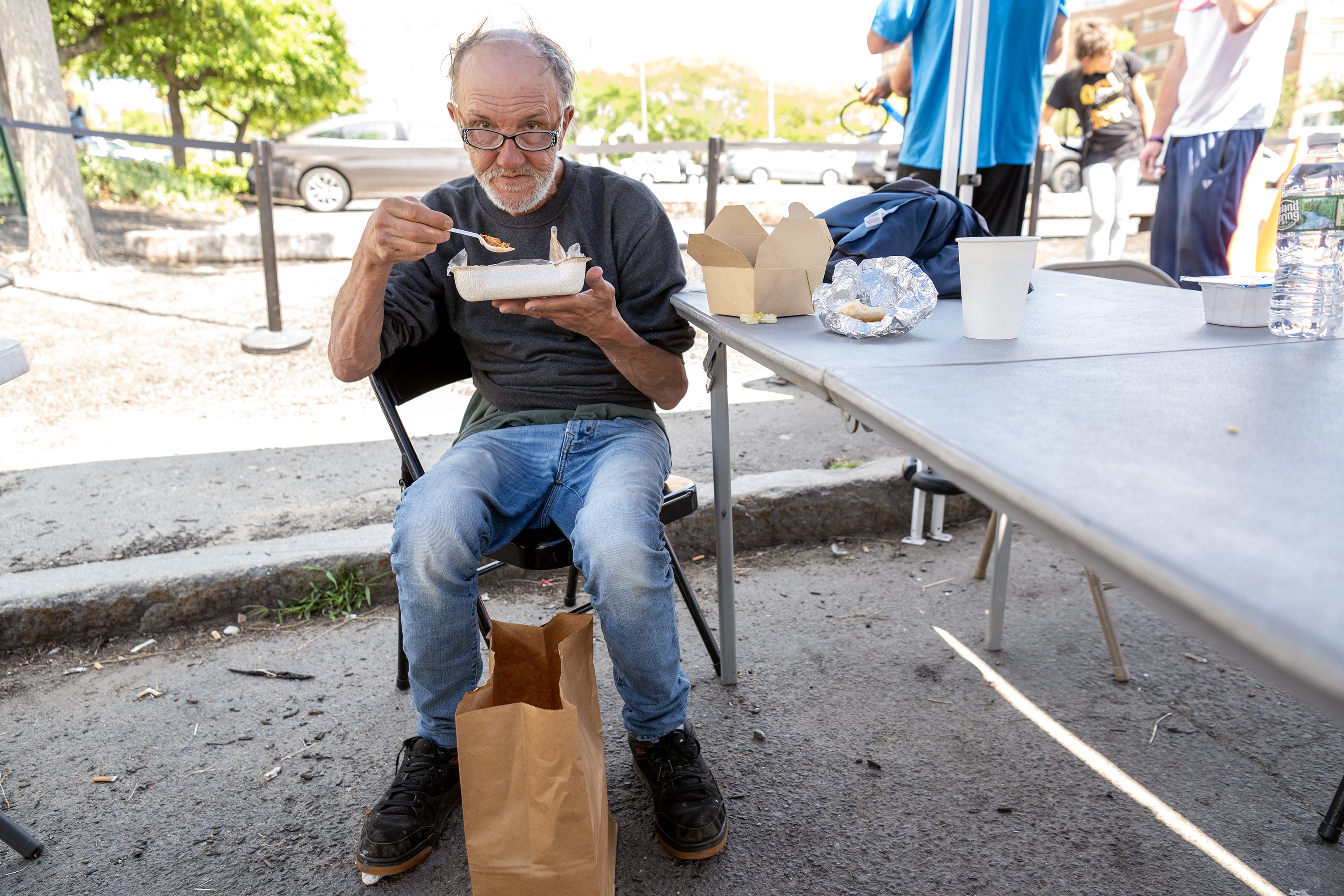
Joe Cianci has lunch at the city’s meal distribution site at Cotton and Spring streets in July. (Daryn Slover/Staff Photographer)
While the program has served over 24,000 meals at that location since last August, many say it’s not the best spot for it, at the edge of the Old Port, in the heart of the city’s tourist district.
But the city has struggled to find an indoor location for the program since Preble Street stopped serving meals at its Oxford Street space.
Mayor Dion said landlords have been unwilling to lease space for a day shelter or feeding program on the downtown peninsula. “There’s no space in the city that won’t draw criticism,” he said.
Dion is calling for stepped up enforcement of quality-of-life crimes and opportunities for people struggling with addiction to choose rehab and recovery over jail.
“It’s not OK to shoot up in public, it’s not OK to defecate in public, and I think we have a duty to intervene and hold people accountable,” Dion said. “We need to meet people where they are and develop a strategy so that when they do offend, it’s leveraged into recovery.”
Advertisement
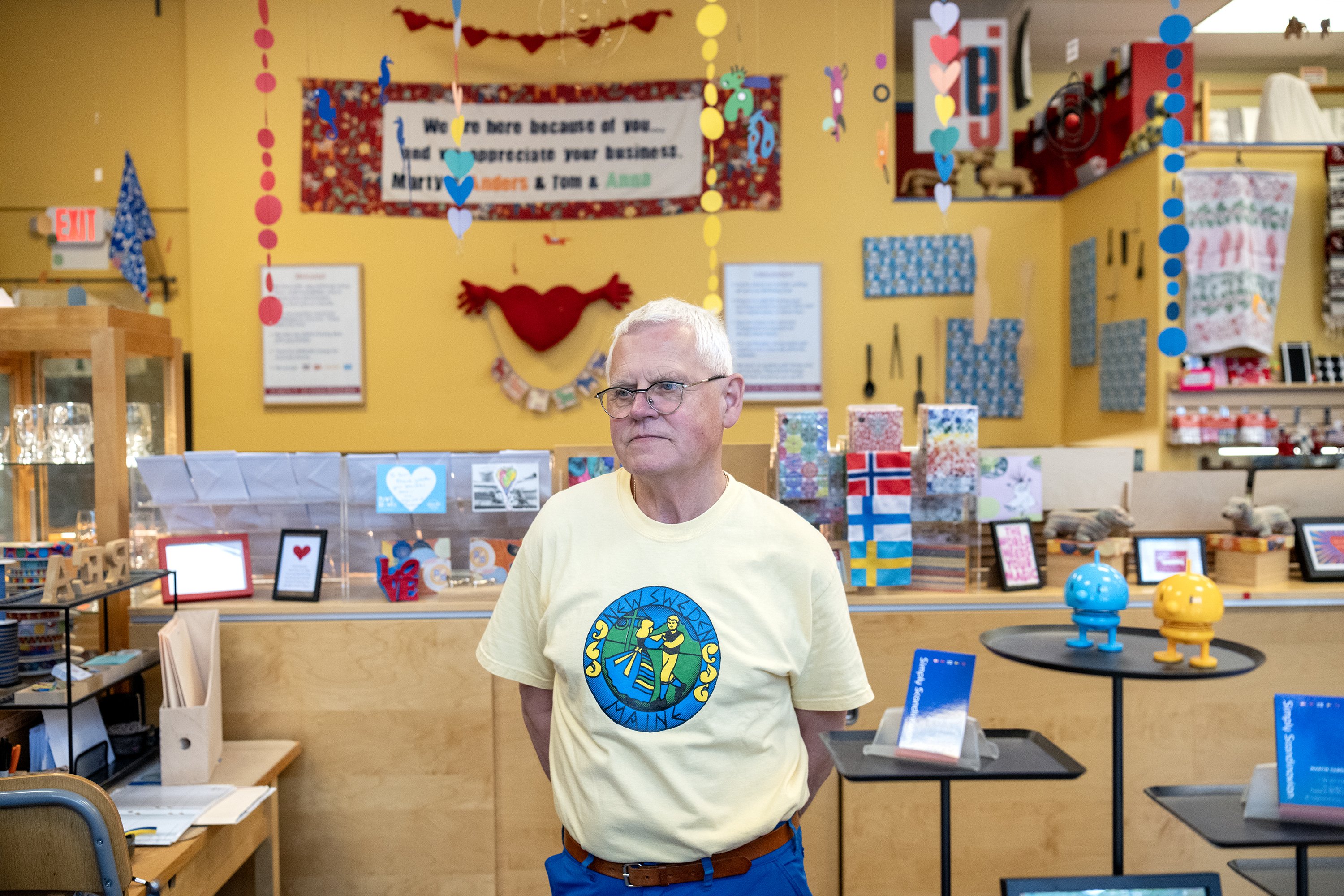
Tom Grant, owner of Simply Scandinavian on Temple Street, believes the city needs a more unified approach to address the impact of homelessness and related issues on the downtown. (Daryn Slover/Staff Photographer)
SEEKING MORE EFFECTIVE SOLUTIONS
Jackie Sartoris, district attorney for Cumberland County, also attended the chamber meeting.
She said she’d like to improve state laws so more people get treatment for mental health and substance use disorders than go to jail. She’s working with other district attorneys to recommend changes this fall.
“But we cannot arrest our way out of this problem,” Sartoris said.
Andrew Bove, Preble Street’s vice president of social work, believes the city needs an additional shelter on the peninsula to house about 100 chronically homeless people, but he questioned whether the business community would support it.
Related
They aren’t cops. So who are these people in uniforms in downtown Portland?
“Homelessness is a solvable problem,” Bove said. “If you can put a man on the moon, you should be able to provide shelter for 100 people.”
Whether Sun Oriental Market will continue to operate in downtown Portland if the problems continue is a question owner Se Jong Park regularly asks himself.
“If I can’t keep this store clean and if customers aren’t comfortable shopping here, I don’t want to be in business here,” he said.
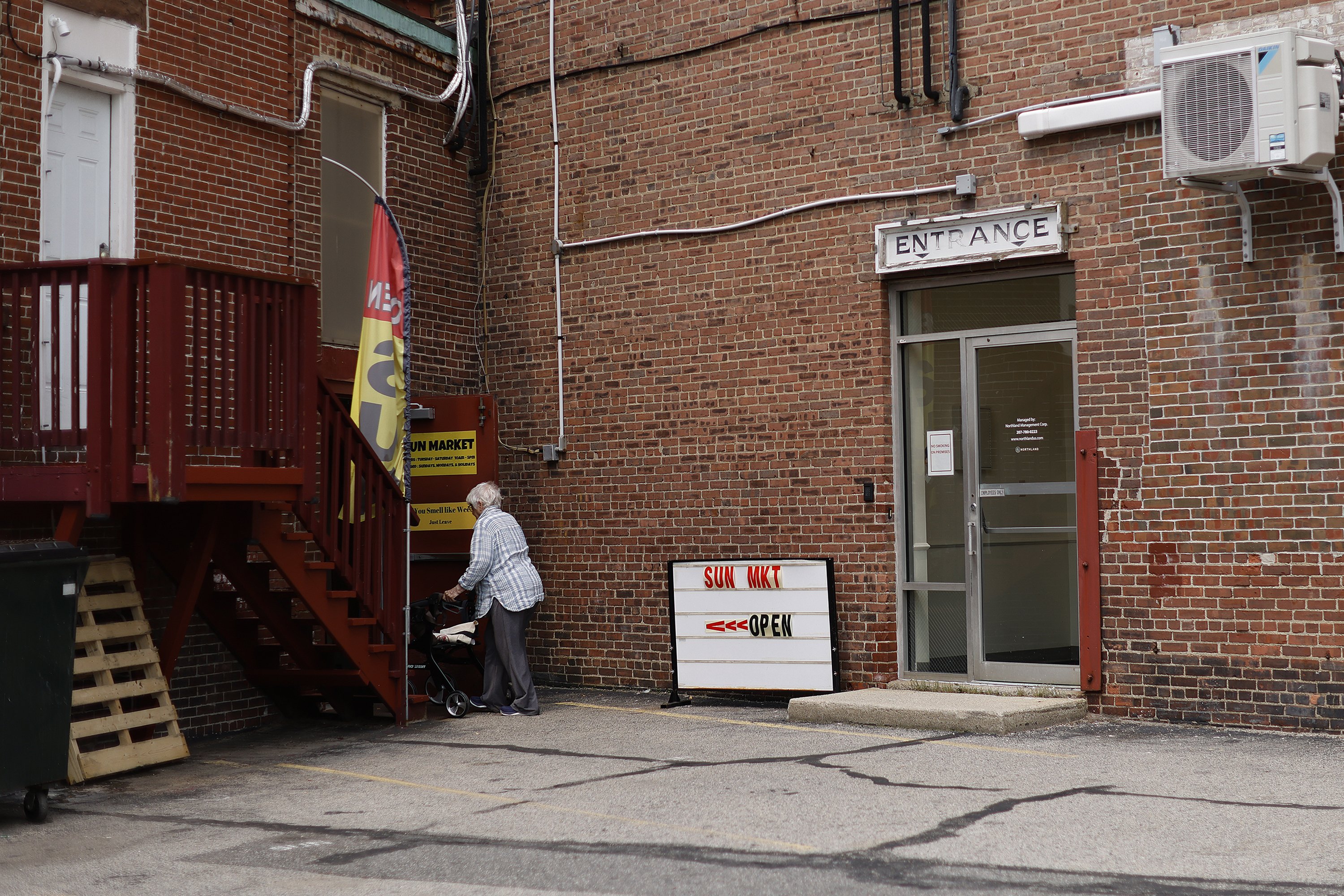
A woman enters Sun Oriental Market via its rear entrance. (Derek Davis/Staff Photographer)
Copy the Story Link
Tagged: homelessness, maine businesses, monument square, old port, public safety, tourism

Kelley writes about Maine businesses large and small, focusing on economic development, workforce initiatives and the state’s leading business organizations. Her wider experience includes municipal and. More by Kelley Bouchard