

Downeast writer’s new memoir explores complex familial bonds

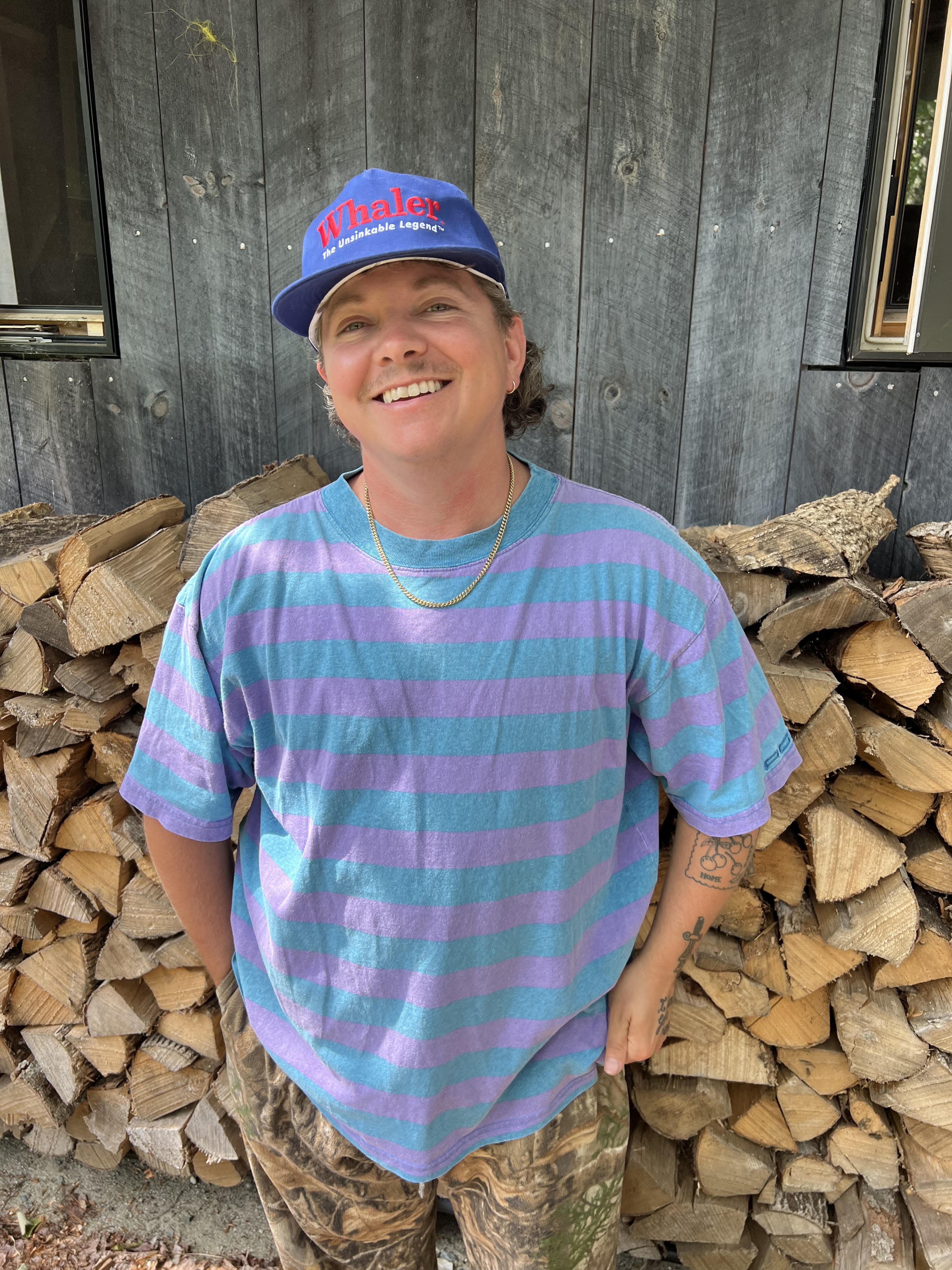
Emerson Whitney. (Photo by Char Bataille)
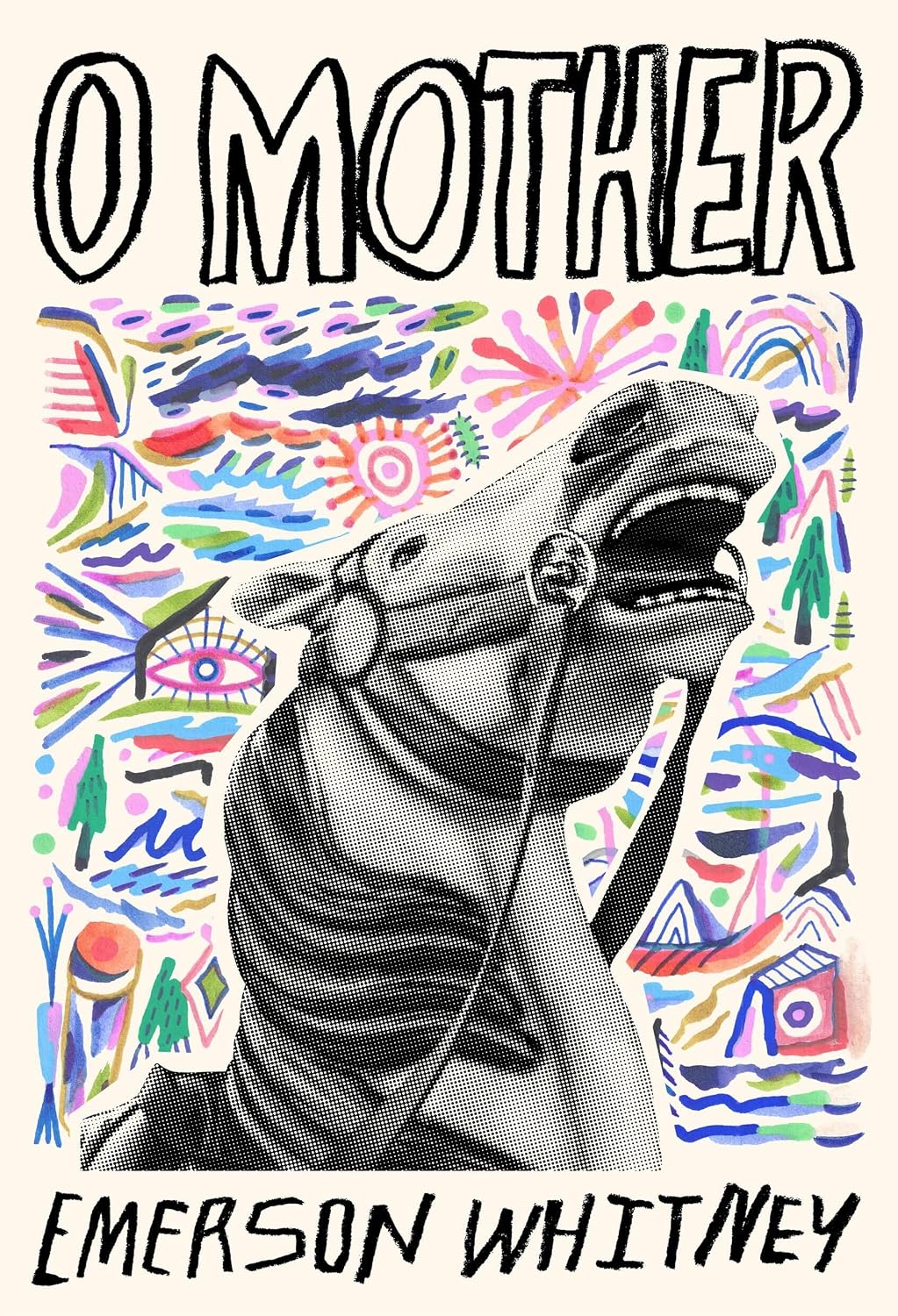
Our relationships with our family can be among the most fulfilling connections we have — or the most wrenching. Emerson Whitney’s memoir “O Mother” zeroes in on its author’s often-fraught connection to their mother, exploring both their shifting dynamic over the years and the aftermath of Whitney’s mother’s death. The resulting book is not always an easy read, but in describing their own efforts to create a life in Maine — complete with building a house — Whitney offers readers a candid and vulnerable look at the ebbs and flows of one family. We spoke with Whitney about “O Mother” and how it fits into their larger bibliography.
You’ve written about your family in your previous books. When you began working on “O Mother,” did you have a sense of how you would approach your family’s history in a way that stood on its own?
I see each of these books as fitting into the long-term durational project of writing life; Anne Ernaux is someone that really inspires me in that same way where I find myself enthralled by each episodic movement of that life. I’m hopeful that I can do that, and at the same time this was the first book where I wasn’t being really mindful of my mom’s privacy.
She wanted me to keep certain details out when she was alive, partially because she was always worried that something would jeopardize her job. I was respectful about that. I tried to not even say “Maine” a whole lot, so this was the first time that I could actually talk about where we were living. That felt really different. And, of course, my lens on our relationship and who I am in relation to her kept changing, so I think it’s cool to keep hanging out with some of the same subject matter but to see it each time with a different lens.
At the end of the book, you talk about changes you’ve made to certain details, but you also make it clear that the language of your mother’s that you used includes the errors and idiosyncrasies of her language. Was that something you had planned from the outset, or did it evolve as the book developed?
Often, books about self-completed death or suicide tend to be these sweeping projects where people are going through documents. In living through this particular death, I was filled with documents, so there was no real way for me to not engage with it. I tried to do it so that it wasn’t exactly backward-looking. Even if you’re talking about your own relationship with a family member, there may be stuff that happened generations before that still has an impact on the present day. That’s a lot of what this book is about.
When I was going through her hope chest, I found a picture of her when she was young. A sticky note that she’d written about herself fell off of it and it said, “Do I have autism? Is this what’s going on?” I was really struck by that because it had never occurred to me that she would even think like that. In the process of looking more closely at some of these Tupperwares of papers, I saw a lot of diagnostic material. As I was going through, I started to realize some of these were mine, so we were all shuffled as one being in this Tupperware. I realized in this accordion moment, “Wow, this is a lens through which I could see my mom, and this is a lens through which I need to see myself a little differently, too.”
You’ve lived in a number of very large cities; did you have any issues adapting to life in Maine?
I was a reporter for the Observer in New York from 2008 to 2010. I was working for Peter Kaplan, and that was incredible; he said, “We’re going down as a publication and you don’t have a degree. I’m worried about you,” and he paid me under the table to go to school. I went to Goddard College in Vermont because it was low-residency. It made me think this is more where my nervous system belongs. I don’t miss a whole lot about being in a city.
Advertisement
Chronic illness is a big part of this book, and living with chronic conditions is something a growing number of writers are being candid about nowadays. Do you see your writing as a part of that?
I do. There are a lot of people I’ve always been a huge fan of, like Eli Clare, working in the field of disability issues. In relation to COVID, there has been a wider cultural discussion on disability. As some of my favorite disability authors and makers say, “We’re all going to be disabled in various ways, if we’re not already.” And most of us are, but ableism just sort of lurks around, regardless of how many people fall into the category of disabled. I think that’s what I’m hoping to puncture to some extent. In my own life, it’s so hard; I have such intense internalized ableism, I’m always trying to undo it. It’s a life’s work and it’s in many ways paired with a life’s work practice of decolonizing.
There are so many old ideas that I have about what it looks like to be a “good person,” and some of that involves those Puritan ideals I’m writing about in the book. She thought if your hands weren’t bleeding then you didn’t do anything today. She used to tell me things like, “I think I broke my foot but I went to the YouTube doctor about it.”
I’d be so exhausted by that because I could tell she was calling for help, but I didn’t understand the extent to which she was living with such severe internalized ableism that she couldn’t actually form the words for either how to receive help or how to care for herself. We were in this kind of mutual ableism tangle for probably my whole life.
Do you have another project in the works now or are you waiting for inspiration to strike?
I definitely have another book I’m working on. I’m a constant maker — I don’t know how to not be — and I’m grateful for how this works in my life. As a life writer it feels great to be always making. My biological dad passed away very quickly last May from Stage 4 colon cancer. I inherited his boat, which showed up in my driveway one day without me planning on receiving it, so I’ve been learning a lot about the lineage of queer sailing here out in Hancock County. I’ve been studying that and also trying to learn how to sail this boat, so that’s what I’m working on right now.
New York City resident Tobias Carroll is the author of five books, most recently the novel, “In the Sight.” He has reviewed books for The New York Times, Bookforum, the Star Tribune and elsewhere.
Copy the Story Link
Tagged: books