

Celebrating the Mainer who helped bring baseball to Japan

GORHAM — Theo Balcomb was 12 when she learned her family’s farm was part of Japanese history.
Her dad was milking the cows when a group of serious Japanese baseball men arrived one summer day in 2000. The group included a newspaper reporter, a historian and a translator. They wanted to meet the descendants of Horace Wilson, who left the farm to fight in the Civil War — and who brought baseball to Japan in the 1870s, showing the game to students when he was working as a teacher there.
“It was shocking. To have this contingency of formal folks from Japan coming here, out in the middle of nowhere, felt very odd,” said Balcomb, now 39 and a senior editor at The Atlantic. “We love having people over. This was just different.”

Scott Balcomb and his wife, Abigail Sanborn, far right, with their daughters Theo Balcomb, center left, and Hallie Balcomb at their family home in Gorham. Sanborn’s ancestor Horace Wilson, born on in the same house, is credited with bringing baseball to Japan. (Derek Davis/Staff Photographer) Purchase this image
The visitors invited Balcomb and her family to come to Japan and help them promote Wilson as a founding father of Japanese baseball. Balcomb and several family members visited the country, met with dignitaries and toured ballparks. In 2003, Wilson was inducted into the Japanese Baseball Hall of Fame. Now, Balcomb is part of a group of people working to share Wilson’s story with a wider audience at home.
Those efforts include the Horace Wilson Baseball Tournament, being held Aug. 15-21 at the Little Falls recreation area in Gorham, on a field named for Wilson. On Aug. 23, the Portland Sea Dogs will host Japan Day, as a tribute to Wilson. Japanese Consul General Seiichiro Takahashi, based in Boston, will be on hand. Balcomb will throw out the first pitch.
In Feburary of 2025, an event to celebrate Wilson was held at University of Southern Maine, with supporters discussing ways to commemorate Wilson and promote the Maine-Japan connection. One of the guests was Boston Red Sox designated hitter and outfielder Masataka Yoshida.
Advertisement
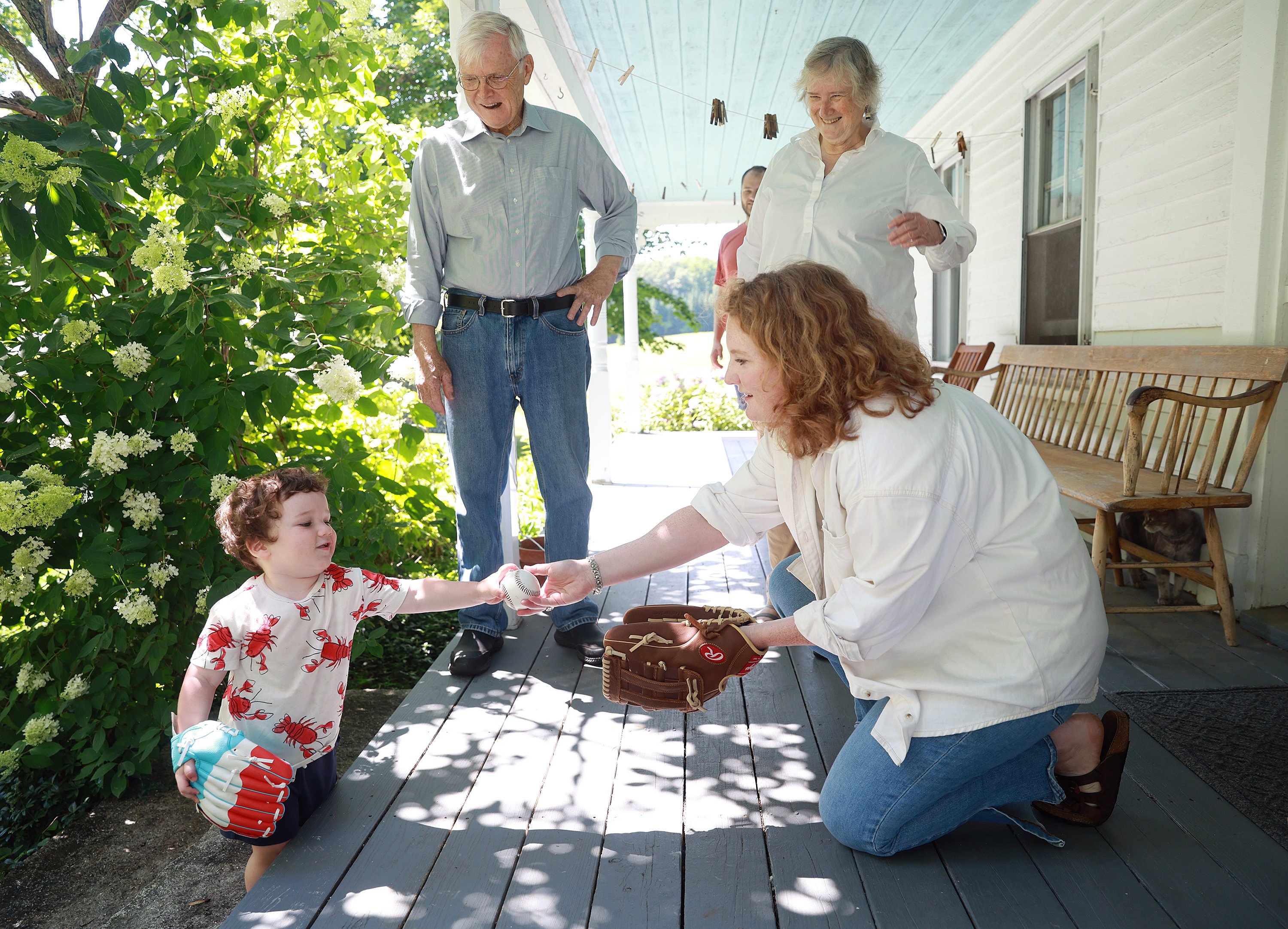
Scott Balcomb and his wife, Abigail Sanborn, watch their daughter Hallie Balcomb as she gives her son, Arthur Freeze, 2, a baseball at their family home in Gorham. Hallie and Arthur were scheduled to throw out the first pitch at the Horace Wilson Baseball Tournament. (Derek Davis/Staff Photographer) Purchase this image
Yoshida also toured Wilson’s birthplace, the Gorham farmhouse where Balcomb’s parents still live. He spent much of his time in the parlor, where a replica of Wilson’s image in relief at the Japanese Baseball Hall of Fame sits on an antique piano.
In an email sent by his translator, Yutaro Yamaguchi, Yoshida said last week he visited the Gorham house because he wanted to “see the birthplace of Japanese baseball and learn about the place.”
“Baseball has brought people from all over the world together, especially those from Japan and the United States. Baseball is also the reason I am here today,” Yoshida said. “Sometimes, we take for granted the fact that we get to play this game every day. But because people like Mr. Wilson paved the way for us, we have the opportunity to play the game we love today.”
During his visit to Gorham, Yoshida left the family one of his No. 7 Red Sox jerseys, authographed.
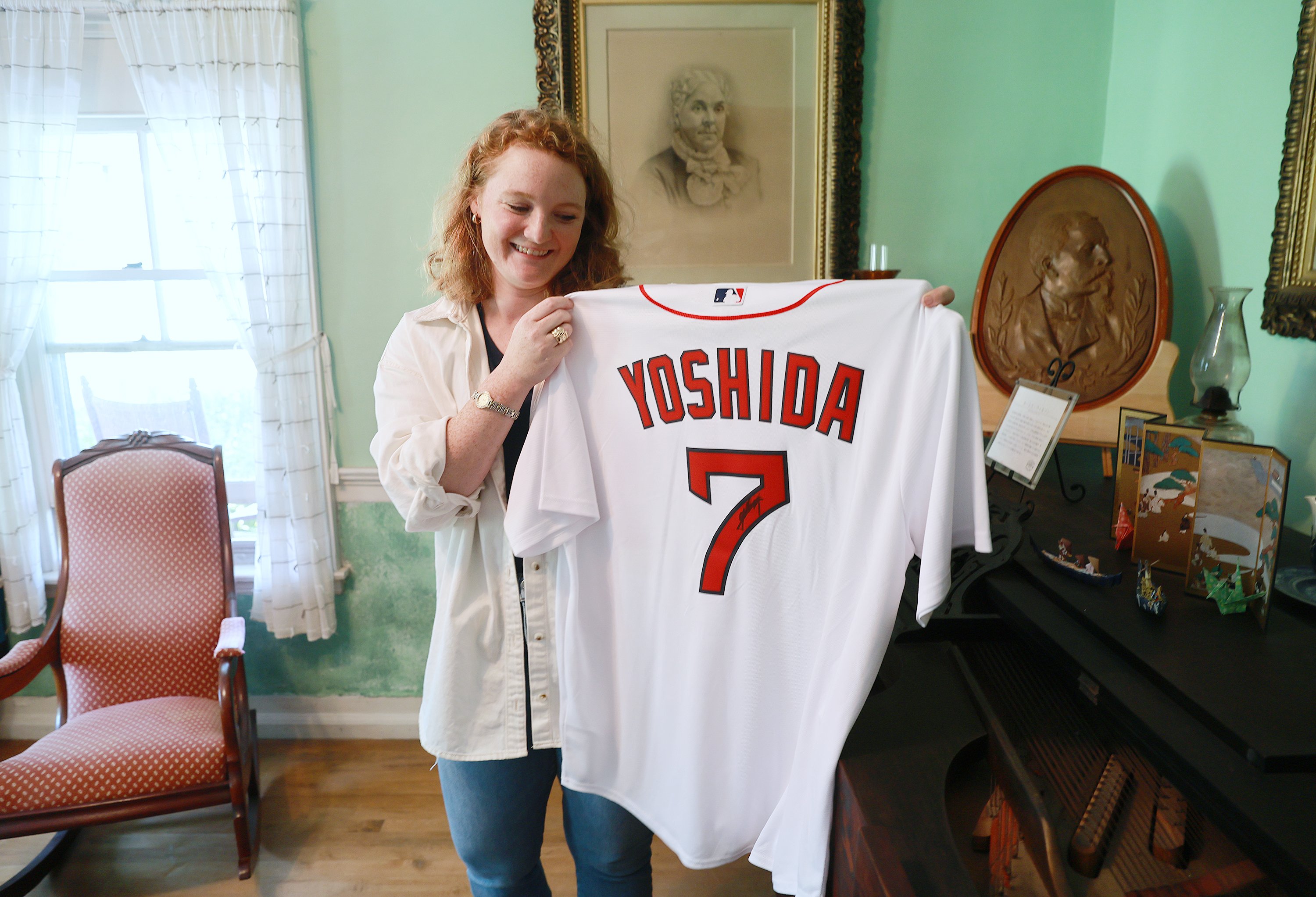
Hallie Balcomb holds a Red Sox jersey autographed by Masataka Yoshida. He visited her family’s Gorham farm last year because he “wanted to go see the birthplace of Japanese baseball.” (Staff photo by Derek Davis) Purchase this image
NO HORACE, NO ICHIRO
This recent burst of activity around Wilson and something he did 150 years ago started with another outsider’s visit to the family farm in Gorham.
Ryan Shaffer of South Portland showed up one day at the 150-acre farm a couple years ago and introduced himself to Theo Balcomb’s parents, Scott Balcomb and Abigail Sanborn (her side is descended from Wilson). Shaffer works as president of the Japan-America Society of Washington D.C., and was visibly excited about this cultural connection between the two countries.
Advertisement
“I just said to him, ‘What are you doing here?,’ I hope, in a polite way,” said Scott Balcomb. “I’m always amazed at how some people are so enamored with this story.”
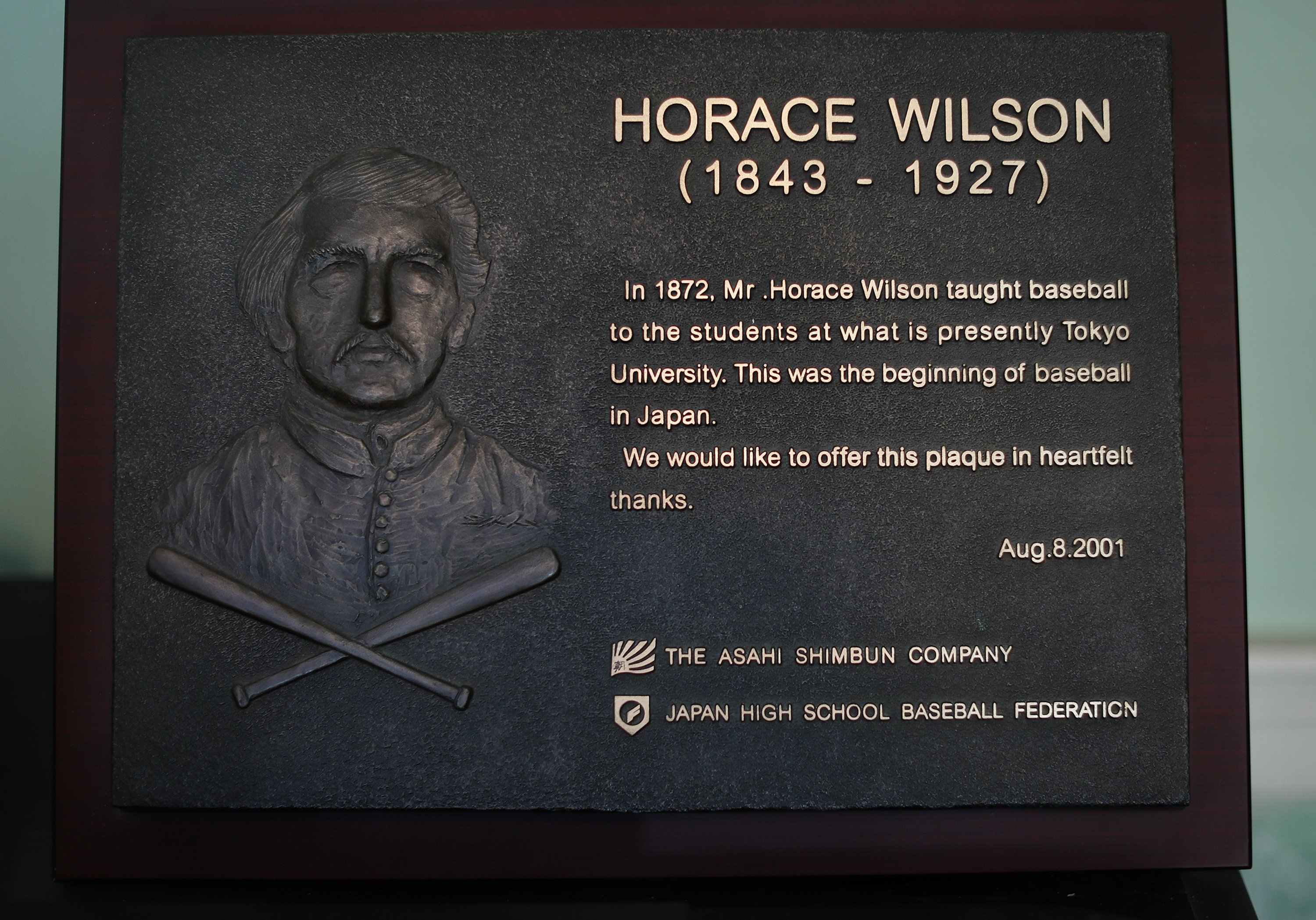
A commemorative plaque given to members of Theo Balcomb’s family when they visited Japan. (Staff photo by Derek Davis) Purchase this image
Shaffer first heard about Wilson when his parents visited the Japanese Baseball Hall of Fame. Other than a National Public Radio story Theo Balcomb did in 2014, he found very little English-language information about him. Shaffer, using his connections and experience in Japanese-American relations, was the lead organizer of the USM event last year. From that meeting, the Horace Wilson Committee began, with a focus on promoting his legacy. Commitee members were involved in organizing both the Sea Dogs ‘ Japan Day and the Horace Wilson Baseball Tournament.
Because baseball is so important to the cultural fabric of both countries, Shaffer says you’d be hard-pressed to find someone who has had a bigger impact on the friendship between the U.S. and Japan than Wilson. The baseball connection between the two is strong and ever-growing, with players like Yoshida, Ichiro Suzuki and Shohei Ohtani thrilling fans in both countries.
“So, for me, his origin in Gorham creates something of a mecca for anybody for whom baseball or Japan are important,” Shaffer wrote in an email. “Without Horace Wilson of Gorham, there would be no Yoshida, Ohtani, or Ichiro.”
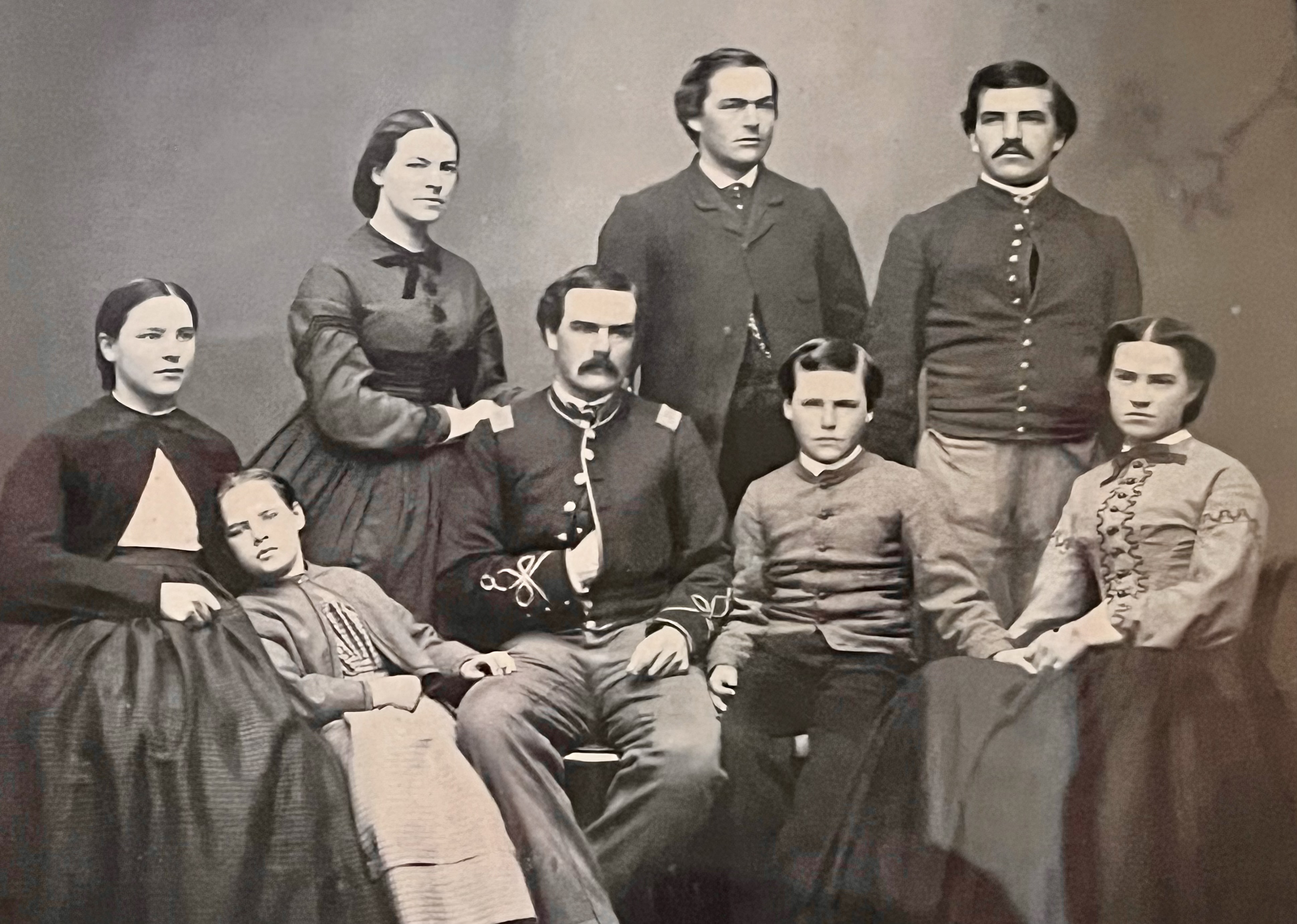
Horace Wilson of Gorham, standing at top right, in a family photo. (Photo by Colin Dwyer)
Wilson’s family doesn’t know much about him, before or after his time in Japan. He was born in 1843 in the family home on Wilson Road, in the White Rock section of town. It’s the same house his descendants live in today. He left the farm to fight in the Civil War, where he could have learned baseball, and later ended up in San Francisco. He was a librarian for a time.
He went to Japan and, in 1872, began teaching English and math at the school that later became the University of Tokyo. While there, he taught baseball to his students. Based on testimonies from his students and other sources, “he is regarded as the first person to introduce baseball to Japan,” according to the Baseball Hall of Fame and Museum, in Tokyo.
Advertisement
America’s own baseball origin story, about Abner Doubleday creating the game on a cow pasture in Cooperstown, New York, has been revealed to be myth.
But Wilson’s feat, teaching baseball to students, is fairly easy to document. Years later, when a Japanese publication ran a story saying someone else had brought baseball to that country, Wilson’s students wrote letters to point out the mistake, Balcomb said.
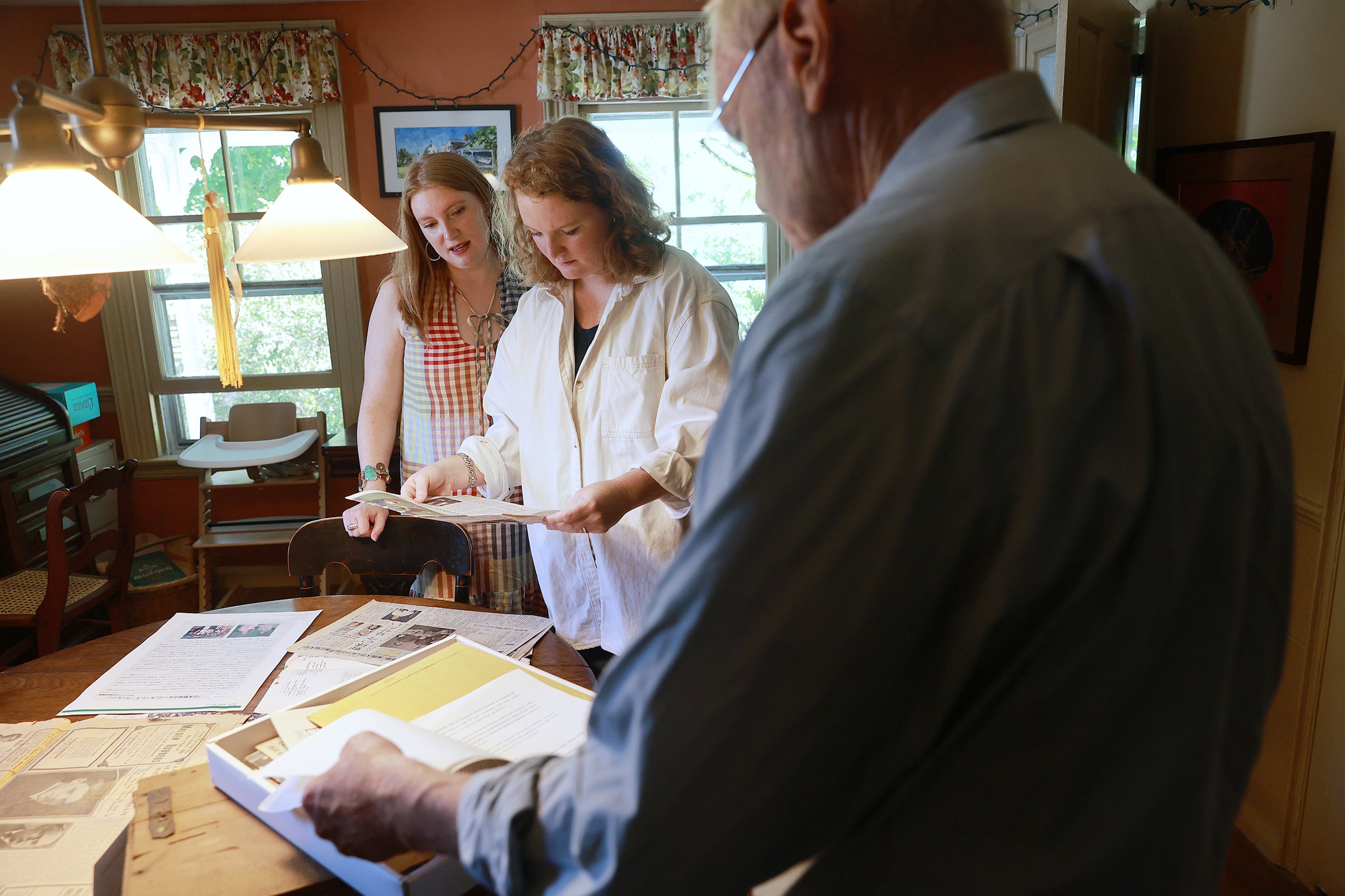
Scott Balcomb looks through newspaper clippings and other information about Horace Wilson with his daughters Theo Balcomb, left, and Hallie Balcomb. (Staff photo by Derek Davis) Purchase this image
JUST THE BEGINNING
After teaching in Japan, Wilson went to San Fransisco, where he died in 1927 and is buried. He had come back to Gorham for visits but never lived there again, Sanborn said. One of the things the Horace Wilson Committee might do is try to find out more about his life, here and in Japan.
The committee includes Shaffer; Theo Balcomb, who lives in Portland; and Ellie Sato, a Gorham state representative, who is Japanese-American. Other members are people involved in area sports or arts and cultural groups, plus town officials. Some of the committee’s objectives include creating a statue of Wilson or a public art piece, either in Gorham or Portland. Committee members hope to use Wilson’s legacy to inspire cultural and educational exchanges between Maine and Japan, and maybe attract visitors to Maine.
Mio Maeda, the deputy consul general at the Japanese consulate in Boston, will be at the tournament’s opening ceremonies, scheduled for 2 p.m. Saturday. Hallie Balcomb, Theo’s sister, plans to throw out the first pitch with her 2-year-old son, Arthur Freeze.
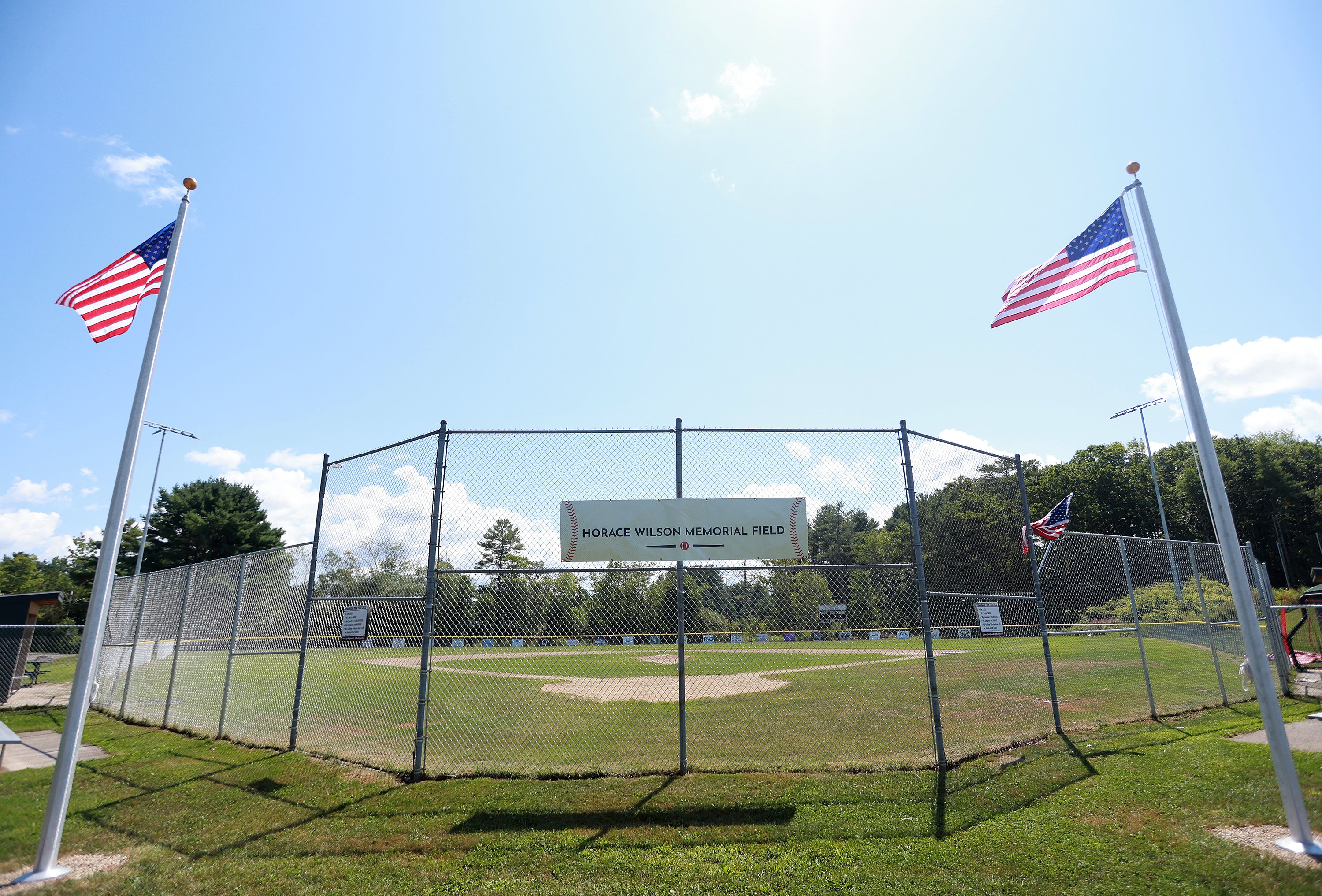
Horace Wilson field at the Little Falls Recreation Area in Gorham will host a baseball tournament in his honor. (Staff photo by Derek Davis) Purchase this image
Organizers hope the baseball tournament in Gorham this week is the beginning of something bigger. Cindy Hazelton, a committee member and director of the Gorham parks and recreation department, thinks that someday teams from Japan might come to Gorham to play baseball on Horace Wilson Memorial Field. Or maybe teams of Japanese students going to school in this country will. This year’s inaugural tournament will feature Little League teams from Maine’s District 6, on a field that recently got lights and also has flush toilets, which Hazelton says is “a big deal.”
Advertisement
“We have to walk before we can run,” Hazelton said.
The Sea Dogs’ Japan Day is already up to sprint speed, as far as minor league promotions go. There will be activities going on before and during the 1 p.m. game against the Reading Fightin’ Phils on Aug. 23 at Hadlock Field in Portland. There’ll be several performances, including Shakuhachi flute music from Toji Kaido Perlman, the Taiko Maine Dojo drumming group and traditional dance by students from Showa Boston.
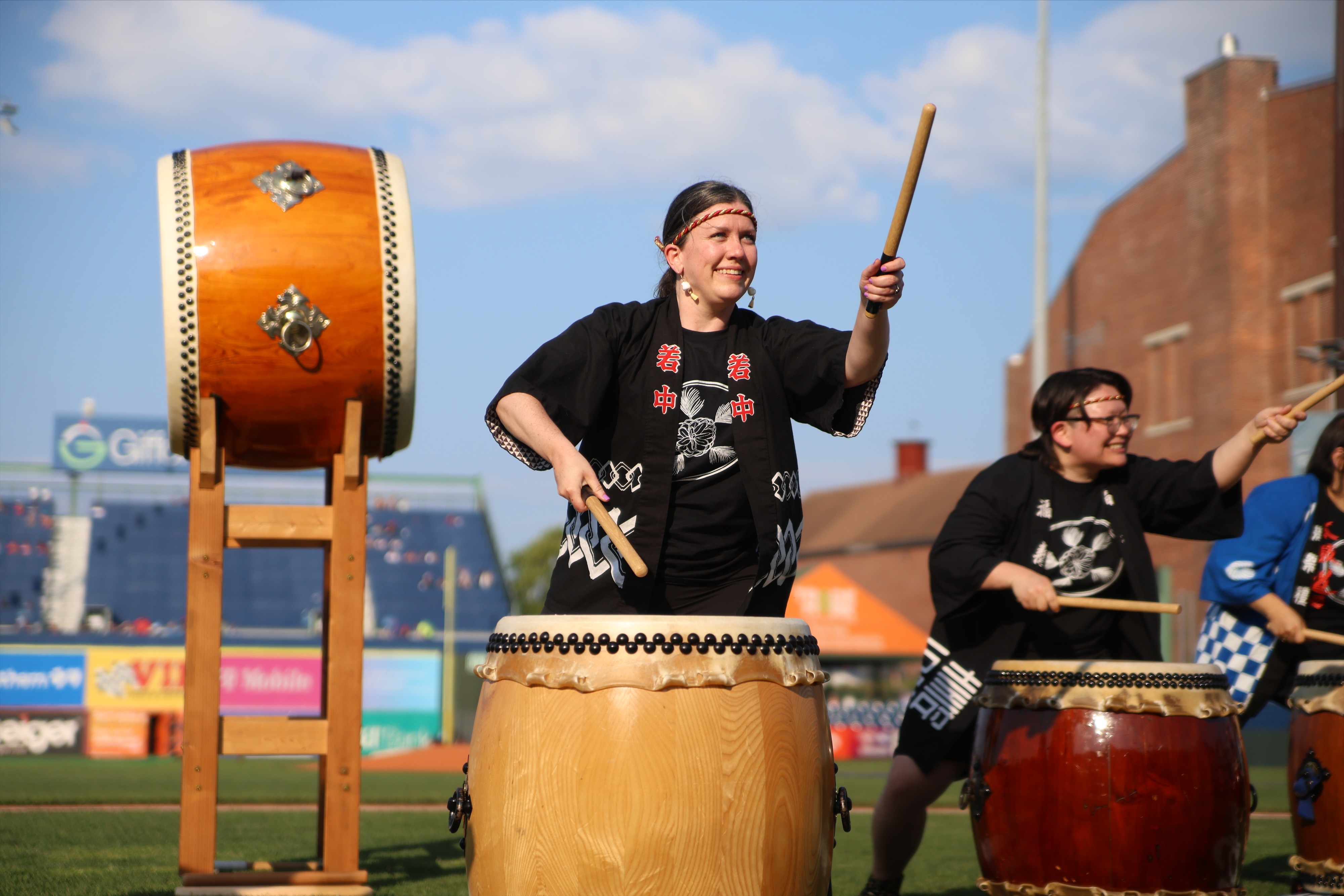
Drummers perform at the Portland Sea Dogs’ Japan Day in 2025, honoring Horace Wilson. (Courtesy of the Portland Sea Dogs)
Little Leaguers who played in the Gorham tournament will be part of a pre-game parade. There will be videos about Japanese tourism and Japanese beverages will be sold, including Kirin Ichiban beer and Farthest Star Sake. Besides the Japanese Sea Dogs T-shirts, there will be Sea Dogs hats with a Japanese cherry blossom design, part of a special ticket package. Japan Airlines will give one fan at the game 80,000 air miles, or the equivalent of a round-trip flight from Boston to Tokyo (tax and fuel fees not included).
The first Japan Day, held last year after Horace Wilson Committee members reached out to the Sea Dogs, was very popular with fans. So, the team decided to make it bigger and better this year.
“I’m sure a lot of people didn’t realize that Japanese baseball actually started with a man from Gorham, which is an incredible story,” said Chris Cameron, vice president of communications for the Sea Dogs. “We love that we can help share his impact and legacy.”
Copy the Story Link
Tagged: baseball, japan, portland sea dogs

Ray Routhier has written about pop culture, movies, TV, music and lifestyle trends for the Portland Press Herald since 1993. He is continually fascinated with stories that show the unique character of. More by Ray Routhier