

Bored with social media? Get your hands on a Maine zine


Sophie Raskin, left and Elena Dugal drop off copies of their zine Backline at Bold Magazine Shop in Portland Monday. Stacy Mitchell, of Bold Magazine, looks over the zine to the right. (Shawn Patrick Ouellette/Staff Photographer)
It’s difficult to find a universal definition for a zine.
Shorter than a magazine and usually produced in small batches, this physical media (pronounced “ZEENS”) can look very different from zine to zine.
Some zines are printed out by hand at home and stapled together. Others are made of a single sheet of cut and folded paper, or printed using online print-on-demand services.
Some start as collages of physical artwork, others contain typed-out news articles with vibrant photos.
Zines can be about anything from photos of food-themed license plates or pairs of white shoes, to comics or political activism.
Because they are relatively short, most zines can be printed and sold cheaply, making them appealing for buyers and retailers alike.
Advertisement
In Portland, zine makers – many of whom know each other and sell at the same local businesses – have found plenty of people eager to get their hands on physical media. In an increasingly digital age, these zine makers want you to know that the art form, which originated in the early 20th century, is still relevant today.
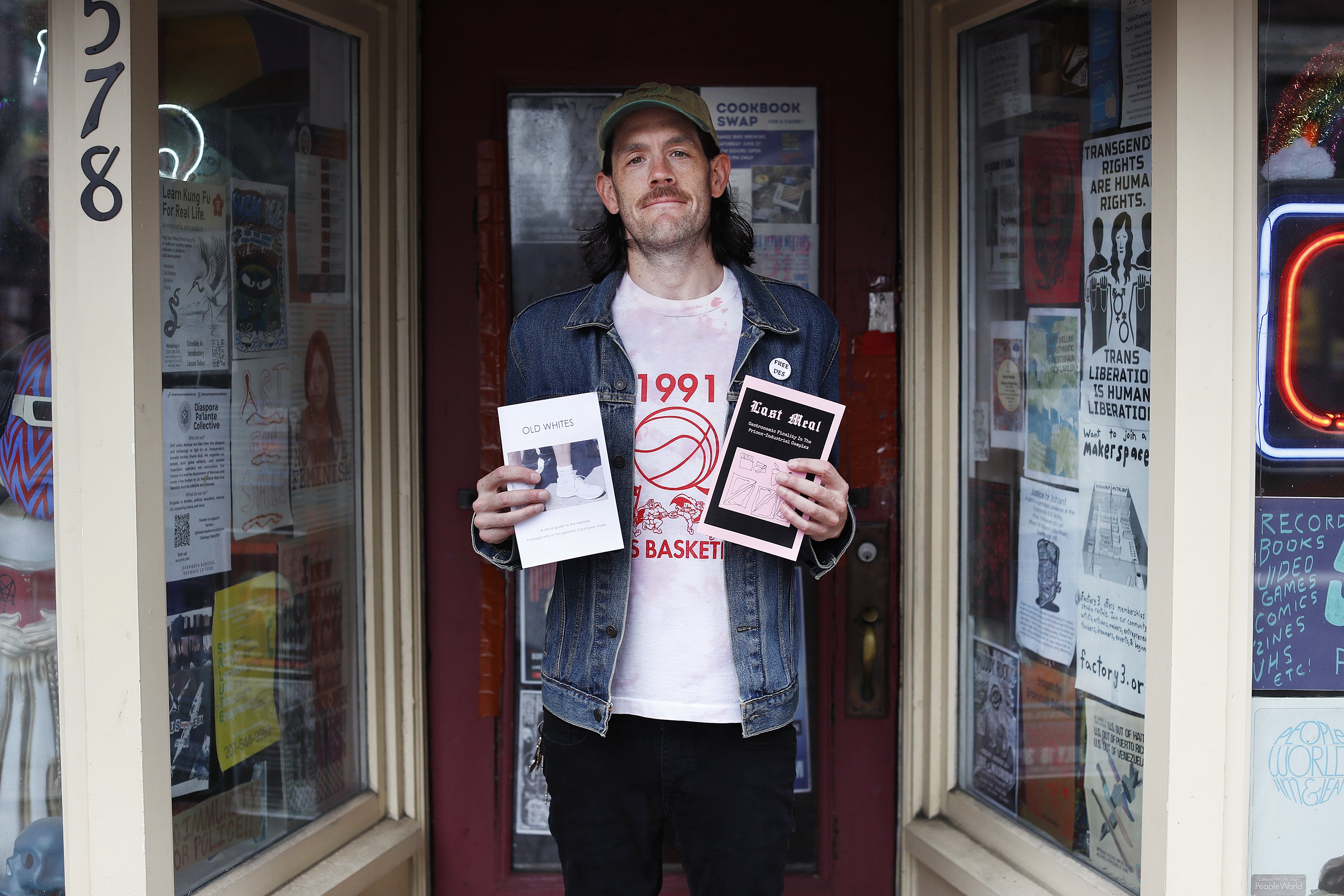
Zine maker Matt Dodge waits at Strange Maine in Portland to drop off materials on, Aug. 3. (Derek Davis/Staff Photographer) Purchase this image
PRINT IN A DIGITAL AGE
Although their exact moment of origin is contested, many people place the birth of zines in the 1930s as short booklets primarily made by science-fiction fans. They became popular in the 1960s and ’70s, when copy shops became more available. As zine culture grew and production became easier, zines were increasingly used to showcase original artwork, information about music groups or political activism. Today, although not quite mainstream, zines remain popular.
With the proliferation of social media, many zine makers and distributors in Portland see zines as a nice alternative to posting or reading things online.
In an increasingly digital age, G Ferragamo-Gilbert, who produces the popular Portland Dirt zine said of the appeal, “It feels obvious to me. There’s something satisfactory about holding something in your hands that changes and ages with you.”
While flipping through a zine is a physical experience, some zine makers do market, accept submissions and distribute their zines online.
Ferragamo-Gilbert first began Portland Dirt over a year ago. The zine, modeled after a short newspaper, is submission-based. Ferragamo-Gilbert and their collaborator, Benjamine Sapp, prioritize publishing poems and art by New Englanders, but have reached enough popularity online that they now receive and accept submissions from across the country.
Advertisement
Elena Dugal and Sophie Raskin, creators of the new music-based zine Backline, printed their zine through an online service called Mixam and have a personal website and Instagram where people can order their zine, but they also table at events and sell the zine at Bold Magazine Shop.
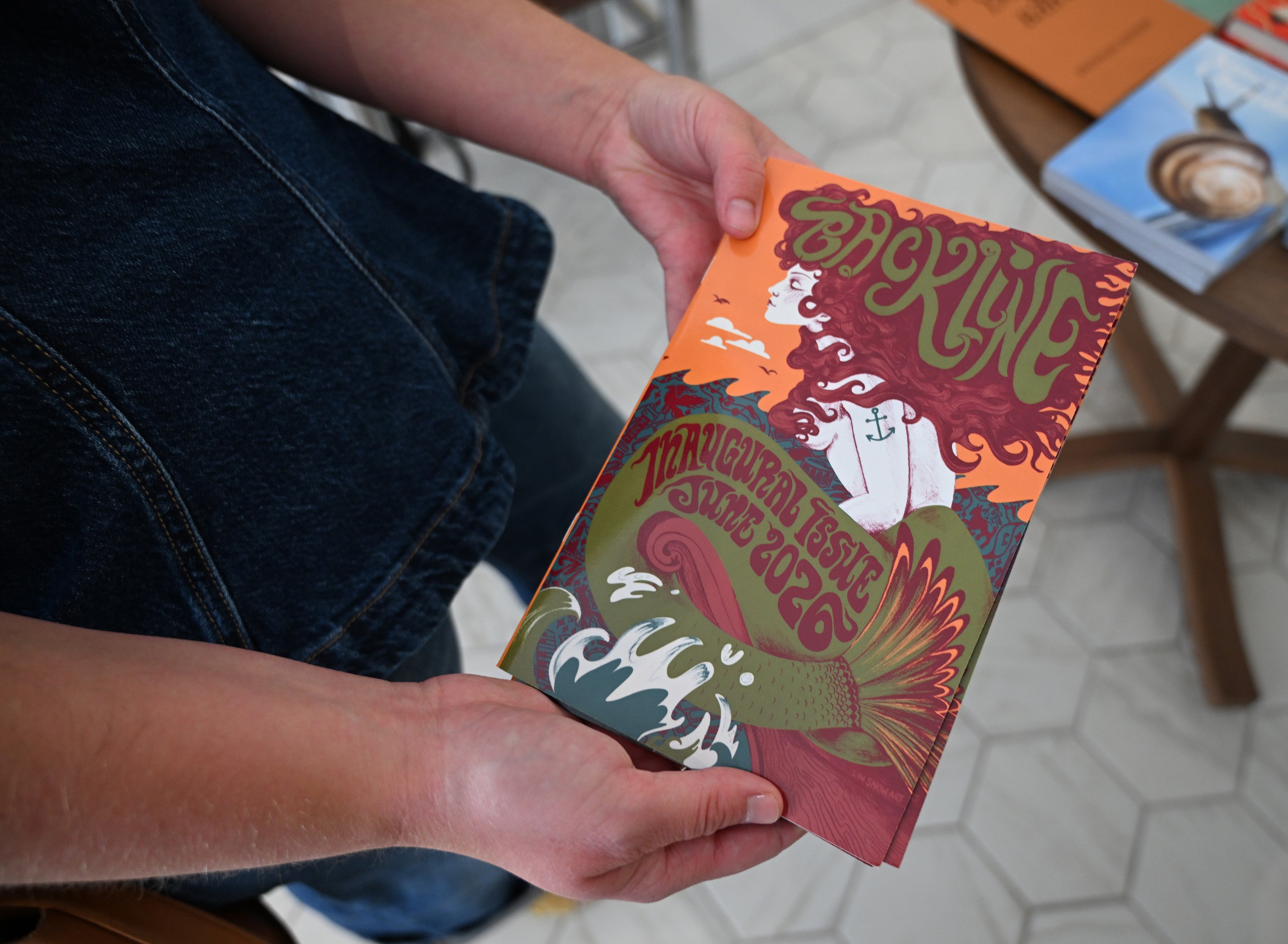
Sophie Raskin holds a copy of the zine Backline at Bold Magazine Shop in Portland in July. (Shawn Patrick Ouellette/Staff Photographer)
VOICES OF A FEW GENERATIONS
At Portland’s Resurgam Music and Arts Festival earlier this summer, Dugal and Raskin said they ran into an elderly couple while they were tabling who said that they were too old for zines, which amused the two young zine makers.
“Zines are, like, your generation,” Dugal said about the couple.
The Backline zine has been popular, particularly among the music community in Portland. Backline features stories about bands and musicians and has a section where musicians can find opportunities, like bands looking for new members.
“I think a lot of times musicians don’t know where to turn for information or opportunities,” said Raskin. “We thought it would be great to shed light and share stories about people in the industry.”
Beyond Portland Dirt, another popular submissions-based zine is The Portland Drawing Survey, run by zine maker Jo Ophardt.
Advertisement
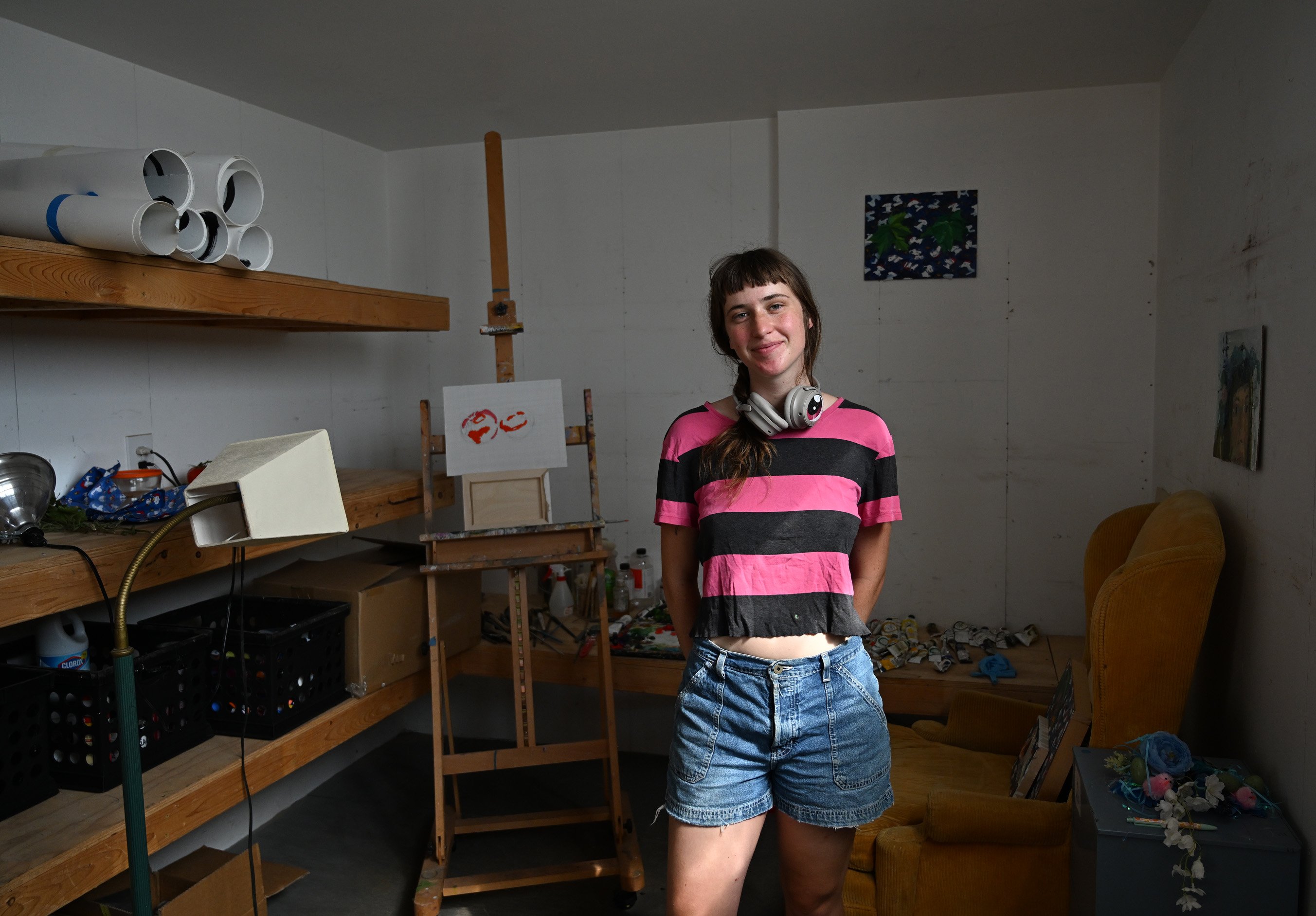
Artist Jo Ophardt in her Portland studio in July. (Shawn Patrick Ouellette/Staff Photographer)
“Drawing is a way that people can record what’s going on right now and what they feel, what’s going on in their lives. So it really interested me to bring it all together and kind of archive what people are drawing in Maine,” said Ophardt.
Matt Dodge, another zine maker who creates under the name Lank Press, has produced one-off zines as well as zines based on categories like Wikipedia entries or vanity license plates. He even made a zine about missed encounters at different Hannaford grocery stores in the state, all drawn from Craigslist ads.
Dodge also creates more serious politically-minded zines, like one about the death penalty and one related to a 2025 case in which protesters in Texas were arrested for possessing zines about topics like mutual aid and U.S. Immigration and Customs Enforcement (ICE). Prosecutors labeled the zines “insurrectionary materials” and linked them to violence that occurred at a protest at the Prairieland ICE Detention Center in Texas.
Dodge, who believes that the sentences the protesters received were extreme, knows several other zine makers in the Portland area.
In his zine West End Liberation Front, creator Aidan Mitchell writes out interviews with local makers like graffiti artists on one side of his zine – which is produced as a long, folded sheet of paper – and draws a comic on the other side. Mitchell’s zine was born when he was about to drop out of college and only had a few more weeks to use the school printers.
Mitchell said that he’s enjoyed seeing his zine pop up around Greater Portland in unexpected places.
Advertisement
“I’m humbled by that, seeing something I’ve worked on in someone’s house or at the bar or whatever,” said Mitchell.
SELLING ZINES
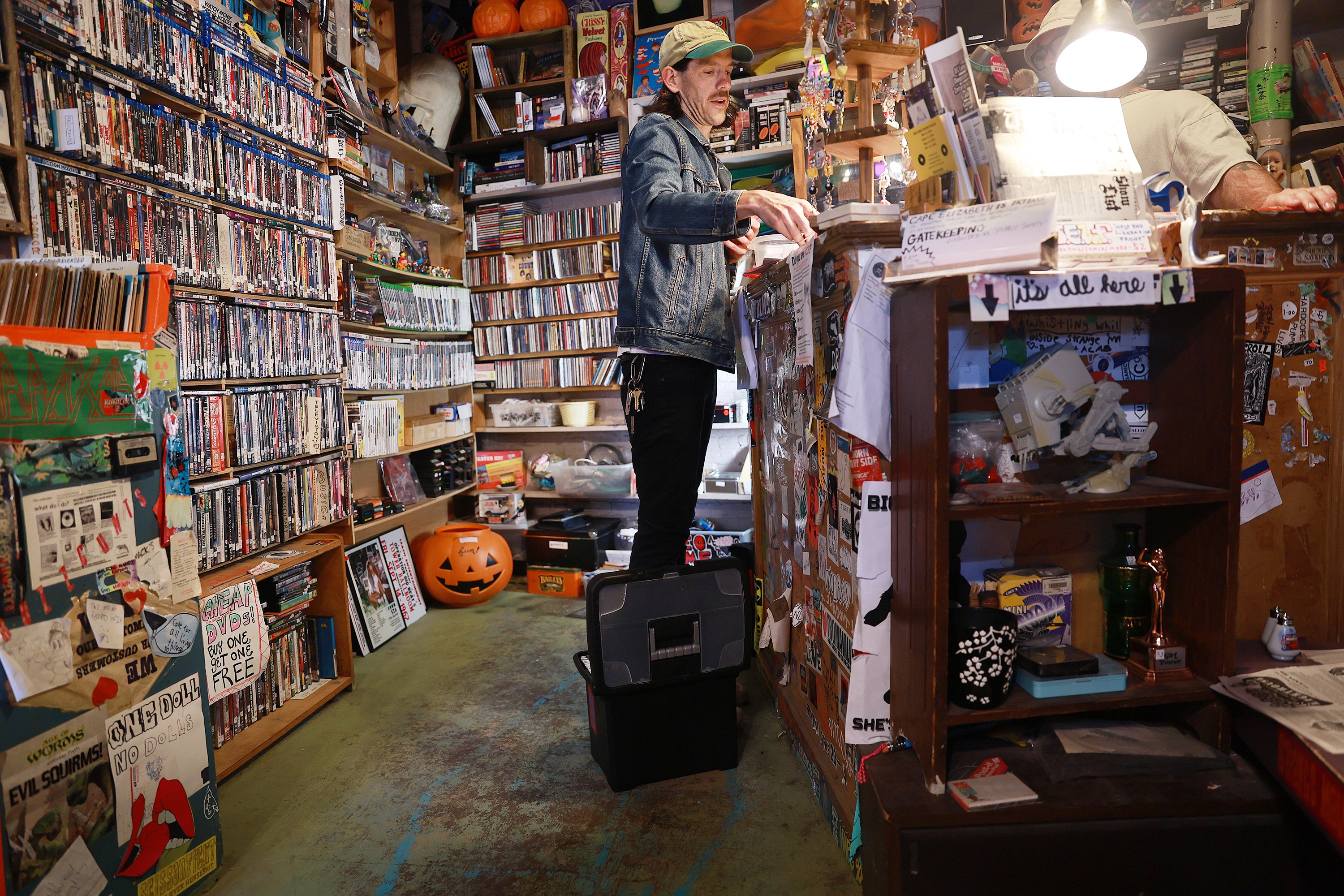
Zine maker Matt Dodge visits Strange Maine in Portland to drop off materials on Aug. 3. (Derek Davis/Staff Photographer) Purchase this image
Zine sellers in Portland include businesses like Print: A Bookstore, Bold Magazine Shop, and Strange Maine.
Some zine creators, like Ophardt and Mitchell, also sell zines personally on First Fridays.
Josh Christie, co-owner of Print: a Bookstore, said that he read and enjoyed zines growing up.
“They’re just so niche and so interesting, and that’s the thing that I really love about them,” said Christie.
Christie said that zines also have staying power because of how easy they are to create and stock. Most of his zines retail for between $3 and $10, which makes them an easy add-on for people already buying books.
Stacy Mitchell, who opened the Bold Magazine Shop around Thanksgiving, said that interest in local publications has been high.
“People have always been asking about which titles are from Maine or which have a connection to Maine,” said Mitchell. “And I think that the zine type and publication form is extra popular because it’s approachable, it’s fun, it’s something to hold, and it’s more likely that you might know someone if it’s a local zine.”
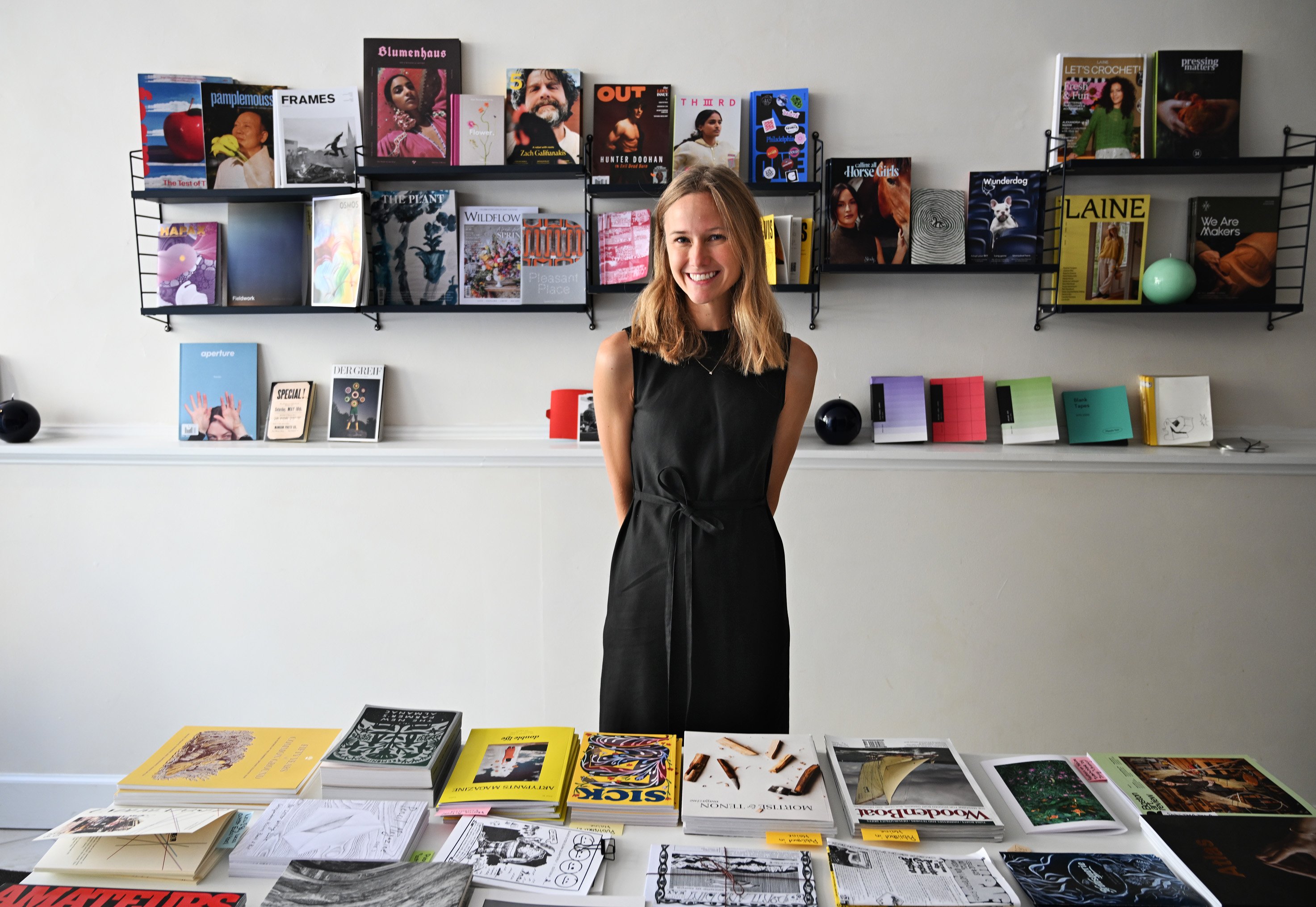
Bold Mag shop owner Stacy Mitchell at her Congress Street shop. (Shawn Patrick Ouellette/Staff Photographer)
Copy the Story Link

Chloe Swedberg, a graduate of Bowdoin College, is pursuing a master of journalism degree from the University of California, Berkeley. She is working with the Press Herald's features team. More by Chloe Swedberg