

Augusta utility sues 4 paper mills over toxic PFAS in drinking water


Andy Begin, assistant general manager and chief engineer for the Greater Augusta Utility District, talks about the new PFAS filtration system last week during a tour of the Riverside station in Augusta. (Joe Phelan/Staff Photographer)
The Greater Augusta Utility District has filed a federal lawsuit against four upstream paper manufacturers to recover millions spent filtering toxic “forever chemicals” out of the capital city’s public drinking water supply.
The utility is asking the court to hold the mills responsible for polluting the Kennebec River watershed rather than forcing ratepayers and taxpayers to absorb the cost of complex water treatment.
The outcome could set a legal blueprint for public water systems across Maine and nationwide.
The dispute centers on Augusta’s Riverside wells, where pumps pull groundwater from an aquifer connected to the Kennebec River. Officials shut the wells down after testing in 2021 showed unsafe levels of per- and polyfluoroalkyl substances, or PFAS.
Related
Augusta shuts down two wells for high PFAS levels
Water from these wells contained 23.3 parts per trillion of the six PFAS that Maine measures to establish drinking water safety. The state limit is 20 parts per trillion. To picture that scale, one part per trillion equals one drop of water in 20 Olympic-sized swimming pools.
While that sounds exceedingly small, state and federal environmental regulators emphasize that even trace amounts of these manmade chemicals can pose human health risks, with long-term exposure linked to kidney cancer, liver damage, high cholesterol and immune system disruption.
Advertisement
To protect its 13,750 customers, the utility invested $2 million — much of which came from grants — to build an ion-exchange treatment facility. Water began flowing safely this summer, but the utility argues that the financial burden belongs to the polluters.
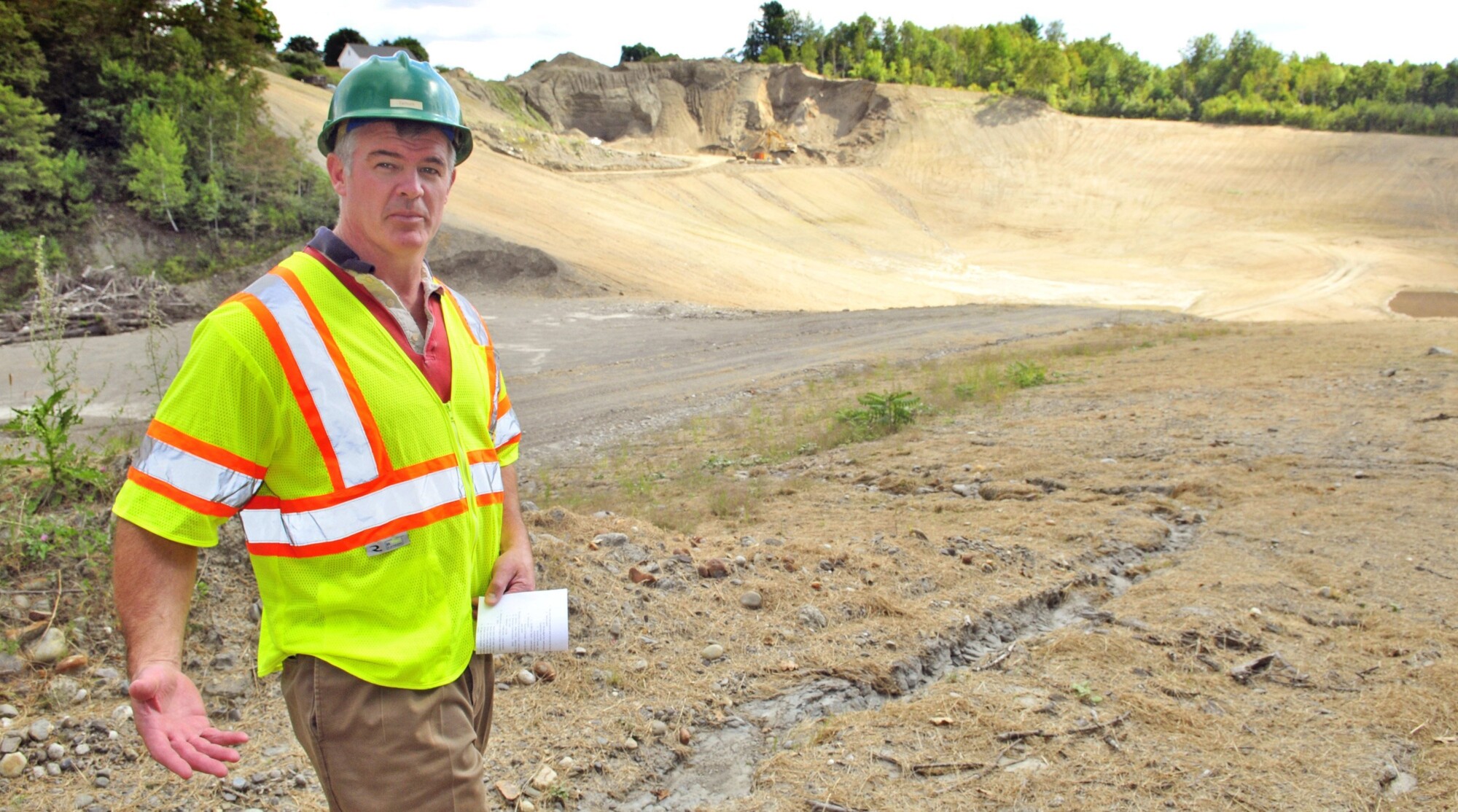
Brian Tarbuck, general manager of the Greater Augusta Utility District, leads a tour of the former gravel pit that is the district’s east side well complex off Riverside Drive in Augusta in 2014. (Joe Phelan/Staff Writer) Purchase this image
The lawsuit marks a crucial strategic shift in environmental litigation.
Most PFAS cases target the chemical creators, like 3M or DuPont. Maine has filed two lawsuits against major chemical companies, alleging they willfully introduced toxic chemicals into Maine’s environment while concealing their known health and environmental risks.
In its lawsuit filed last week, the Augusta district is going after the paper mills that used PFAS while making grease-resistant paper and disposable dishware, including: Sappi North America Inc., which operates a mill in Skowhegan; Huhtamaki Inc., which makes Chinet products in Waterville; Kimberly-Clark Corp., which had a plant in Winslow; and American Tissue Corp. and its subsidiary, American Tissue Mills of Maine, which operated a mill in Augusta. The Winslow and Augusta mills have been closed for several years.
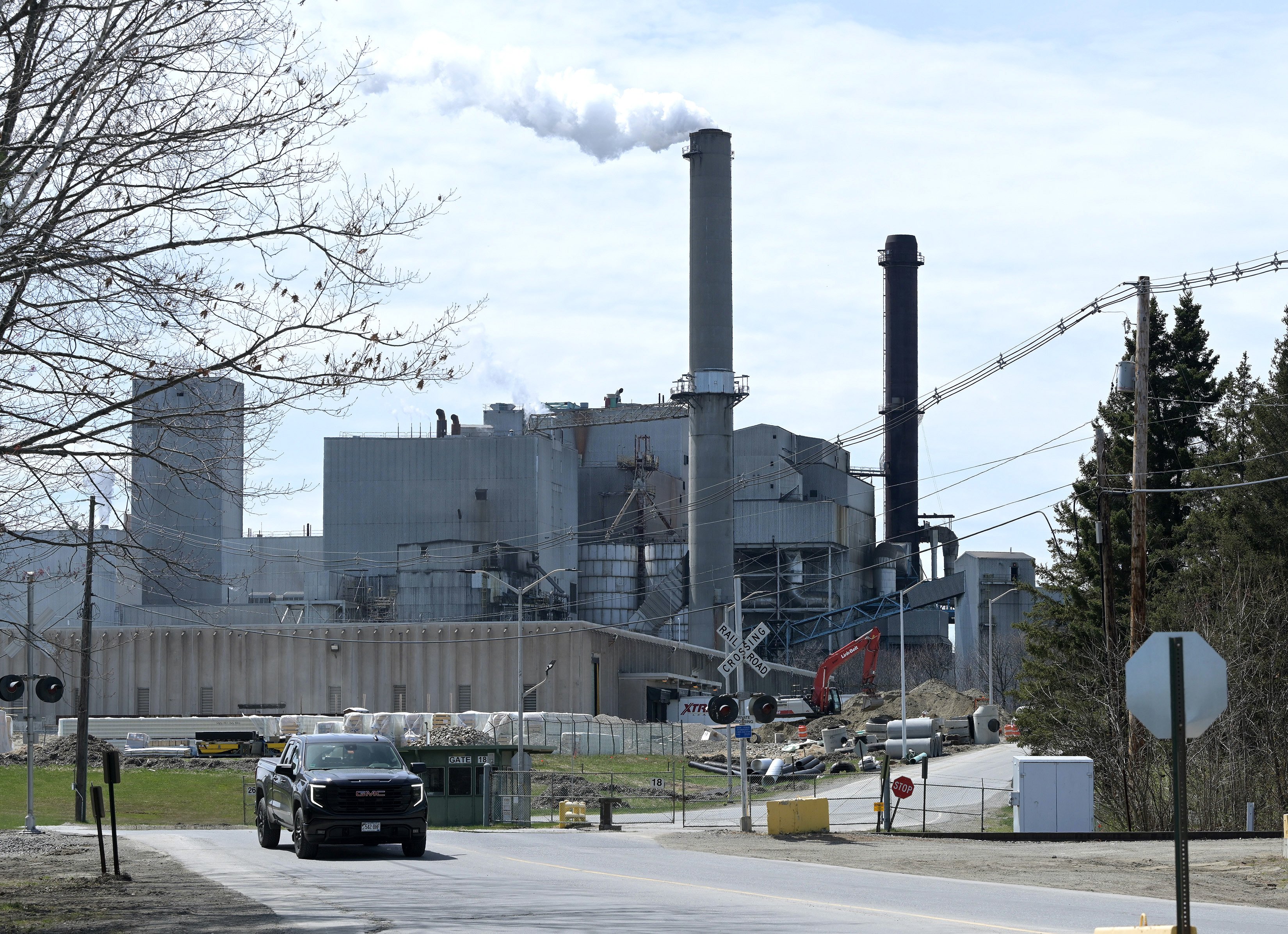
A truck leaves Sappi North America’s Somerset mill in Skowhegan in April 2024. (Rich Abrahamson/Staff Photographer) Purchase this image
A similar legal strategy succeeded in Michigan in 2022, where footwear manufacturer Wolverine Worldwide paid $54 million to the state, two local communities and residents after dumping PFAS-contaminated leather-treatment waste.
However, while Wolverine involved a single isolated disposal dump, proving causation along Maine’s 30-mile Kennebec River corridor could be far more complex because discharges from multiple mills commingle in the water.
Advertisement
But federal law offers a powerful legal tool: the Comprehensive Environmental Response, Compensation and Liability Act, or Superfund, which establishes the mechanisms needed to force responsible parties to pay for environmental clean up costs.
“Liability is strict, retroactive and joint and several,”said Anthony Moffa, an environmental law professor at the University of Maine School of Law. Under that law, defendants can be held responsible for cleanup costs even if they complied with all of their permits, Moffa said.
This legal framework resolves a question that hung over the utility’s recent project opening, where officials said there was no single “smoking gun” to blame for its PFAS spike. In its suit, the district claims mill discharges blended together over decades to form an indivisible toxin.
Related
Augusta water district completes $2M PFAS filtration project
But under federal Superfund regulations, plaintiffs do not have to isolate individual chemical molecules to establish liability. They only need to prove an upstream mill discharged hazardous waste into the watershed. And for that, they turned to state-run water, leachate and fish testing.
The district cites PFAS spikes in paper mill discharge, landfill runoff and fish tissue as its proof.
“Defendants, and not the district, its taxpayers, or its customers, should bear the past, present, and future costs of investigating, monitoring, treating, and remediating PFAS contamination affecting the district’s drinking water,” the district said in its Oct. 7th suit in U.S. District Court.
Advertisement
The litigation builds on a wave of class-action litigation by central Maine landowners and farmers, who are suing mills like Sappi and Huhtamaki after their sludge spread as fertilizer contaminated private wells and tainted farm fields across Somerset and Kennebec counties.
Related
Trail of forever chemicals lead to Maine paper mills
Unlike some national settlements reached with chemical creators, none of the Maine lawsuits targeting paper mills have settled, according to court records, with regional class actions still working their way through federal and state dockets as the paper mills mount vigorous defenses.
Because the spreading of industrial sludge was state-permitted, Maine maintains historical records of its use. From those records, the state estimated eight paper companies spread at least a half million cubic yards of paper mill waste in Maine between 1989 and 2016.
But Maine has no such records for industrial PFAS discharges into public waterbodies. For decades, state and federal discharge permits regulated things like suspended solids or pH, but they did not require monitoring of PFAS compounds.
However, the Maine Department of Environmental Protection conducted a 10-month statewide study testing industrial and municipal wastewater effluent in 2022. The agency calculated that regulated facilities discharge roughly 30 pounds of PFAS into Maine waters every year.
Maine now requires all who discharge into public waters to monitor and report PFAS levels.
Advertisement
Upstream paper companies and industry leaders have argued the mills operated within the law.
A spokeswoman for Sappi said the company is reviewing the lawsuit. She said Sappi complies with environmental regulations, operates within its state and federal discharge permits and doesn’t knowingly use PFAS in products.
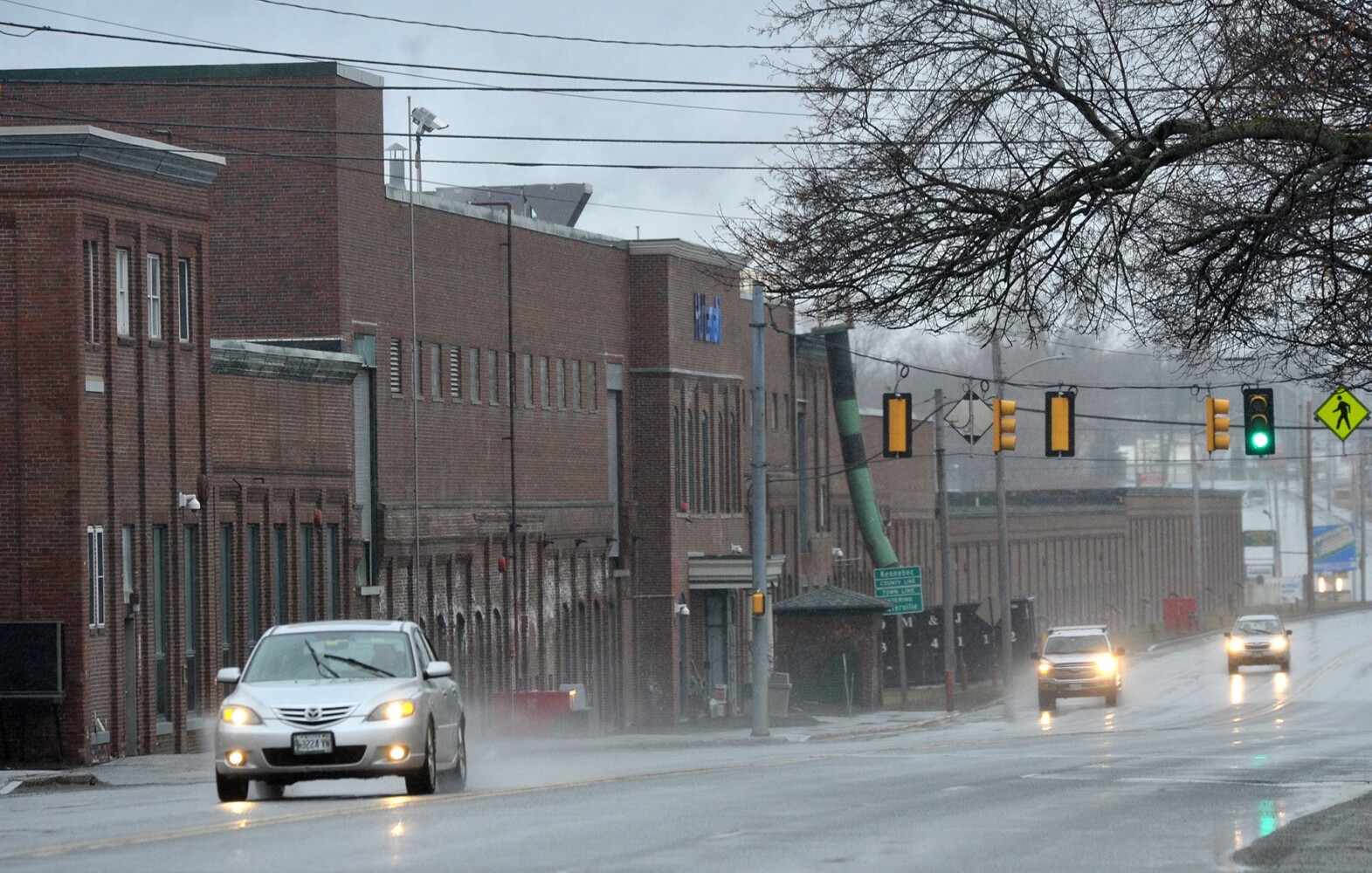
The Huhtamaki plant in Waterville in March 2020. (Rich Abrahamson/Staff Photographer)
Neither Huhtamaki nor Kimberly-Clark responded to requests for comment. American Tissue has ceased operations and filed for bankruptcy in 2001. Under federal law, if a responsible party cannot pay, the financial burden shifts to the solvent co-defendants remaining.
Industry leaders echoed that defense and cautioned against penalizing law-abiding businesses.
The executive director of the Maine Wood Products Council, Krysta West, stressed that mills work hard to apply current science. “It is always concerning when lawsuits are filed against companies in any sector who operated in accordance with state and federal permits,” West said.
The lawsuit lands amid Maine’s broader reckoning with legacy chemical pollution.
Advertisement
For decades, state-approved programs encouraged paper mills and wastewater plants to spread their leftover sludge on local fields as free fertilizer. The practice contaminated has almost 100 farms, ruined dairy herds, and fouled hundreds of private drinking wells in central Maine.
The public outcry prompted Maine to become the first state to ban sludge-based fertilizer use.
Public health advocates said mills cannot claim ignorance after decades of scientific warnings.
“Industries choosing to create or use PFAS in spite of that should not be surprised when consumers, regulators, and other impacted groups… seek compensation for the harms,” said Emily Carey Perez de Alejo, executive director of Portland-based Defend Our Health.
This is a developing story.
Copy the Story Link
Tagged: environment, forever chemicals, paper mills, PFAS

Penny is excited to be the Portland Press Herald’s first climate reporter. Since joining the paper in 2016, she has written about Maine’s lobster and cannabis industries, covered state politics and. More by Penelope Overton


