
Androscoggin River water quality is the subject of a lawsuit. Here’s what you need to know.


Gulf Island dam on the Androscoggin River, foreground, at the end of Switzerland Road and Gulf Island Pond, background as seen on Tuesday. (Russ Dillingham/Staff Photographer)
Friends of Merrymeeting Bay, a conservation group, filed a federal lawsuit last week seeking stronger water-quality protections for part of the Androscoggin River.
The lawsuit challenges the U.S. Environmental Protection Agency for abusing its discretion under the Clean Water Act “in failing to reject Maine’s unlawful and uncodified actual antidegradation policy.”
It also challenges the Maine Board of Environmental Protection for its refusal to recommend to the state Legislature a reclassification of a stretch of Androscoggin River ranging from Gulf Island Pond dams to Worumbo in Lisbon.
Related
Conservationists press for Androscoggin River upgrade: ‘This is not optional’
The lawsuit follows a yearslong debate over whether the stretch of Androscoggin River should be reclassified from a Class C waterway to cleaner Class B status.
“The main stem of the Androscoggin from the New Hampshire border to Swift River, in Rumford, is Class B,” said Ed Friedman, chair of Friends of Merrymeeting Bay. “Then, from there down to Wurumbo is Class C, and from Wurumbo down to (Merrymeeting Bay) is Class B. So we’re basically trying to move that classification upgrade up the river from Worumbo up to Gulf Island Pond Dam.”
Maine DEP spokesperson David Madore said his department cannot comment on pending litigation.
Advertisement
A U.S. EPA spokesperson could not be reached for comment.
Here are five things to know about the case:
FROM CLASS C TO CLASS B
The state’s classification system for rivers ranges from Class D to Class AA, with Class AA waters requiring the highest protection and Class A waters suitable for treated drinking water, fishing, recreation and industrial use. Class B waters protect fish habitats and other aquatic life while allowing for recreation, navigation and agricultural/industrial use. Class C waters are considered suitable for navigation, industrial processes and cooling water supply.
HIGHER STANDARDS ALREADY MET
Years of water quality monitoring show the river is already in compliance with Class B standards, according to Friends of Merrymeeting Bay.
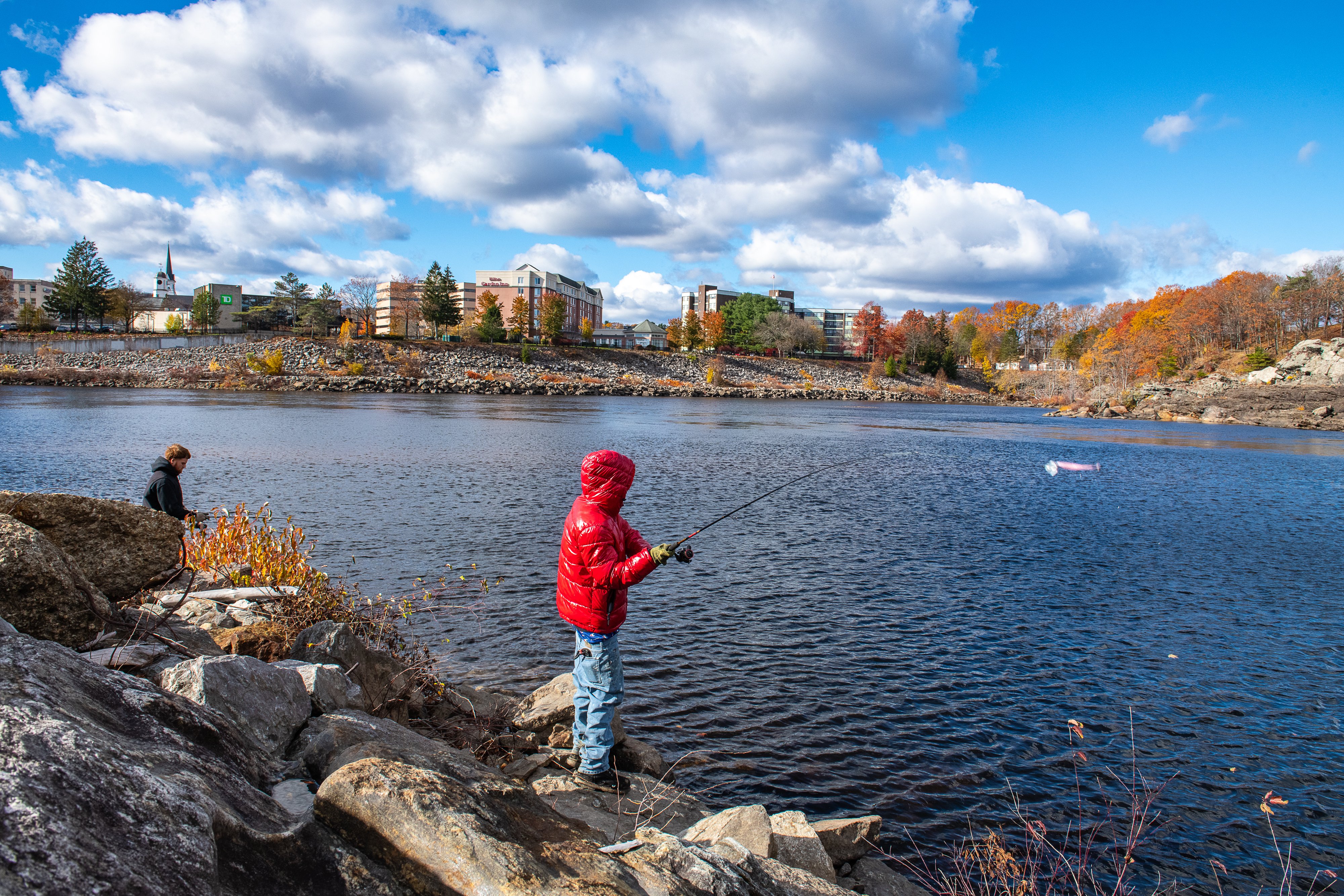
Dekoda Scott, left, and Eli Vereen cast their fishing lines into the Androscoggin River at Veterans Memorial Park on Main Street in Lewiston last November. The spot is part of a stretch of the river conservationists want reclassified in order to protect water quality. (Russ Dillingham/Staff Photographer) Purchase this image
Court documents illustrate that state law requires waters to consistently exceed standards of current classification for consideration of an upgrade to protect those improvements.
“So when the actual quality is better than the classification, that leaves room to pollute and still meet the lower classification,” Friedman said. “For example, the Class B dissolved oxygen standard is 7 parts per million as a minimum, but for Class C, it’s 5 (ppm). That’s a big difference. The more oxygen, the better for aquatic life.”
Advertisement
‘LOCKING IN’ WATER QUALITY
If Friends of Merrymeeting Bay succeeds in its lawsuit, state regulators will be required to recommend the Legislature pass an amendment giving the stretch of the river from Gulf Island Pond dams to Worumbo a Class B upgrade.
Friedman said the goal is to “lock in” current water quality by ensuring its classification indicates its actual condition.
“All we’re saying is we need to be following the law and locking in actual quality and preventing backsliding,” Friedman said.
POLLUTION PERMITS COULD BE AFFECTED
Protections for waterways are in part determined by river classifications, so if the stretch of river were to be reclassified, future wastewater and industrial discharge permits could face stricter requirements.
Related
Friedman said wastewater and industrial discharge operating under permits tied to Class C standards would then be adjusted to ensure water quality continues meeting Class B standards.
IMPLICATIONS BEYOND THE ANDROSCOGGIN
Maine DEP relies on models of worst-case scenarios assuming low river flows, high temperatures and maximum discharges all occur at once, according to court documents. During the state’s Triennial Review process, DEP officials argued the Androscoggin River segment does not meet Class B standards 100% of the time, so the stretch should not qualify for reclassification.
Advertisement
The DEP considers three critical conditions when classifying a river: 10-year low flows, water temperatures and dischargers at their full licensed load. Friedman said the problem is that the process assumes all of the worst conditions are happening at the same time, and permits are granted so current classification is maintained.
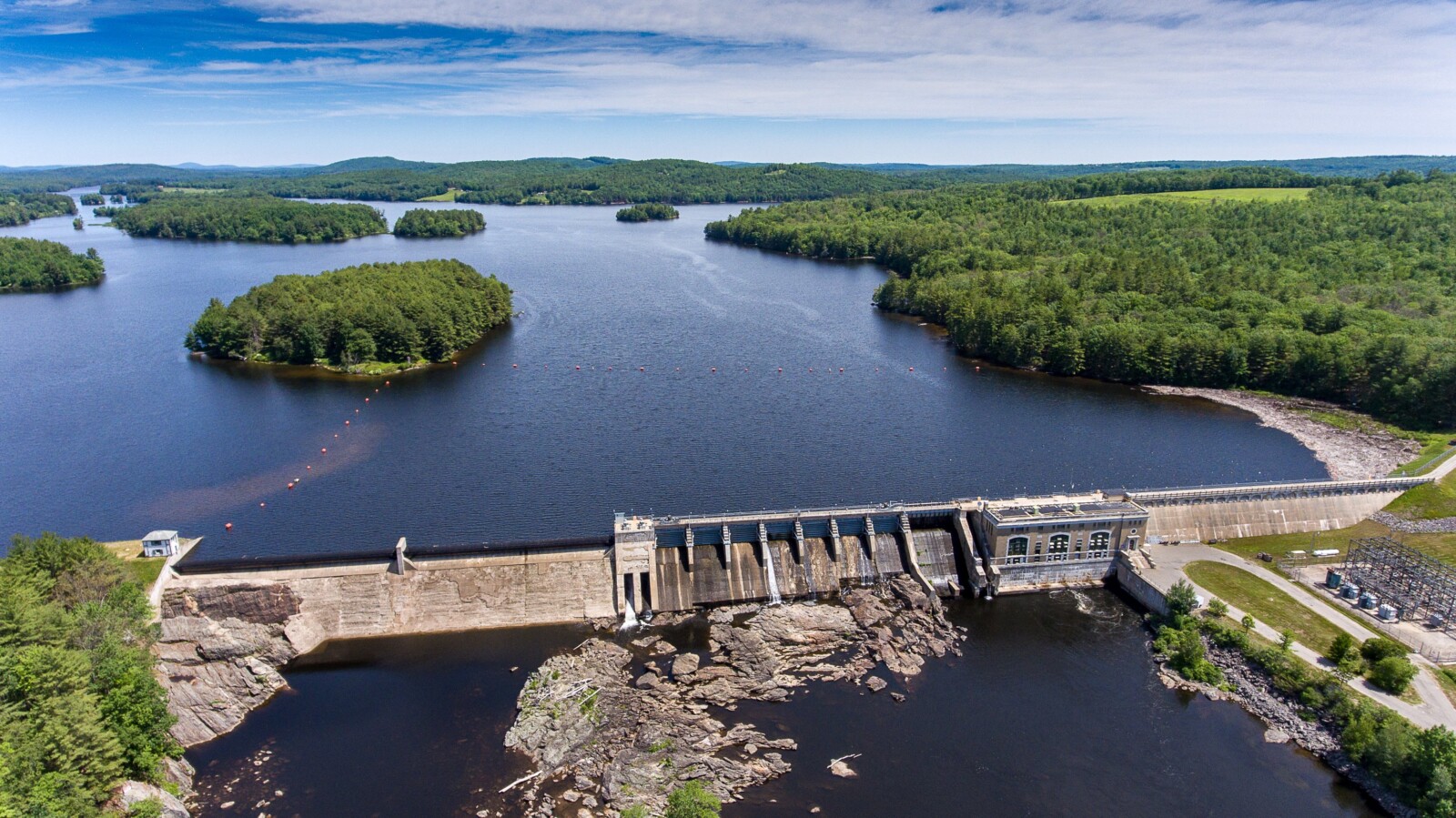
The Gulf Island Dam, foreground, between Lewiston and Auburn, is pictured in June 2021. (Russ Dillingham/Staff Photographer) Purchase this image
“The problem is when the department takes those permitting conditions and applies them to classification,” Friedman said. “Classification is based only on actual water quality, and what happens if you create a threshold or a bar? Would those three critical conditions make that a threshold to reclassify? You’re turning the Clean Water Act goals and Maine’s own Clean Water goals on their head. You’re essentially holding classification hostage to permitting.”
River classifications should instead be based on actual conditions measured in the river, Friedman said.
Friends of Merrymeeting Bay also argues that regulators have allowed discharge permitting to outweigh water quality improvements when considering reclassification requests.
A ruling in favor of the conservation group could change how river reclassification proposals are evaluated across the state.
Copy the Story Link
Tagged: auburn maine, lewiston maine, lisbon maine

Joe Charpentier came to the Sun Journal in 2022 to cover crime and chaos. His previous experience was in a variety of rural Midcoast beats which included government, education, sports, economics and analysis,. More by Joe Charpentier