
A Maine dairy is opening a cow spa. Udder genius or absurdity?

If you have ever looked at a 1,500-pound Holstein dairy cow standing knee-deep in a Kennebec County pasture and thought, “You know what this animal really needs? A peppermint-oil scalp massage,” yogurt maker Stonyfield Organic has some good news for you.
Starting Sept. 10, Rainbow Valley Farm in Sidney will transform into what Stonyfield is billing as the world’s first-ever organic cow spa. For $120 a ticket, visitors can trade the chaos of modern life for a “pasture pedicure” and a supervised session of cow cuddling.
According to Stonyfield, the pop-up spa, which runs through Oct. 3, will let people feel “udder relaxation” and get a firsthand look at the rigorous standards of an organic dairy. Anybody who has ever actually milked a cow at 4:30 a.m. will quickly recognize it as a cheeky marketing stunt.
Luxury wellness and New England agriculture make strange bedfellows. Beyond the breathless lifestyle buzzwords of “touch grass” encounters and green-graze juices is a hardscrabble reality: even award-winning, multigenerational farms have to get creative to survive in modern Maine.
Related
How Maine's u-pick farms are navigating change
Enter the Braggs. Rainbow Valley Farm, tucked along the West River Road in Sidney, is no cute petting zoo. Run by Jeff Bragg and his son, Jake, the farm was built upon generations of agrarian grit on the same Kennebec County soil where their family has been since the late 18th century.
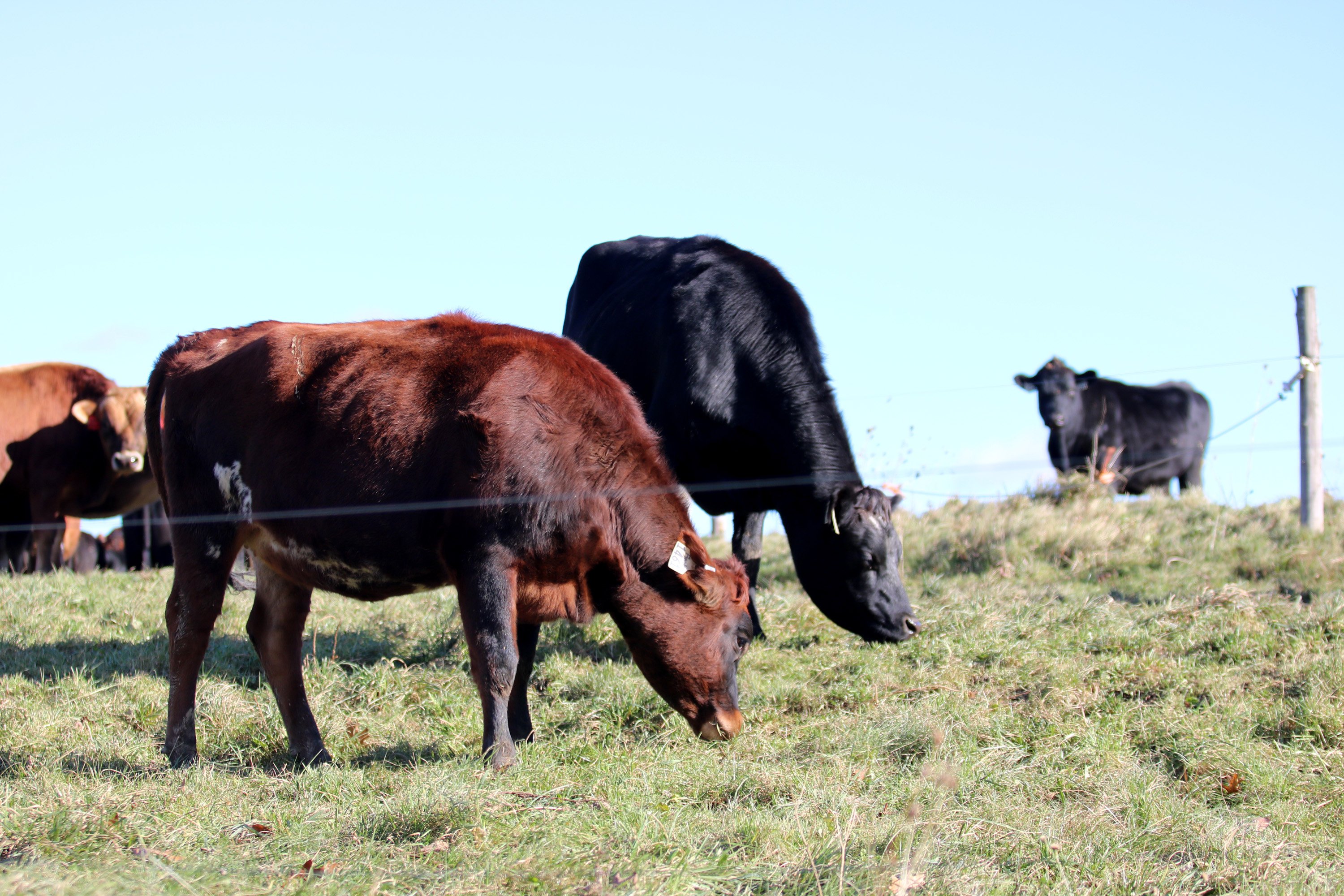
Finnley, front, and friends graze at Rainbow Valley Farm on a sunny afternoon in November 2023 in Sidney. (Anna Chadwick/Staff Photographer)
Last year, their peers voted them the Maine Dairy Farm and Family of the Year, honoring a dairy operation that transitioned to organic practices decades ago, long before wellness pop-ups were so much as a gleam in a brand strategist’s eye.
Advertisement
When asked how a family of ninth-generation dairy farmers feels about setting up a meditation trail and a journaling corner for tourists, Jake Bragg does not groan. You might even say that he’s udderly pragmatic about the whole thing.
“Whatever it takes to get people out to the farm,” Bragg said.
The math of Maine dairy farming has been brutal for a long time. Costs are soaring, margins are shrinking and the state’s dairy infrastructure has dwindled to a shadow of its former self. Maine has lost a third of its commercial dairies since 2020, with less than 150 still in production.
Simply put, milking cows doesn’t always pay the bills the way it used to.
Related
Maine dairy farms are dwindling
Agritourism has become an economic pressure valve. Whether it’s farm stays in a yurt, raw milk sales out of a cooler, cross-country ski trails and ultimate frisbee parks, renting out pasture for a wellness retreat — these are part of the diversification plan that Maine dairies rely on to survive.
Amanda Beal, the state agriculture commissioner, knows the challenges. She grew up on a dairy farm and is all too familiar with their ups and downs, huge infrastructure investment and razor-thin profit margins.
Advertisement
“Farmers have to do a little bit of everything to survive,” Beal said. “But dairy farmers? They have to use every trick in the book, and sometimes even that’s not enough.”
Beal led a statewide task force trying to keep Maine’s dairy industry afloat. There’s a lot at stake. Maine’s dairy sector is estimated to annually contribute $2.96 billion in total economic impact, including more than 13,000 jobs, according to the task force’s findings.
Rainbow Valley Farm is doing pretty good, at least for now. Being organic helps, because it allows the Braggs to command a higher price, but it requires a lot of land to keep a cow out to pasture for 120 days, which is the minimum number of days required under national organic certification.
That’s where the $120 ticket price for Stonyfield’s pop-up cow spa comes from. It’s a reminder to the spa-goer of the higher standard that organic dairies maintain to get that certification, and the extra money that they must spend to obtain it.
The pasture requirement means that organic herds are often smaller. As a result, the animal care is often more intimate, Bragg said. For example, every Rainbow Valley cow is named. Bragg fondly recalls his first calf, P-Nut. P-Nut begat Jelly, and Jelly begat Buttah.
He doesn’t massage his cows or give them bubble baths to relax them. Adult cows don’t even like to be touched, Bragg said. But he does go to great lengths to keep them clean. And when an udder hardens, he will use peppermint oil to reduce the swelling and ease the pain.
Advertisement
Bragg thinks of the pop-up as a fun metaphor. At the cow spa, customers will receive the kind of pampering that humans like, while Bragg’s cows get the kind of pampering they like, like a bed of fresh sawdust to sleep on and hours spent grazing grassy farm pastures.
While Stonyfield staff and third-party hires will handle the more traditional spa treatments, like massages and pedicures, the Braggs will oversee the cow cuddling sessions. While adult cows do not like to be touched, young calves love nuzzling and sucking on your hands.
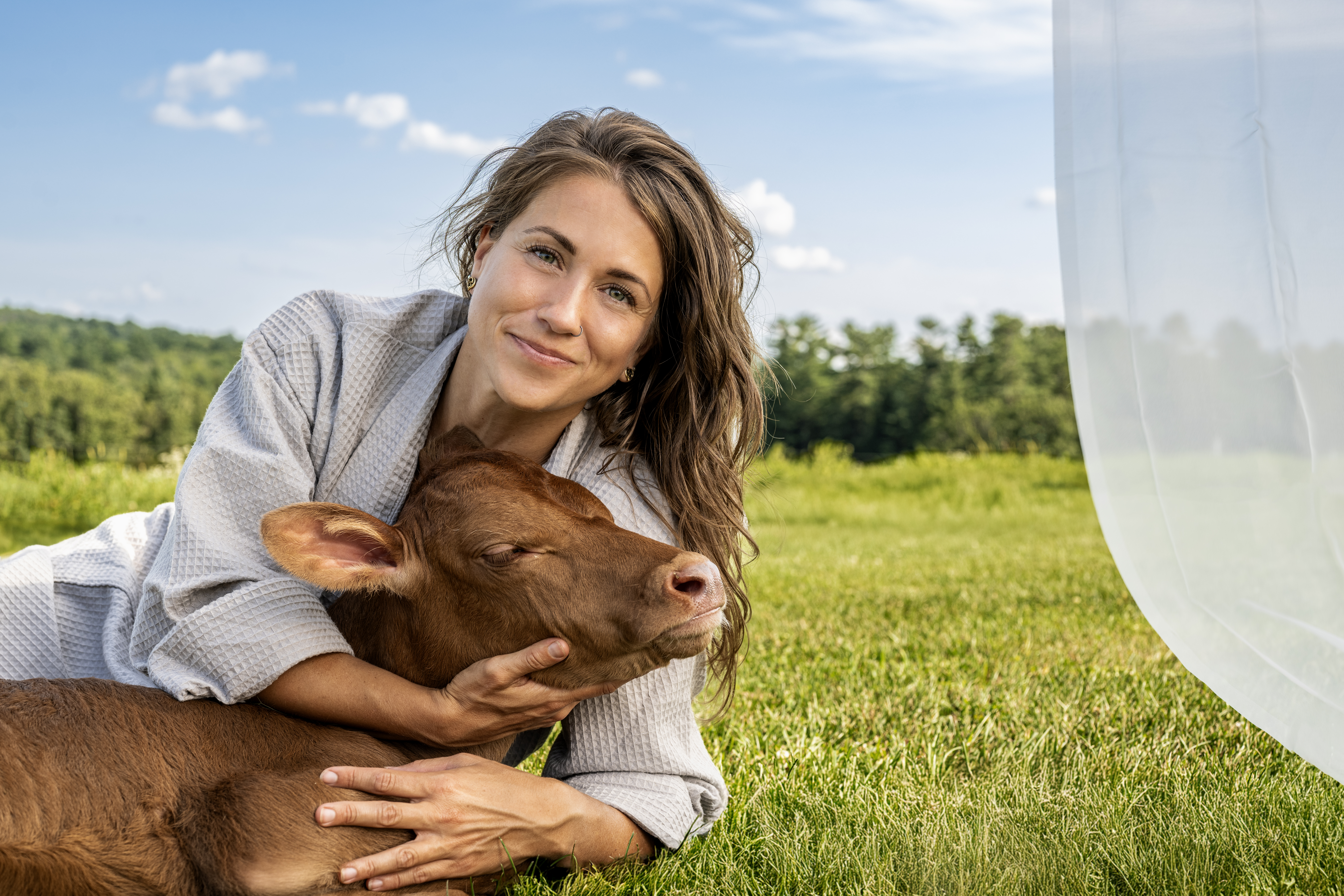
Stonyfield Organic will host a pop-up cow spa at Rainbow Valley Farm in Sidney from Sept. 10 through Oct. 3, 2026. For $120, customers receive spa treatments inspired by organic animal care, including green graze juices, peppermint oil massages and supervised cow cuddles. (Courtesy of Stonyfield Organic)
The idea for the cow spa came from Stonyfield, but Bragg said his family is happy to do it. The company has been good to them. Jake’s mother, wife and daughters are eager to enjoy the human spa services. They enjoy the public, too, each year hosting a popular first-day-of-pasture party.
And this farming family firmly believes in diversification. Jeff Bragg runs a well-known compost business that uses manure generated by the farm to power most of the farm’s electrical needs and create animal bedding and compost that is sold around the state.
So, the science behind hugging a cow, even a baby one, to cure human existential dread might be a bit oversold by the publicists. And Jake Bragg said no one should mistake a human scalp massage for the actual realities of mucking out a tie-stall barn in January.
But if a major yogurt brand wants to funnel urban tourists up to Kennebec County, charge them $120 to breathe fresh air and cuddle a calf and throw some much-needed attention to a suffering industry or an award-winning Maine farming family?
Maybe the cows aren’t the only ones getting milked.
IF YOU GO: The Stonyfield Organic Cow Spa will be available for bookings beginning Wednesday at stonyfieldorganiccowspa.com, with the spa open Sept. 10 through Oct. 3.
Copy the Story Link
Tagged: agriculture, dairy, organic farming, tourism

Penny is excited to be the Portland Press Herald’s first climate reporter. Since joining the paper in 2016, she has written about Maine’s lobster and cannabis industries, covered state politics and. More by Penelope Overton